
Introduction
“QC checked” from a Supplier can sometimes be akin to “we had a look” from a contractor. This gives you no tangible information that you can feel comfortable with when approving a shipment.
To ensure your inspections mean something for your outdoor WPC order—such as composite wall cladding (a great example of a product that will penalise you for poor dimensional and appearance tolerances)—you need to ensure the following four areas have been documented:
- What was sampled?
- What was considered a defect?
- Which lot was inspected?
- Who approved the shipment?
Without having these documented, you are not doing QC; you are playing with your lead times, claims and rework on site. WPC can often be found in external applications such as cladding/siding.
1. Sampling Plan and Lot Definition
1.1 Lot Definition
Ensure you know what constitutes a ‘Lot’, as Suppliers can often try to fudge this.
With WPC cladding/decking profiles, a SKU is not just a 150mm Teak board. It will include the profile, nominal dimensions, colour family, surface finish and embossing, capped or uncapped. Any changes would mean you are purchasing a different SKU. On your PO, ensure you agree what constitutes different lots. For example, different production dates, formulation, line, Capstock batch and packaging runs. If this can affect the appearance, fit and complaints, it is not the same lot.
1.2 Sampling Plan
Without a defined sampling plan, you have no plan.
Ensure that your purchase order has:
- Sampling standard – e.g. ISO 2859-1 / ANSI/ASQ Z1.4 (attribute sampling).
- Inspection level – e.g. Normal/Tightened/Reduced. Whatever you have agreed, document it.
- Sample Size and Accept/Reject – If using an AQL-based plan, ensure you have documented how many samples are required and what the Ac/Re values are for each defect category.
- Unit of Inspection – e.g. Board, Accessories, Box, Bundle.
- Nonconforming units vs Defects – People often get confused here. Ensure you have documented this.
Don’t fall for the myth that AQL means you will only receive X% defective. AQL is a parameter to help select a plan from tables. Acceptance sampling always carries risk. Just because your sample has passed this does not mean your lot is free from defects. It will help you decide whether to accept or reject based on the error rates of the plan.
1.3 Sample Representative of Shipment
Many inspections can become a farce with samples taken from the top of 2 easily accessible pallets.
Ensure samples are:
- Randomly selected by the inspector from identified pallets and positions.
- Document which pallets were sampled. Note any pallets that could not be accessed.
If the shipment was not completely packed, document this in your report. You can’t pass if half of your lot wasn’t available. Sampling calculations assume your sample is representative of your lot. If it is biased, then the whole probability theory behind acceptance sampling will not apply.
2. Defining WPC Defects
2.1 Dimensions and Fit
With composite exterior cladding, fit is the first thing you will lose if you don’t have tangible specs.
Simply ensure:
- Dimensions are correct – Length, Width, Thickness and profile geometry (tongue depth, groove width, clip channel, overlaps, etc.).
- How they are measured – Caliper or tape measure, where on the profile, number of measurements per board.
- Straightness/Warp – How this is measured, e.g. straight edge and measuring gap.
If your order contains clips/trims/mating profiles, ensure you do some basic fitting. If it doesn’t fit in the factory, it won’t fit on the scaffold in the rain!
2.2 Appearance
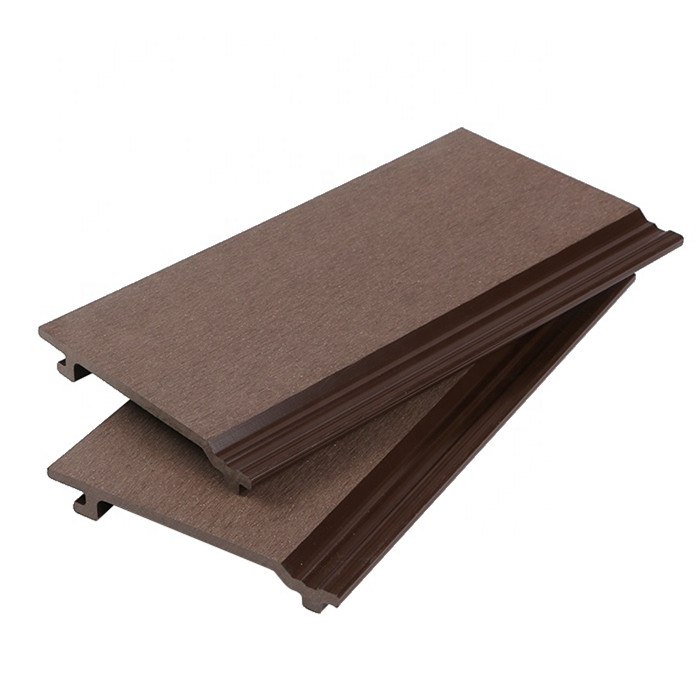
Appearance can often be an issue due to a lack of defined rules on how to view the product.
Ensure you have:
- Approved references – Golden samples (signed and dated) or defined limits.
- Viewing criteria – Distance, lighting type, angle, A face.
- What constitutes a defect – Scratches, chips, pitting, staining, irregular embossing and cap layer edge issues. As WPC is a composite material, it is widely used on external products. Often, appearance can be linked to Capstock uniformity and processing stability.
2.3 Defect List
To ensure consistency, ensure you have a defect list.
- Critical – Anything that would cause a safety, structural or fit issue. Profile doesn’t fit together so it can’t be fixed. Sharp edges on exposed edges. Accessories don’t fit so the system won’t work. Many buyers will have zero acceptance on defined criticals. Just ensure you have documented which are critical.
- Major – Functional or obvious appearance issues causing returns/rework.
- Minor – Small appearance issues that don’t affect usage but are important for high-quality jobs.
Add images, measurement limits and what constitutes a non-conforming unit. People often get confused here.
Is a board with 5 scratches 1 non-conforming unit or 5 defects? Decide this upfront.
2.4 Pre-Shipment Inspection
A pre-shipment inspection can check:
- Dimensions, Fit, Appearance, Packaging, Labelling, Quantities.
You usually cannot prove performance (weathering, mechanical performance, fire behaviour) unless you have organised for actual testing. Ensure you have confidence in the lab and sample chain.
Treat performance claims like adult documentation:
- Ask for test reports.
- Ensure they are for the correct construction (Capped/Uncapped, Formulation, Thickness, Surface).
- Don’t accept an old report for something similar.
3. Composite Cladding Traceability
3.1 Traceability
The first thing people ask when a project goes wrong is “Which batch was it?”—not “Who inspected it?”
Ensure you can trace:
- PO + SKU to finished product Lot Code to production records to pallet IDs to packing list/invoice.
Agree how long the Supplier will hold the source references (raw material batches, extrusion run sheets, Capstock Batch IDs if applicable) and what you can access if you make a claim.
3.2 Traceability During Packing
If your traceability is lost during packing, it isn’t traceability.
Ensure:
- Labelling is correct for the agreed SKU description and quantities.
- Pallet IDs and Lot Codes match the packing list.
- If there has been re-packing, partial shipments or replacements, ensure the product is still identifiable, or if not, clearly labelled with a documented link.
- If the pallets have been mixed between lots, this is a loss of traceability.
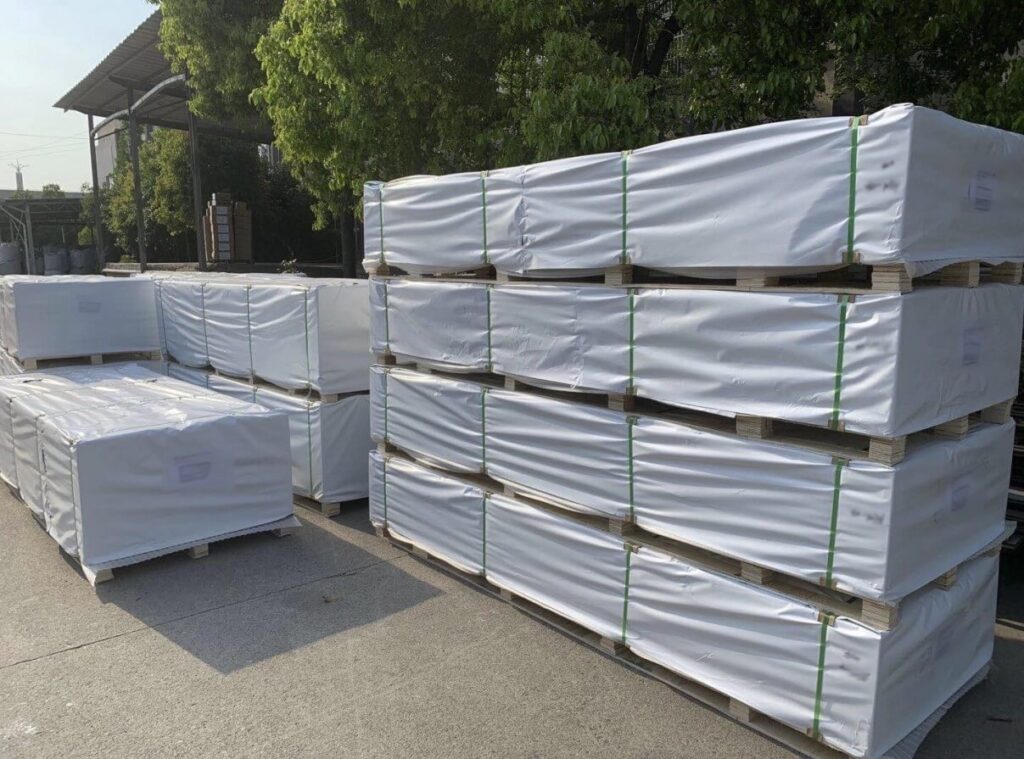
3.3 Example Composite Cladding Purchase
Using a real product page as an example.
KR WPC (WPC Manufacturer based in China and overseas supplier) shows typical examples of composite external cladding here. They also show common claims made by sales. These include different panel designs, capped/co-extrusion positioning and fire/weathering claims. So what would you ask for?
- Approved profile drawings.
- Approved appearance references – Physical samples or controlled images and criteria.
- Inspection plan – Sampling standard, Edition, Level, Ac/Re.
- Lot identification records – Ensure you can trace pallets to production runs.
If you want to see what a Supplier may claim as “Batch by batch QC”, compare it with what you would ask for. Their decking page clearly states they do batch-by-batch checks. They also state they carry out sample testing (impact resistance, moisture absorption, UV stability). Their “why” page states they have an in-house inspection team and lab. This is useful, but they don’t have a sampling plan, defect list and traceability as defined on your PO.
4. Evidence-Based Shipment Approval
4.1 Inspection Report
An inspection report should not just be pictures. Ensure you have:
- Lot identification – SKU, Lot Code, Pallets.
- Quantities inspected and sampling.
- Measurements – With method.
- Defects – How many per category, images of sampled items.
- Packaging, Labelling and Accessories.
- Limitations – What couldn’t be verified and why.
If you can’t see what was inspected and from where, you cannot make an informed decision.
4.2 Lot Fails
Lots will fail. It’s important to ensure your process manages this correctly, or you will be left with “Can you just check again?”
Define what happens when a lot fails:
- Segregation – Hold tags, Blocked Pallets, No mixing.
- Sorting, Rework, Replacements – Who will do it and who will pay.
- Re-Identification – New Pallet IDs, notes on rework.
- Re-inspection – What needs to be done and any costs.
Repeated sampling is not a solution. You are just playing dice.
4.3 Shipment Approval
Ensure someone has ownership of approving the shipment.
- Who will review the report.
- Who will confirm actions have been completed.
- Who will approve the shipment in writing.
If you are making any concessions, ensure you have documented them. This should include the affected items, what the concession is, what the acceptance criteria are, and which Buyer representative is approving them. Don’t have any backdoor messages saying “It’s okay to ship”.
Conclusion
To ensure your WPC inspection overseas is not just a formality, ensure the following are attached to your purchase order:
- Sampling Plan – Standard, Edition, Level, Sample Size, Ac/Re.
- Defect List – Critical, Major, Minor (with images, limits and counting).
- Traceability – SKU to Lot to Pallet to Packing list.
- Shipment Approval – Report, Actions, Approval.
Agree these before production and ensure you have evidence before dispatch. Anything else is just paying to learn the lesson.
FAQs
- What should I ask for in a Pre-shipment inspection for my outdoor WPC order?
Dimensions, Fit with accessories, Appearance against approved references, Packaging, Labelling, Quantities and Lot IDs. Weathering, Fire and Mechanical performance should be left to proper testing with matching reports. - How many WPC boards should I sample?
As many as your sampling plan says for your defined lot size and inspection level. “We checked 10 boards” is not a plan. - What does AQL mean?
AQL is an index to help select a sampling plan. It does not mean you will only receive X% defective. If your sample passes, this does not mean your lot is clean. It will help you decide whether to accept or reject based on known risks. - What should happen if my WPC shipment fails?
Segregate the lot, complete defined actions to rework/sort/replace, ensure items are identifiable, and re-inspect according to agreed rules. Don’t resample. - What documents should I review before approving a shipment?
Inspection report with sampling details, defect evidence, measurements, Pallet/Lot IDs, consistency with packing list and actions completed. Any third-party test reports that are relevant and match your ordered SKU.