Introduction
Everyone wants to make a small change – a warmer shade of teak, a deeper fixing pocket, a cleaner shadow line. Then you get a huge quote for something that looks like a tooling project.
When working with outdoor WPC profiles, and specifically composite wall cladding, any request regarding colour could be as simple as a pigment change or something more involved with developing a new surface. You will have new trials, new waste and arguments over matching.
The aim here is to understand what the changes are, agree to a measurable brief, understand who will pay for what evidence and agree to produce based on documented evidence.
1. Understand What Changes Are Being Made
1.1 Colour / Surface
Are you requesting a colour change? Or a custom colour?
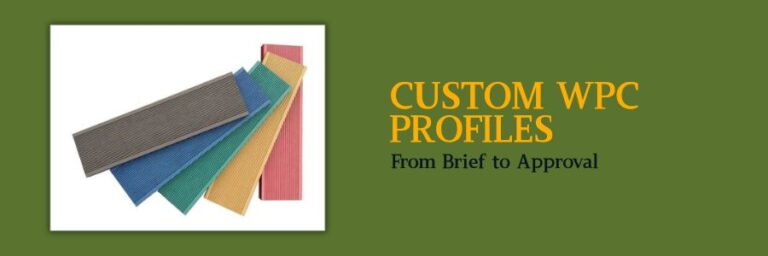
A colour change will simply be selecting a colour from a colour chart. A custom colour will involve matching trials, downtime for the supplier to change material and usually a minimum run quantity.
Any changes to the surface (wood grain emboss, brushing, matte finish, cap layer construction) can change the process completely. Co-extruded cap layers would mean another material flow going through the die.
To avoid arguments:
- Physical sample always wins over screens and printers. Even if you are using the same RAL, once you add in wood flour and UV package it can change.
- Agree on how you will accept the samples – colour band & light conditions (outside diffused light or inside LED) or use instrument readings if using a spectrophotometer.
- Ask for separate charges for matching trials, sample production and delivery.

1.2 Length Change / Cross Section Change
Length change can often be seen as an easy request. You may still be using your existing extrusion tool so it is simply a change in cutting and packing.
However, there is a limit to how long you can make the profiles. The longer the profile, the harder it will be to handle, with a risk of bowing and issues with packing. I have had fantastic profiles delivered looking like bananas because someone wanted a long length profile and they were packed incorrectly for ocean freight. This isn’t a material issue; it is a specification issue.
Any changes to width, thickness, voids, fixing pocket, locking mechanisms, clips or T&G will not be a simple adjustment. This will fall under feasibility, often involving tooling changes and calibration changes.
Ask for separate charges:
- Tooling (Die & Calibration)
- Trials
- Material changes (Weight per metre)
- Secondary operations (drilling, routing, punching, pre-grooving)
- Packaging (Stillage, separators, wrap, label)
1.3 New Profile / Material Changes
A new cross section, formulation and/or capped surface can all be seen as separate projects.
Break this down:
- Geometry – New Die / Calibrator / Cooling
- Material – Formulation or additive package changes to improve weathering, stiffness or processing window.
- Surface – Emboss, brushing, sanding, co-extruded cap layer & gloss.
In the field the silent killer is making small material changes which affect shrinkage, colour or texture. Everyone will blame it on tooling. Co-extrusion can improve surface durability and hide the filled core but it introduces another set of variables to control.
A practical tip:
- If the volume is low, try to use an existing profile unless it is a true bespoke geometry.
- If the application is very tight (close-fitting clips, exposed edges, high-demand architect) then bespoke tooling may be justified but you need to budget for evidence and changes.
2. Agree Brief & Responsibilities
2.1 Understand What Is Required For Outdoor Use
“Outdoor cladding” is not a requirement. Find out:
- Environmental exposure – Full sun, shaded facade, salt from the sea, freeze-thaw, heavy rain areas.
- Installation – Ventilated rainscreen, direct fixing battens, Vertical / Horizontal.
- Market & Code – Where they are being sold and installed. Different documentation will be required.
Create a measurable brief:
- Section drawing with named critical dimensions.
- Visible surface (what is considered a reject – dragging marks, weld lines, pitting, gloss variation, cap layer).
- Interfaces – Clip, Starter/End Trim, Corner, Drainage.
You won’t be setting universal values for all WPC. You will be defining what evidence is required for this application.
2.2 Buyer / Supplier / Testing Responsibilities
This will determine whether your project will be quick or endless sampling.
Buyer:
- Application & Installation Method
- Part information (Clips, Trims, Screws, Rail Parts) or who is responsible.
- Who is the approver.
Supplier:
- Evidence of manufacturability (What is risky and what is stable).
- Tolerances (Based on process).
- Checks (Dimensions, Straightness, Weight per metre, Visible Defect Criteria, Fit).
Testing:
- Lab selection (Or if in-house reports are acceptable).
- Specimen supply, Cost & Ownership.
- Outcome of failure.
If you don’t agree on this now, you will argue later when someone is trying to ship.
2.3 WPC Cladding Profile RFQ Example
KR WPC is an example of a WPC manufacturer supplying Composite Cladding. Using a proposed cladding profile, create an RFQ pack which includes:
- Section drawing (PDF & CAD if available), with revision code.
- Finish (Physical Sample or agreed reference board), with viewing rules.
- Fixing interface (Clip, Screw limits & Edge Engagement).
- Forecast (Expected Volume & Launch Date). Even a rough guide will help the supplier to understand if bespoke tooling is required.
- Packaging (Wrap, Label, Pallet height, Corner Protection, Mixed Lengths).
Be honest and ask for evidence:
- What bespoke changes can be done (Colour, Texture, Length & Cross Section).
- Is bespoke tooling required? What is included? What is the charge for changes?
- What validation can be provided (Sample stages, Dimensional recording & Any existing reports).
If the supplier lists bespoke options on their website, use this as a starting point for your questions.
3. Tooling, Trials & Change Costs
3.1 Tooling Quotes
Tooling is not a mould. For WPC profiles, this will typically include:
- Extrusion Die
- Calibration
- Cutting, Drilling, Routing, End Milling & Assembly Fixtures.
These are often forgotten by buyers:
- Ownership
- Exclusivity
- Storage, Maintenance & Repair
- Transfer, Waste & Buy-out if the relationship ends.
Agree on:
- Number of trials.
- Supplier deviation (Their problem). Or buyer-requested changes (Your problem).
- Change tracking & approval.
No evidence – No control.

3.2 WPC Profile Manufacturing Process
You don’t need to micromanage but it is good to know:
- Material preparation & feeding (Wood Plastic blends won’t play nicely with poor control).
- Mixing & Devolatilisation (Voiding & Surface defects don’t like trapped volatiles).
- Extrusion & Cooling (Thin walls will cool faster than thick sections).
Geometry, Cooling & Calibration work together. A change in any of these can cause changes to straightness, shrinkage & Surface finish consistency. This can cause a simple groove change to spiral into another tooling adjustment.
What is checked & when:
- Key dimensions & tolerances.
- Straightness.
- Weight per metre.
- Visible Defect Criteria.
- Accessory Fit (Clips/Trims).

3.3 Initial Samples
Initial samples can be very useful but are not evidence.
Use the correct samples for the right decisions:
- Drawings/Mock-ups/Prototypes – Geometry & Installation Concept. Useful for “Will it assemble?”
- Extrusion Trials – Process. Useful for “Can it be manufactured consistently?”
- Pilot Run – Production intent. Useful for “Will it run to spec?”
Track changes like your life depends on it. Every sample must be linked to a drawing revision & Material/Surface definition.
4. Approval Of Pilot Run
4.1 Define Pilot Run & Sampling
Pilot means it will be produced like production.
Agree on:
- Quantity & What it represents (1 Shift, Batch, Line Setup).
- Equipment & Process.
- Material Reference (Formulation/Cap Layer) & Tooling ID.
- Sampling – Sample throughout (Start, Mid & End) or multiple packs.
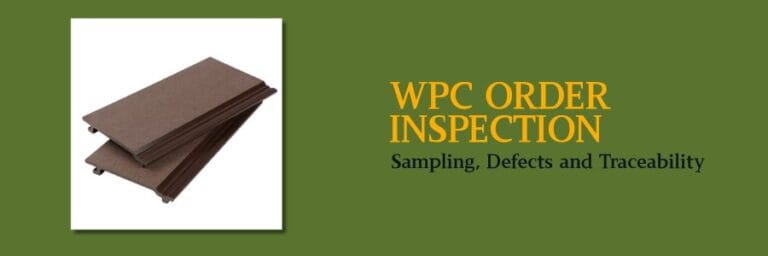
Ensure you have a reference (Drawing Revision, Tooling ID & Pilot Lot Number). If you cannot trace it, you cannot approve it.
4.2 Visual, Fit & Relevant Performance
Have rules in place for visual checks.
Measure dimensions, straightness & surface finish.
- Colour Variation – Under agreed lighting & viewing conditions, using agreed reference boards.
- Fit – Assemble boards with intended clips, trims & corners.
- Performance – This should be specific to your application. Often cladding will be outside, so UV packages & Stabilisers will be mentioned. Ensure your report matches your construction.
Remember, samples can be affected by how they are stored & exposed prior to installation.
4.3 Approval Of Production
Approval can be:
- Approved
- Conditional Approval (With actions & Deadline).
- Rejected (With reasons documented).
If you approve, ensure you have:
- Golden samples.
- Final Drawings, Inspection Criteria, Packaging & Supporting Reports.
- Change Control – What changes need to be notified, validated or fully approved (Material, Pigment, Cap Layer, Tooling Repair & Process).
Only ship volume production if your evidence pack is complete. Otherwise, you will be paying for arguments.
Conclusion
A bespoke WPC exterior wall cladding profile doesn’t go wrong because it is a mystery material. It goes wrong due to poor requests.
Categorise the changes, agree the brief, agree tooling & changes. Then approve your pilot run based on a documented plan with traceable samples.
This will prevent you from paying for repeated sampling, unexpected damage in transit and phone calls about “It isn’t the colour I saw on my screen”.
FAQs
- What information should Buyers provide for a bespoke WPC profile?
Section drawing (With revision), Finish reference, Application & Installation, Part interfaces, Forecast volume range, Packaging Rules & Final Approval Authority. - Will I need a new mould for a colour change?
No, unless it is a bespoke colour change. Usually a colour change won’t require new tooling but can require matching trials & controlled acceptance. Surface changes can be different. - Who owns the tooling? Can other Buyers use it?
As per contract. Ownership, exclusivity & use are all negotiable. Ensure this is agreed in writing. - How long does it take to develop a bespoke WPC profile?
It depends on what changes are required: whether it is a colour match, cross section or material change. Tooling lead times, trials & approval speed will determine this. Don’t go for vague answers. - What should Buyers check before approving Volume Production?
Traceability (Drawing, Material & Tooling ID), Consistency of samples from pilot run, Visual under agreed conditions, Fit with real accessories & Any performance evidence required matches the exact construction.