
Introduction
Most siding decisions start with a color chart and end with regret. Not because people pick “the wrong beige,” but because siding isn’t décor—it’s the part of your house that stands outside getting cooked by UV, blasted by wind, soaked by rain, and splattered with whatever your lawn mower launches at 6,000 RPM.
Yes, material cost matters. But it’s not the only number that will haunt you. Climate performance, maintenance, install details, and what the place will look like after five ugly winters matter more.
If you want a wood-ish exterior without signing up for a lifetime of scraping and repainting, WPC composite cladding is worth a serious look.
Start With the Needs of Your Home
Evaluate the Exterior Environment
Sunlight and temperature changes: Walk around your house like you’re scouting a crime scene. Which walls get hammered by sun all afternoon? Dark colors can look sharp, but they can also show fading faster and run hotter, which means more movement in the boards. Plan joints and fastening so seasonal expansion and contraction doesn’t turn your siding into a wavy mess.
Rain, snow, and moisture: Pay attention to the usual trouble spots—roof edges, windows, doors, corners, and anything close to grade. If water gets behind siding and has nowhere to go, it doesn’t politely evaporate; it sits there and causes problems. For Canadian homes especially, freeze-thaw cycles and long damp seasons reward wall systems that include drainage and ventilation behind the boards.
Wind and physical exposure: Wind-facing walls and tall elevations need fastening that’s chosen for reality, not optimism. Also: your siding will get hit. Tree branches. Patio chairs. Hockey nets. Choose board profile and a support system that matches how the exterior actually gets used.
Define Your Maintenance Expectations
Routine maintenance: Be honest. Are you really going to repaint, stain, or seal on a schedule? Are you willing to inspect for rot, cracks, insects, loose pieces, and surface damage? Some materials ask for attention like a needy houseplant. Others just want a wash now and then.
Long-term appearance: Some siding weathers evenly. Some doesn’t. Think about how scratches show, how repairs work, and whether “real wood look” is worth real-wood chores.
Match the Siding to the Home’s Architectural Style
Traditional homes: Horizontal boards, warmer tones, and visible grain usually play well with older designs. WPC can pair nicely with brick, stone, and light trim without trying too hard.
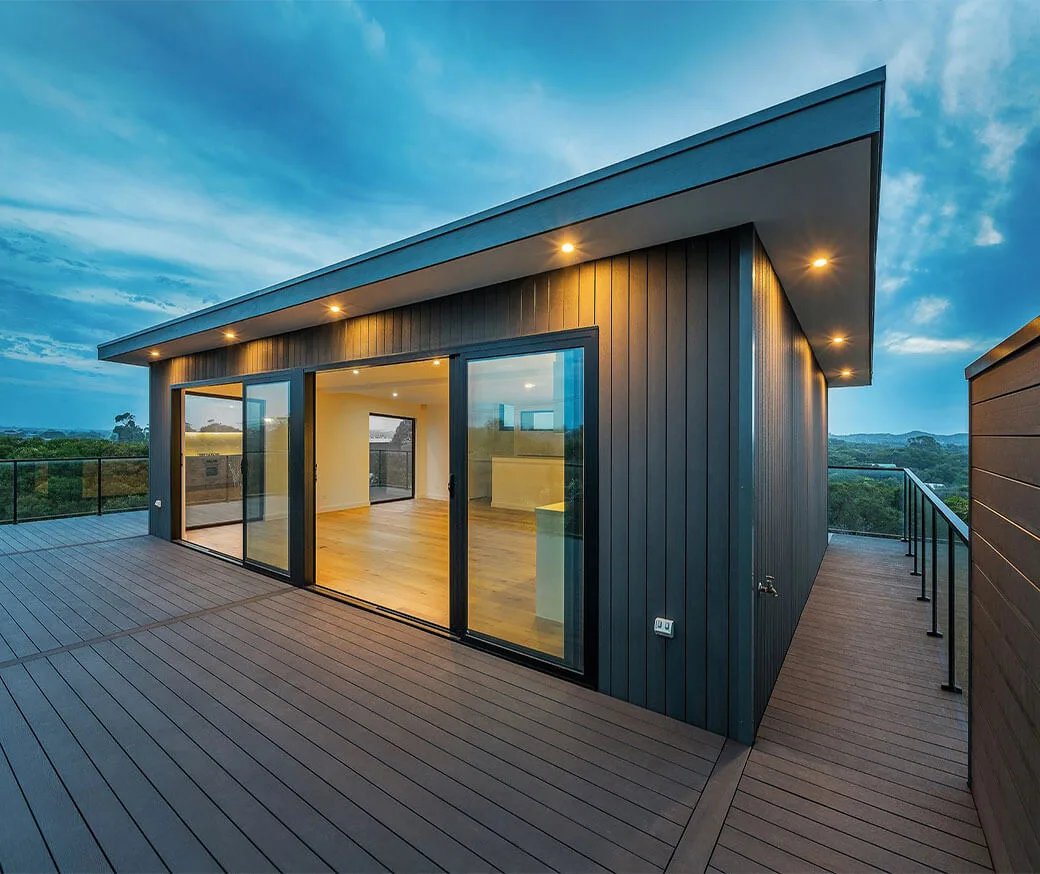
Modern homes: Vertical boards, tighter joints, and darker finishes can look clean and intentional. Mixing directions—horizontal on one volume, vertical on another—can break up a big boxy facade.
Partial exterior renovations: You don’t have to side the entire house to get a payoff. Using WPC around an entry, garage, gable, patio wall, or backyard elevation can modernize things while keeping the budget from sprinting off a cliff.
Compare House Siding Options by Everyday Performance
Natural Wood Siding
Main advantages: Real grain. Real texture. Real charm—especially on cottages, lakeside places, rustic builds, and traditional homes. Paint or stain options are wide open.
Points to consider: Wood is work. Moisture plus time can mean rot, cracking, and insect damage. The long-term bill often shows up in weekend labor (or contractor invoices), not the receipt from the lumberyard.
Vinyl Siding
Main advantages: Usually easier on the wallet up front. Light panels can make installs quicker. Lots of standard colors.
Points to consider: It can look flat up close, especially next to real trim and masonry. One cracked section can force you to remove nearby panels to get the replacement in. And performance under deep cold, high wind, and hard sun deserves a closer look than the brochure gives you.
Fiber Cement Siding
Main advantages: Can mimic wood boards or clean modern panels. Looks “solid” on both classic and contemporary houses. Plenty of profiles.
Points to consider: It’s heavy. Cutting and fastening require care, and edges and joints need proper treatment. You may still repaint or do local repairs over time, especially if the finish gets abused.
Metal Siding
Main advantages: Great for modern, industrial, and minimalist designs—clean lines, big continuous surfaces. Also pairs well with wood-look sections for contrast.
Points to consider: Dents and scratches happen. Heat transfer and rain noise are real things, and the wall assembly behind it has to be thought through. Corners and trim can get expensive fast because “simple” metal details rarely stay simple.
WPC Composite House Siding
Main advantages: Wood-like appearance without the same routine painting or staining schedule. Works on exterior walls, patios, garages, garden structures—basically anywhere you’d want a warm look outdoors. Can go horizontal, vertical, or mixed.
Points to consider: Not all WPC is built the same. Construction, surface finish, and fastening systems vary a lot. Ventilation, drainage, expansion gaps, and support spacing matter. And the real project cost includes battens, fasteners, trim, accessories, shipping, and labor—so price it like a system, not like a single board.
Why WPC Is a Practical House Siding Option
Suitable for Outdoor Living Areas
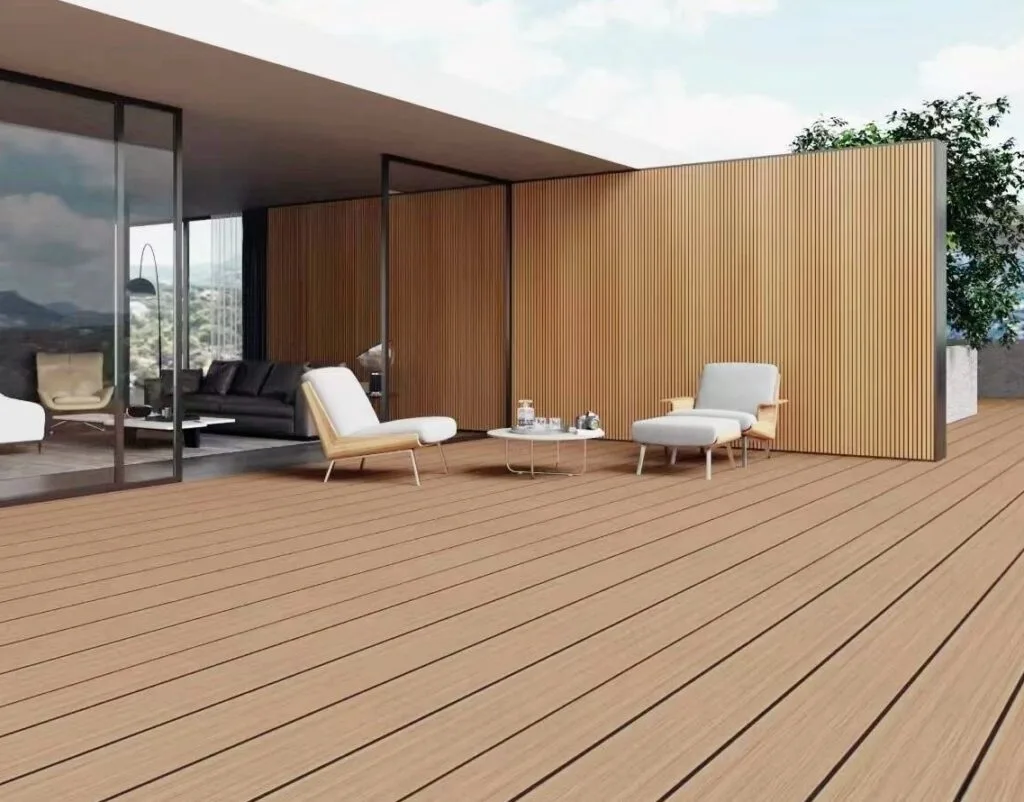
Exterior walls: WPC cladding can cover front elevations, side walls, and backyard-facing walls without looking like you wrapped the house in plastic. Wood-grain finishes can calm down big blank surfaces, and it pairs well with glass, brick, stone, metal, and concrete.
Patios and covered spaces: Installing WPC behind patios, seating zones, or outdoor kitchens can make the area feel “built,” not temporary. If you already have wood plastic composite decking, matching (or intentionally contrasting) wall cladding can tie the whole space together.
Entrances and architectural features: A vertical run near the entry can make a section feel taller. A color shift can mark the front door as the focal point without screaming for attention.
Lower-Maintenance Exterior Design
Easier routine cleaning: Dirt happens. Mud splashes. Pollen coats everything. With many WPC systems, you can usually clean common grime without repainting boards afterward. That said: “lower maintenance” doesn’t mean “ignore it forever.” You still inspect joints, fasteners, drainage paths, and any damaged sections.
Reduced need for painting: Wood often demands repeating cycles of stain, paint, and sealing. WPC generally skips that calendar of chores. But if the install is sloppy—no room for movement, poor ventilation, bad trim details—any siding material can become a problem that needs fixing fast.
Flexible Design Options
Wood-look finishes: If you like the idea of timber but not the upkeep, WPC finishes in browns, grays, charcoals, and modern neutrals can get you close. View physical samples outdoors. Indoor lighting lies.
Horizontal and vertical installation: Horizontal reads familiar and residential. Vertical reads modern and intentional. Mixing directions can separate garages from living volumes, highlight an entry, or visually “stack” upper floors.
KR WPC Composite Exterior Wall Cladding
Product application: KR WPC positions its composite exterior cladding for facades, patio walls, entry features, garden structures, and other exterior wall use. If you’re shopping this category, that’s the product line you’d be looking at from them: wood-look, outdoor-ready, used on residential and commercial exteriors.
Company and manufacturing information: KR New Materials Co., LTD (KR WPC) is a China-based manufacturer that also makes composite decking and composite fencing panels. The company describes its WPC as a mix of wood powder, high-density HDPE plastic, and additives, with quality-control checks during production. KR WPC also states its products have CE and FCS certifications and have passed testing related to fire and heat resistance, and that it supplies international markets.
Plan the WPC Siding Project Before Installation

Choose Between Full Cladding and Accent Cladding
Full-house cladding: Best for new builds or full exterior renovations. Plan windows, doors, roof edges, corners, and foundation transitions before a single board goes up. Estimate materials by the full wall system, not just the pretty visible area.
Accent cladding: Smart when budgets are tight or the house already has brick, stone, or stucco you want to keep. Put WPC where it counts—entry, garage face, gables, patio wall, backyard elevation—and stop before scope creep eats your savings.
Review the Supporting Wall System
Subframe and ventilation: The wall behind the cladding needs to be flat, stable, and ready. Leave space for airflow and drainage behind boards. Batten spacing isn’t a “feel it out” situation—follow the manufacturer’s requirements.
Expansion and fastening: Leave gaps at board ends, joints, corners, and fixed objects. Use outdoor-rated fasteners. Don’t clamp boards down so tight they can’t move; that’s how you get buckling and weird noises later.
Corners and openings: Decide how you’ll handle inside/outside corners, windows, doors, and roof connections early. Water shouldn’t be able to sneak into the assembly through lazy trim work. Choose corner and edge pieces that match the cladding color so it looks planned, not patched.
Compare the Complete Project Cost
Material costs: Boards, real coverage, battens, clips, screws, corner trim, edge trim, shipping, waste, and a few spare boards for future repairs.
Installation costs: Tear-off, wall prep, extra detail work around openings, and access equipment for upper levels.
Long-term ownership costs: Cleaning and inspections, repairs if something gets hit, and how painful it is to swap one damaged board without dismantling half a wall.
Request Samples Before Making the Final Decision
Check colors outdoors: Look at samples in sun, shade, and cloudy light. Compare against roof color, window frames, doors, brick, and trim.
Review texture and board size: Check grain and surface up close, then step back to street view. Make sure board width and joint spacing fit the scale of the house—tiny boards on a big facade can look busy, and wide boards can look clunky if the details aren’t right.
Conclusion
Picking siding isn’t a paint-chip hobby. It’s a performance decision that affects maintenance, weather protection, and what your home looks like after years of sun and storms.
Wood, vinyl, fiber cement, and metal all have their place. If you want wood-like style, flexible layouts, and fewer routine chores, WPC composite siding deserves a spot on your shortlist.
Get samples, price the full wall system, and confirm the install details—ventilation, drainage, expansion space, fastening, and trim—before you commit.
FAQ
How does WPC siding compare with natural wood siding?
Wood wins on authenticity, no contest. WPC usually wins on routine upkeep—less repainting or sealing. The trade is that WPC depends heavily on correct gaps, ventilation, and fastening, while wood depends on regular surface care.
Is composite siding better than vinyl siding?
“Better” depends on what annoys you. Vinyl is often cheaper and light to install, but it can look flatter and repairs can be fiddly. WPC can look more wood-like, but you have to respect expansion and the full wall assembly.
How much maintenance does WPC house siding require?
Not zero. Expect periodic washing, plus inspections of joints, fasteners, and drainage paths—especially after storms or freeze-thaw seasons. If something cracks or a corner detail opens up, fix it quickly so water doesn’t get invited inside.
Can WPC cladding be installed over existing house siding?
Sometimes, but it’s not a blanket “yes.” The wall needs to be flat, stable, and set up for a subframe with airflow and drainage. If the existing siding is warped or hiding moisture problems, covering it just hides the mess.
Does composite house siding fade in direct sunlight?
Some fading is common with most exterior materials over time, especially on the sunniest elevations. Lighter colors tend to hide change better than deep dark tones. The practical move: view samples outdoors and ask about expected color change, not perfection.