
When you start searching for the best WPC fencing price in Philippines, you might see numbers. Figures that look a bit high compared to ordinary wood. You can easily grab the cheapest quote you find on Facebook Marketplace. But buying a fence is not like buying groceries.
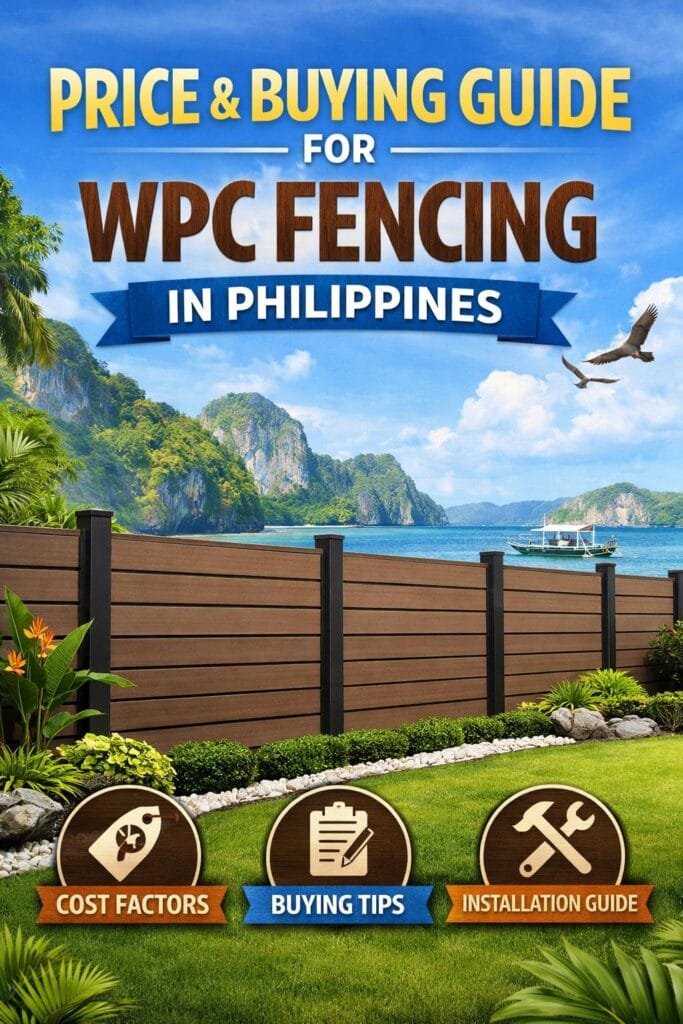
Before you look at the price and decide to buy, you need to understand the cost logic. Let us have a look in what really makes up WPC fencing costs in Philippines and how you can get the best value for your hard-earned pesos.
Popularity Surge of WPC Fencing in Philippines
Every homeowner in the Philippines is talking about the famous WPC fencing. Why? Because it separates them off from the great fence struggle. Ofcourse, we all love the look of a classic wooden gate or a neat white garden fence.
However, our weather is basically a professional bully. Between the scorching summer sun that makes wood crack and the endless rainy season that turns everything into a feast for termites, keeping a traditional fence looking good is like a second full-time job.
So, can you spend your precious weekends sanding, painting, and praying that the moisture does not rot the posts by next year? NO, you do not!
This is exactly why WPC composite (Wood-Plastic Composite) is becoming the best fence in Philippines. It gives you the look of real wood but has the superpowers of plastic. It does not rust like iron. It does not rot like timber. And most importantly, the termites hate it.
Factors that Influence WPC Fence Prices in the Philippines
When you start shopping for a fence in the Philippines, you quickly realize that not all plastic wood is created equal. One supplier might quote you ₱1,500 while another says ₱3,000 for what looks like the same thing.
There are technical reasons for these price gaps. In 2026, the cost of WPC composite fencing boards is driven by what is inside the board and how it got to your doorstep.
1. Material Composition
WPC is a mix of wood fibers, plastic (usually HDPE), and chemical additives.
● The Wood-to-Plastic Ratio:
High-quality boards usually have a 60/30/10 ratio (60% wood, 30% plastic, and 10% additives). If a board has too much wood, it will be cheaper but might soak up water and rot.
If it has too much cheap plastic, it looks fake and can warp in the Manila heat.
● Resin Grade:
Premium fences use virgin or new plastic. This is stronger and holds color better. Cheaper fences use recycled plastic from old bottles or bags. While this is eco-friendly, the lower-grade recycled plastic can become brittle under the Philippine sun.
2. Solid vs. Hollow Panels
This is the most obvious thing you will notice when you pick up a WPC board for fencing.
● Hollow Panels:
These have tunnels or honeycombs running through the middle. They use less material. Hence, they are usually 20-30% cheaper and easier for a DIY install.
● Solid Panels:
These are one solid piece of material. They feel like heavy timber. They are much stronger against impacts (like a basketball hitting the fence or high typhoon winds).
3. Design and Structure
Complexity costs money. A simple wall is often cheaper than a fancy design.
● Slatted Fences:
These use horizontal or vertical slats with gaps. They use less WPC material. Therefore they can be more affordable. The labor on this might be higher. This is because each slat needs to be aligned perfectly.
● Privacy Panels:
These are interlocking boards. They have leave zero gaps. They are the gold standard for security and privacy. However, they require more boards per meter.
● Thickness Matters:
A 20mm panel is standard. But if you go for a heavy duty options, the 30mm panel provides extra security. The price will jump accordingly.

4. Local Market Conditions
Philippines is an island nation. Hence where the WPC fence comes from matters a lot for your final bill.
● Import vs. Local:
Most high-end WPC in the Philippines is imported from China or South Korea. This means you are paying for international shipping and import duties. Locally distributed brands might have more stable prices because they keep large stocks in local warehouses.
● The Logistics Factor:
If you live in Metro Manila, delivery is cheap. But if you are building a villa in Siargao or Palawan, the cost to ship those heavy WPC boards across the sea can add 15-20% to your total project cost.
● Currency Fluctuations:
Since many materials are imported, a weak Peso can suddenly make WPC fencing costs go up overnight.
Typical WPC Fence Cost Structure (Per Linear Meter)
When you buy a WPC composite fence, you are paying for three main things. The boards, the posts and clips, and the labor.
Here is a breakdown of what your typical WPC fencing pricing will contain.
1. The Boards
This is the part that everyone sees. The price changes depending on how thick or fancy the boards are.
● Hollow Boards
Price: ₱1,200 to ₱1,500 for per meter.
These have holes inside like a whistle. They are lighter and the cheapest option. Expect to pay around .
● Solid Boards:
Price: ₱1,800 to ₱2,500 per meter.
These are heavy and strong. They like a real piece of wood. They use more material. Hence they cost more.
● Fancy Finishes:
Some boards have wood grain textures. You can feel these with your fingers. Moreover, some offer extra sun protection so the color does not fade. These features can add about ₱300 more to the price.
2. The Posts and Clips
The WPC fence boards cannot be stood up on their own. There is a need for parts that can hold them together.
● Aluminum Posts:
Price: ₱2,300 to ₱4,000
Most Pinoys choose aluminum posts. This is because they never rust. The price depends on how tall it is.
● The Clips and Screws:
There is also a need for little clips and screws. They snap the boards into place. A full set of these for one section of your fence usually costs around ₱1,000.
3. The Labor
Unless you are a DIY expert, you will require a professional to build it for you.
● Standard Labor:
Most workers charge between ₱500 and ₱1,000 per meter to put the fence up.
● The Advanced Fee:
If your ground is very rocky, or if they have to dig through old concrete and bushes, they might charge you a little extra (around ₱2,000 total) to prep the site.
● City vs. Province:
If you live in a big city like Manila or Cebu, the workers usually cost about 20% more than if you live in the province.
Quick WPC Fence Price in Philippines Guide for 2026
| WPC Boards | Estimated Price (PHP) | Source Link | What does this cover? |
| Budget Hollow Panels | ₱1,200 – ₱1,500 per meter | Hosung WPC PH | Lightweight boards with “holes” inside; best for simple garden borders. |
| Standard Solid Panels | ₱1,800 – ₱2,500 per meter | Const.ph | Heavy, solid boards that look and feel like real wood; very durable. |
| Premium Co-extrusion | ₱2,800 – ₱3,500 per meter | Hosung WPC Guide | Panels with an extra shield layer to prevent sun fading and stains. |
| Aluminum Post Kit | ₱2,390 – ₱4,000 each | CitiHardware | The metal frame that holds the fence; rust-proof and very strong. |
| Standard Installation | ₱500 – ₱1,200 per meter | Unifloor PH | Professional labor for setting posts and clicking the panels into place. |
| Hard Ground Labor | ₱2,000 – ₱5,000 total | Scribd PH Costing | Extra fee if workers have to dig through rocks or old concrete. |
Comparing WPC Fence with Other Fence Options in the Philippines
When you are deciding on a fence for your home in the Philippines, it usually comes down to three choices. There is Wood, Metal, or WPC.
While wood or iron might seem cheaper at first, the local weather in Philippines can be a real bug over time.
Here is a comparison between different materials.
WPC Fence vs. Traditional Wood Fencing
● The Maintenance Trap:
Real wood looks amazing. Though it is a lot of work. In the Philippines, you have to sand, stain, and varnish wood every 12 to 18 months. This is necessary to keep it from rotting.
It is recurring cost of around ₱3,000 – ₱5,000 for materials and labor every time you do it.
● Termite (Anay) Buffet:
If you live in a grassy area, the termites are your biggest enemy. They can eat through a soft-wood fence in just a few seasons. Since WPC is a mix of plastic and wood dust, termites won’t touch it.
It stays standing while wood fences eventually crumble.
● Wet Season Performance:
During the rainy season, wood soaks up water and expands (mag-umbok), then cracks when the hot sun hits it. WPC is waterproof, so it doesn’t grow or shrink when the weather changes.
WPC Fence vs. Metal or Wire Fencing
● The Rust Problem:
If you live near the ocean (like in Cavite, Cebu, or Batangas), the salt in the air makes iron fences rust very fast. You will see ugly orange streaks on your white concrete walls within a year.
WPC is corrosion-proof. It has no impact with salt or rain.
● Privacy and Safety:
Wire fences or iron grills let everyone see inside your yard. WPC panels can be built as a solid wall. This gives 100% privacy. You can enjoy your morning coffee in your pyjamas without the neighbors watching. Additionally, WPC does not have sharp edges that can scratch kids or pets.
Value Over Time:
It’s easy to look at the store price and think WPC is too expensive. However, you have to look at the bigger picture.
| Expense Type | Traditional Wood/Iron | WPC Composite Fence |
| Initial Buy | ₱ (Cheaper) | ₱₱ (More Expensive) |
| Yearly Painting | Yes (₱3,000+) | No (₱0) |
| Termite Spray | Yes (₱2,000+) | No (₱0) |
| Replacement | After 5-7 Years | After 20+ Years |
The Bottom Line:
By the time you reach year 4 or 5, the money you saved on paint, varnish, and repairs usually pays for the extra cost of the WPC. It is a one-time big-time investment. It keeps your house looking fancy and modern without the weekend chores.
How to Choose the Right WPC Fence for Your Budget
Matching Fence Type to Application
Not all parts of a property require most expensive or heavy-duty board. You can save money by choosing based on the requirement:
- Residential Gardens: Sometimes you just need to define a flower bed or a low boundary for your front yard. Then choose the 15mm–20mm hollow panels. They are lightweight, easy to install yourself, and the most budget-friendly.
- Boundary Fencing: For the main walls around your house privacy and security are important. You should use 20mm–30mm solid panels. They are strong enough to withstand kids playing, dogs jumping, and high winds during the rainy season.
- Commercial Spaces: For offices or resorts, you should look for Premium Co-extruded WPC. These have an extra shield layer. It can resist heavy wear, stains, and the harsh salt air if the property is near the beach.
Balancing Upfront Cost and Durability
- The Typhoon Factor: Spending a little more on Aluminum Posts instead of wood or thin steel will save you thousands in the long run. Aluminum would not snap or rust. This means you will not have to rebuild the whole fence after a big storm.
- Sun Protection: If your fence will be in direct afternoon sun, you should invest in UV-stabilized boards. Cheaper and non-stabilized WPC might save you 15% today. However, it can become brittle and chalky after just 3 years of Philippine heat.
Selecting a Reliable Supplier
There is a market full of online sellers and WPC fencing suppliers. You must look for these three things before you send your deposit:
- Product Consistency: You should ask for a sample pack. A good supplier like KR WPC should be able to show you that their boards are consistent in color and thickness.
- Technical Support: You should see if the supplier provide a detailed installation guide. Reliable companies will help you. They understand exactly how much spacing to leave between boards for expansion.
- Warranty Clarity: You should always ask for a written warranty. Most reputable WPC brands like KR Composites now offer 10 to 25-year warranties against termites and rotting.
Conclusion
A WPC fence is a one time investment. There is no need for more painting, no termite and no more rust. At KR WPC, we specialize in making these durable solutions easy to understand and even easier to own. You are buying a fence that actually lasts.
FAQs
Is WPC fence more expensive than wood fencing in the Philippines?
Yes, if you only look at the first day. A WPC fence usually costs about 15% to 40% more to buy and install than a basic wood fence. But a wood fence needs high maintenance to stop it from rotting. In the Philippines, those materials and labor cost you around 3,000 to 5,000 pesos every time. Since WPC needs zero paint. It actually becomes the cheaper choice after about 4 or 5 years.
What affects WPC fence prices the most?
The biggest things that move the needle are the board thickness and the internal design.
Are WPC fence panels suitable for coastal areas in the Philippines?
They are suitable. They are the best choice. If you live near the sea (like in Batangas, Cebu, or Cavite), the salt in the air eats metal and rots wood very fast. WPC is corrosion-proof and doesn’t care about salt spray.
Is WPC fencing a low-maintenance option for tropical climates?
Absolutely. It handles the weather without warping or cracking. A simple wash with a garden hose and mild soap a few times a year is all it takes to keep it looking like it was installed yesterday.
How long does a WPC fence typically last?
A good quality WPC fence in the Philippines can easily last 20 to 30 years. Some high-end brands can even go up to 50 years if you take care of them.