Have you ever stepped onto your deck on a scorching summer afternoon and yelped? I am sure it feels like walking on hot coals! Hot decking is uncomfortable and it can limit how you enjoy your outdoor space. This is especially applicable for those who like to walk barefoot, host kids play dates or entertain guests often.
Luckily, modern WPC composite decking has made this problem trivial. This material can handle heat better than traditional wood. However, it is important to know that not all composite decking is has the same endurance for heat. Some boards absorb and retain more heat than others. In this guide we will tell you which composite decking stays the coolest, what affects deck heat and practical ways to keep your outdoor areas comfortable.
Why Some Composite Decking Gets Hotter Than Others
How Sunlight Affects Deck Temperature
The answer to why some decks get hotter than others comes down to how materials absorb and release heat. When sunlight shines on a deck, the surface absorbs solar energy. It then converts it into heat. Some materials absorb more of that energy. They may hold onto it longer. On the contrary, others reflect more sunlight and cool down faster.
Factors like color, material composition and surface finish all influence how hot a deck becomes.
Climate also plays a role. Decks in areas with intense UV rays or high temperatures naturally get hotter. Even orientation matters. Decks that face south in the northern hemisphere tend to heat up more in the afternoon sun.
Factors That Influence Composite Decking Heat Retention
How hot the composite decking gets depends on a few key factors:
- Decking Color
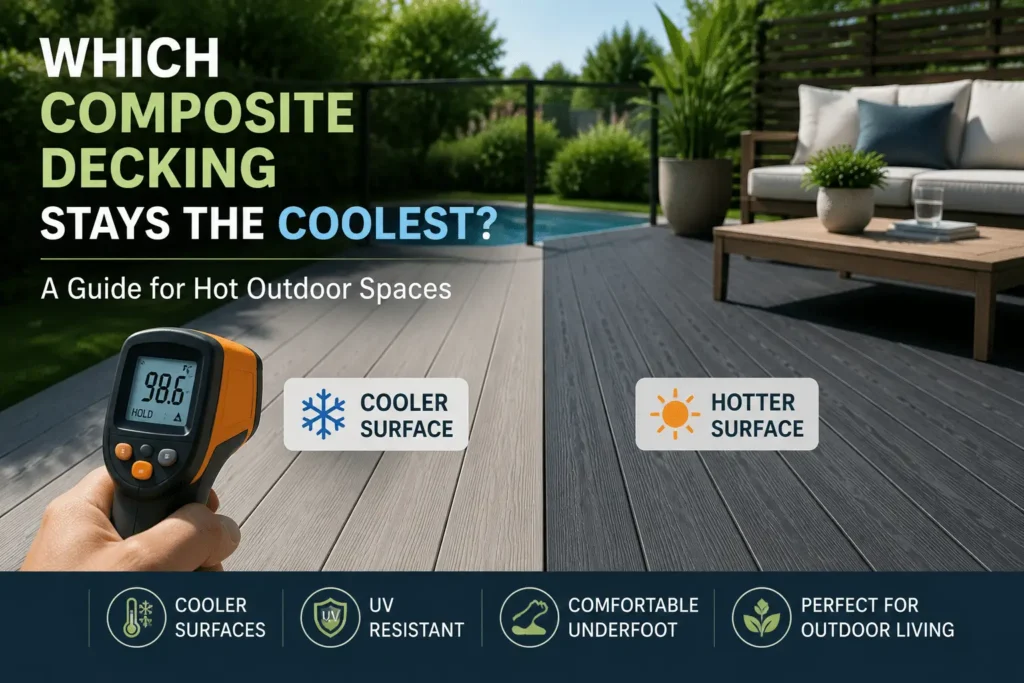
All decking materials absorb sunlight. However, not the same way. It is like wearing a black shirt versus a white shirt in the sun. The darker color will trap more heat. The same principle applies to outdoor decking. Darker boards get hotter. Lighter boards stay cooler.
Lighter colors like beige, sand, gray and light brown reflect sunlight. Hence, they stay cooler. Darker shades that include deep browns or blacks absorb more heat. Therefore they become hot.
- Surface Density and Material Composition
Another factor that affects heat absorption on decks is material composition. Composite decking is made from a mix of wood fibers and HDPE plastic. Heat retention is impacted by how much wood vs. plastic is used. Boards with higher plastic content and lower density usually absorb less heat.
- Capped vs. Uncapped Composite Decking
Capped boards have a protective outer layer on them. This helps reduce surface heat and improves UV resistance. Uncapped boards may absorb more heat. They fade faster over time. Hence the capped decking is a better choice for hot climates.
Comparing WPC Decking to Traditional Wood
Wooden decks can get hot in direct sunlight. Hardwood decks often get hotter underfoot. They can even splinter over time. Composite boards are smoother. This reduces the risk of splinters. WPC decks generally stay cooler as well because of being heat resistance.
Plus, composite decking also requires less maintenance overtime. You do not need to sand, stain or replace boards very frequently. This is a big relief during the long and hot summers.
Choosing the Coolest Composite Decking for Outdoor Spaces
- Pick the Right Deck Color
Color makes a huge difference in choosing the coolest composite decking for your outdoor spaces. As mentioned above as well, lighter shades like gray, sand, beige and light brown reflect sunlight away. Hence, if you select these colors the surface remains cooler. Colors like dark brown, black or deep red can absorb more heat. Therefore, they become uncomfortably hot.
- Surface Technology of the Board
The new version of the WPC composite decking has a capped surface. They are built this way to reduce heat absorption and improve UV resistance. Some boards even have textured finishes or grooves. This helps to increase airflow and reduce hot spots underfoot.
- Installation Choice of the Deck
How your deck is installed can also impact its heat absorption capability. Proper ventilation under the deck allows air to circulate. This enables dissipation of heat. You can add shade providing structures like pergolas, awnings or trees placed strategically. This will also reduce surface temperatures significantly.
How to Keep Composite Decking Cooler in Direct Sunlight
Even the best WPC composite decking can get warm under the summer sun. However, there are several ways you can decrease this surface heat and make your deck more comfortable.
Smart Outdoor Design Strategies
- Partial Shade Planning
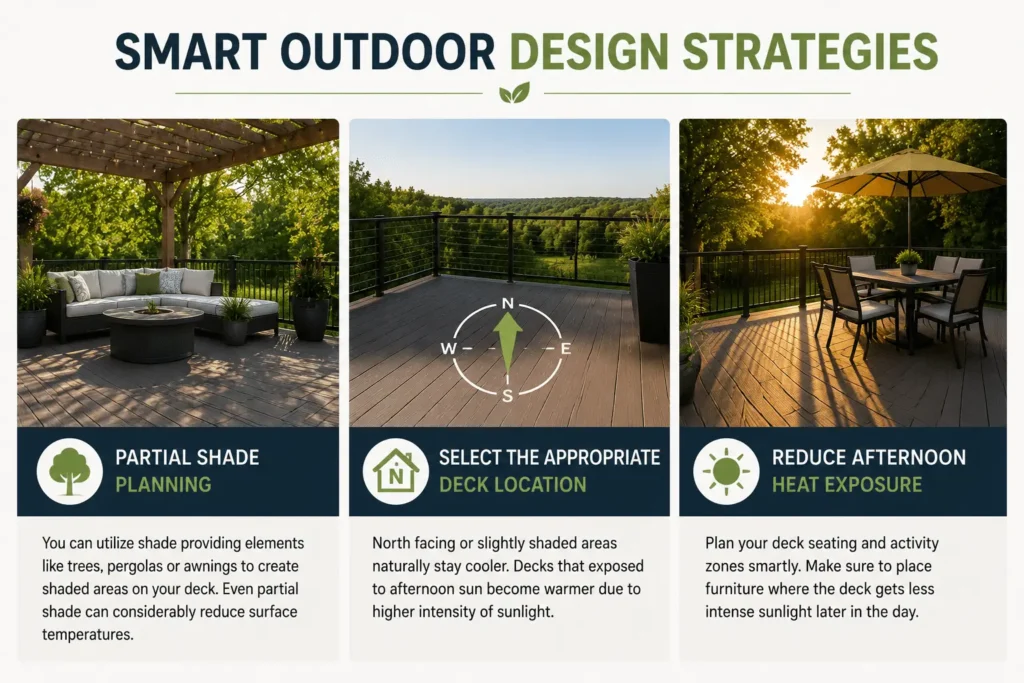
You can utilize shade providing elements like trees, pergolas or awnings to create shaded areas on your deck. Even partial shade can considerably reduce surface temperatures.
- Select the Appropriate Deck Location
North facing or slightly shaded areas naturally stay cooler. Decks that exposed to afternoon sun become warmer due to higher intensity of sunlight.
- Reduce Afternoon Heat Exposure
Plan your deck seating and activity zones smartly. Make sure to place furniture where the deck gets less intense sunlight later in the day.
Cleaning and Maintenance Tips
- Remove Dirt and Debris
Some things like leaves, dirt and grime can trap heat. These can make the deck feel hotter than it is. Regular cleaning helps the surface stay cooler. You should keep the boards clean. This will prevent debris buildup that can increase heat retention.
- Avoid Heat-Trapping Outdoor Rugs
Thick mats and outdoor rugs can hold heat longer. So, you should choose breathable materials for such placements. They enable airflow.
- Select Breathable Outdoor Accessories
Make sure to select your outdoor accessories wisely. This includes furniture, cushions and covers. Use the ones that let air circulate through them. This will help reduce heat buildup on your deck.
Water and Cooling Solutions
- Misting Systems and Poolside Placement
Light misting or positioning the deck near water features can lower surface temperatures quickly.
- Installation of Cooling Equipment
Appliances like fans, sprinklers or cooling mats can provide relief during extremely hot days.
- Surface Cooling Methods
You can sprinkle water over the deck to keep it cool.
Try to combine shading, airflow and water-based cooling for the most comfortable deck experience.
Choosing High-Quality WPC Decking for Hot Climates
If you live in an area that gets plenty of sunshine the you must select and buy the right composite decking for the coolest temperatures. A good purchase can make a noticeable difference in both comfort and long term performance of the outdoor deck.
Not all decking boards are built the same. Hence, it is important to pay attention to a few key features.
Features to Look for in Cool Composite Decking
- UV Resistance and Color Stability
Good quality composite decking that stays cool is made to resist UV damage. It prevents excessive heat buildup, fading and discoloration due to usage over time.
- Light Color Boards
WPC Composite decking in shades like gray, sand, beige and light brown typically stays cooler than darker colors because it reflects more sunlight.
- Durable Outdoor Construction
Look for decking that can handle prolonged sun exposure, humidity, rain and temperature changes without warping, cracking or losing its outlook.
- Protective Surface Technology
Modern capped composite decking often includes a protective outer layer. This layer helps improve weather resistance. Additionally, it maintains a more comfortable surface temperature.
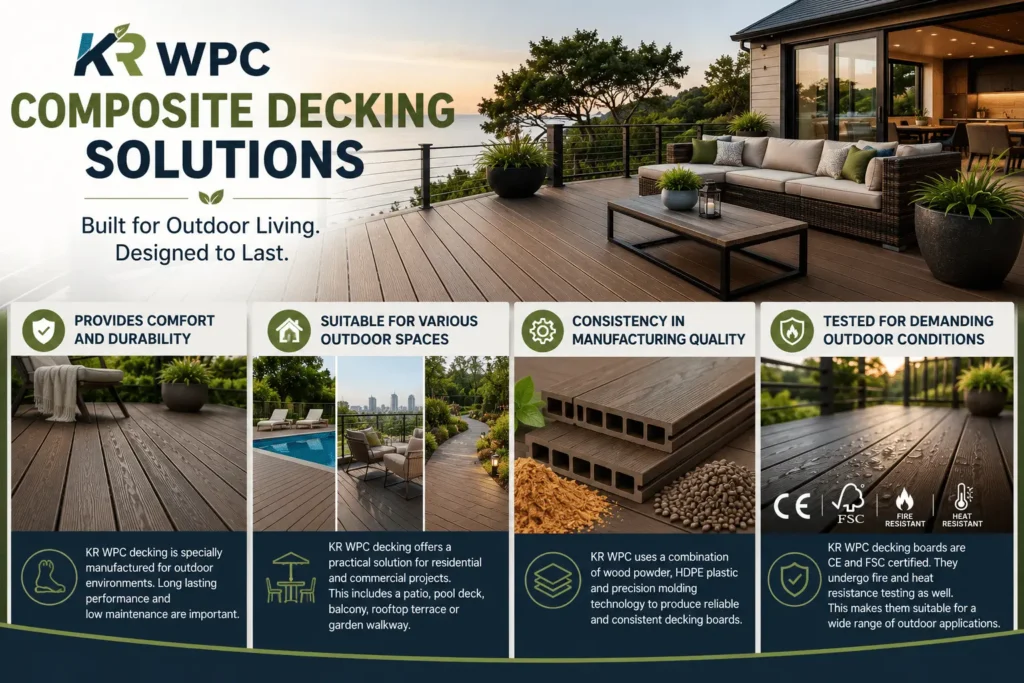
KR WPC Composite Decking Solutions
- Provides Comfort and Durability
KR WPC decking is specially manufactured for outdoor environments. Long lasting performance and low maintenance are important.
- Suitable for Various Outdoor Spaces
KR WPC decking offers a practical solution for residential and commercial projects. This includes a patio, pool deck, balcony, rooftop terrace or garden walkway.
- Consistency in Manufacturing Quality
KR WPC uses a combination of wood powder, HDPE plastic and precision molding technology to produce reliable and consistent decking boards.
- Tested for Demanding Outdoor Conditions
KR WPC decking boards are CE and FSC certified. They undergo fire and heat resistance testing as well. This makes them suitable for a wide range of outdoor applications.
Conclusion
Which composite decking stays the coolest? After all the above discussion, we can say that no decking material will ever stay completely cool under direct sunlight. However, there are ways to make outdoor spaces more comfortable. You should make the right choices and use the right equipment to decrease the temperatures.
Using lighter colors, capped surfaces, proper ventilation, shade structures and high-quality composite boards like KR WPC decking you can significantly reduce heat absorption.
Also you need to plan your deck design carefully. This should include selecting the right materials and maintaining it properly. Even in the hottest weather, you can create an outdoor area that is safer, cooler and more enjoyable for everyone, .
Frequently Asked Questions
Which composite decking stays the coolest in direct sunlight?
There is no composite WPC decking material that can stay completely cool. However, using light colored and capped WPC boards with textured finishes you can help reduce the amount of heat absorbed in hot outdoor environments.
Does dark composite decking get hotter than light-colored decking?
Yes. It does. Darker boards absorb more sunlight. This makes them hotter underfoot.
Is WPC decking cooler than traditional wood decking?
Generally, we can say yes. Composite boards are smoother. This reduces splinters and ensure heat resistant surfaces.
What is the coolest composite decking color for hot climates?
WPC composite deck boards that comes in shades like gray, sand, beige and light brown reflect more sunlight. They hence stay cooler.
How hot does composite decking get in summer?
The temperature of WPC decking boards may vary. It depends on material, color and sun exposure. The lighter capped boards usually stay several degrees cooler than dark boards and traditional hardwood.