Introduction
A fence install has exactly two modes: “clean, straight, satisfying” or “why is it leaning like it’s tired of life?” Most of the heartbreak comes down to posts—spacing, plumb, foundations, drainage. Not the panels. Not the brand. Posts.
WPC fencing has gotten popular because it dodges a lot of the usual outdoor material drama. Wood rots, cracks, splinters, needs babysitting. Metal gets its own set of problems (corrosion, dents, the whole “industrial prison yard” vibe if you pick the wrong style). WPC sits in the middle: it’s a composite—wood fiber/flour plus plastic and additives—so you get a wood-ish look with the weather tolerance of plastic.
If you’re shopping around, KR WPC’s main product hub for this category is here: . It’ll also give you a feel for panel styles, accessories, and the general “system” approach (posts, rails, caps, hardware).

Why WPC Fencing Is Becoming More Popular
Advantages of WPC Fence Materials
If you want the blunt version: WPC doesn’t behave like wet lumber. It’s built to deal with moisture and outdoor exposure without turning into a maintenance hobby. KR also positions its WPC fencing as weatherproof and low-maintenance (no painting or staining as part of basic upkeep).
And because it’s a composite material (wood + thermoplastic + additives), it generally avoids classic wood problems like splintering and many rot/insect issues that show up when wood stays damp. That core “wood flour + plastic” structure is basically what WPC is.
Modern Appearance for Outdoor Spaces
The looks matter. A fence is a giant visual object, so if it’s wavy, blotchy, or mismatched, you’ll notice it every time you take the trash out.
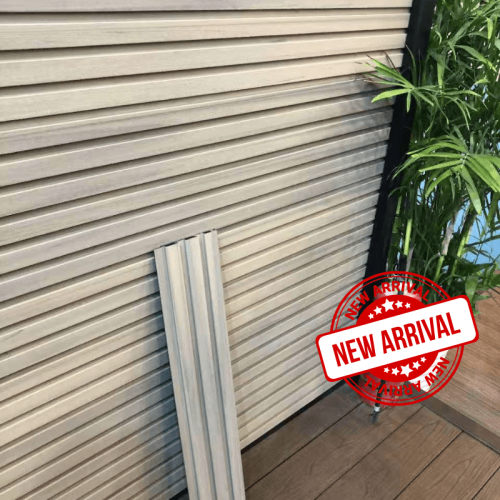
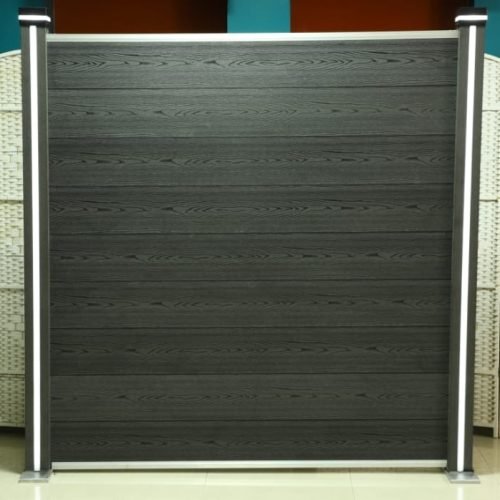
WPC systems tend to produce cleaner, more uniform lines because the panels are consistent (same profile, same finish, same dimensions), and the style options are pretty broad—slats, wood-grain, embossed textures, semi-privacy screens, decorative patterns, the whole menu. KR specifically lists multiple WPC fence panel types (slat, 2D wood grain, 3D embossed, grooved, deep wood grain, semi-privacy) and color options.
Want to coordinate your fence with the rest of the yard so it doesn’t look like you bought it during a panic? Color/finish planning is half the battle. KR’s site also leans heavily into customizable color/texture options across product lines.
Long-Term Cost Benefits
This is the part people mess up in their heads: they compare purchase price and ignore the “every spring you’ll be staining this thing again” tax.
WPC is usually about paying more upfront to pay less later—less repainting, less sealing, fewer repairs from warping and surface breakdown. KR frames WPC fencing as low maintenance (and in its broader product messaging, talks about long service life and warranties on WPC products).
If you’re doing a full outdoor refresh, it’s worth looking at matching materials across the space—fence + deck + cladding can look intentional instead of “yard thrift store.” KR’s other core categories live here: and .

Preparing for WPC Fence Installation
Planning the Fence Layout
Measure twice, dig once. (Yes, I know that line is on every toolbox in North America. It’s still true.)
Start with a clean layout:
- Measure the full run and break it into “panel-sized” bays.
- Mark corners and ends first, then infill post locations.
- Decide where gates go before you set posts—because moving a gate later is a special kind of misery.
KR commonly references standard fence panel sizing like 6 ft × 6 ft (183 × 183 cm) in its fencing product info, which is a useful mental default for planning bays and spacing.
Choosing the Right WPC Fence Panels
Pick panels based on what you’re trying to block:
- Privacy: tighter profiles, full-height boards, fewer gaps.
- Wind exposure: don’t pretend a solid privacy wall in a wind tunnel has no consequences—more wind load means your post and footing choices matter more.
- Style: slat panels read modern; embossed wood-grain reads more traditional.
KR’s fencing category lays out a bunch of styles (slat, 2D grain, 3D embossed, grooved, semi-privacy), so you can decide if you want “clean lines” or “wood-ish texture.”
Checking Ground Conditions
If your yard has soggy spots, clay, poor drainage, or freeze-thaw cycles, your fence doesn’t care about your optimism. It cares about foundations.
Do this before you dig:
- Check if the ground stays wet after rain.
- Identify low spots where water pools.
- Plan for concrete footings where stability demands it (especially corners, ends, gate posts, or windy areas).
KR’s own installation notes emphasize digging holes sized for stability and reinforcing posts with concrete for strength.
Reliable Product Manufacturing
Let’s talk about why “it’s a system” matters.
KR New Materials Co., LTD (KR WPC) positions itself as a manufacturer/supplier for WPC decking, composite exterior cladding, and composite fencing panels, with production built around wood powder/flour + high-density plastic (HDPE) + chemical additives. They describe a manufacturing approach using molds for specific profiles and quality control across the production process.
They also describe an extrusion-based process (mix raw materials + pigments, extrude through molds, cool/shape), which is exactly the kind of thing that translates into more consistent parts on install day—posts and channels that actually fit boards without you “convincing” them with a mallet.
Step-by-Step Guide to Installing a WPC Garden Fence
Installing Fence Posts
This is the job. Everything else is IKEA.
Core rules:
- Keep spacing consistent from the start.
- Check plumb from at least two sides.
- Treat corners and gate posts like they’re doing heavy lifting (because they are).
KR’s own how-to notes recommend digging holes sized larger than the post diameter for stability, using a depth around one-third (or more) of the fence height, and reinforcing posts by pouring concrete in the hole.
Practical tip: run a string line for the fence face. Then align posts to the line. Don’t “eyeball straight.” Eyeballs lie.
Installing the Bottom Support Structure
Most WPC fence systems use rails (often aluminum) and channels to keep panels aligned and stiff. KR lists accessories like top/bottom rails, aluminum rails, posts, caps, and related hardware as part of its fencing system.
What you’re aiming for:
- A solid bottom rail/support that doesn’t sit in permanent puddles.
- A little clearance so airflow can do its thing and moisture doesn’t get trapped against the board edges.
Not glamorous. Very effective.
Fitting WPC Fence Panels
This part is satisfying when posts are correct… and a circus when they aren’t.
Typical process in KR’s instructions: install the bottom cover/rail area, then place fence panels in sequence. And yes—WPC reacts to temperature changes. KR specifically recommends leaving about a 4 mm expansion gap between fence panel and post. Do it. Future-you will be less angry.
Keep checking alignment as you stack/insert panels. If you wait until the top to notice you’re drifting, you’ll be “adjusting” everything, which is code for “taking it apart again.”
Installing Top Rails and Finishing Components
Top rails, caps, cover profiles—this is where the fence stops looking like a construction project and starts looking like a finished boundary.
KR’s install notes call out covering the tops after inserting boards, which helps shield the system from water and improves durability. Post caps and finishing pieces aren’t optional decoration; they’re functional.
Bonus: KR even offers LED cap/strip kits for fencing in its accessory lineup, if you want the fence to pull night-duty.
Common Mistakes to Avoid During Installation
Incorrect Fence Post Spacing
If your post spacing is off, you’ll force panels, twist channels, or end up with odd gaps that scream “DIY weekend.”
KR’s fencing info references common fence sizes like 6 ft (1.83 m) spans and provides fence set sizing guidance—use the actual panel system dimensions to set your post bays, not vibes.
Ignoring Drainage and Ground Conditions
Water pooling around posts is a slow-motion failure. Poor drainage can undermine footings and shift posts out of plumb over time—especially with freeze-thaw.
KR’s own emphasis on concrete reinforcement and stable hole sizing is basically a quiet warning: foundations matter.
Overlooking Expansion and Contraction
WPC moves a bit with heat. If you trap it tight, it’ll push somewhere else. Usually in the form of pressure, bowing, squeaks, or weird fit issues.
Again: KR calls out a 4 mm expansion gap in its install guidance. That number is there for a reason.
Using Incompatible Hardware
Outdoor hardware that corrodes will stain, loosen, and make you hate your fence.
KR sells fencing as a full system—panels + posts (WPC or aluminum) + rails + caps + fasteners—because mixing random parts is how you end up drilling “custom” holes at 9 p.m.
Conclusion
Installing a WPC garden fence isn’t hard in a “needs three apprentices” way. It’s hard in a “you must respect the boring parts” way: layout, post foundations, straight lines, and leaving space for materials to move.
Do that, and you get the upside people buy WPC for in the first place: a clean-looking fence that doesn’t demand constant upkeep, with modern panel options and a system of parts that fit together without turning the install into improvisational carpentry. If you’re building with KR’s system, start at the category page so you’re picking panels and accessories that are meant to work together: .
FAQ
Is WPC fencing better than traditional wood fencing?
“Better” depends on what annoys you most.
If you like the look of wood but hate the upkeep, WPC is usually the calmer choice because it’s positioned as low-maintenance and weather resistant, built from a wood/plastic composite rather than pure timber.
How far apart should WPC fence posts be spaced?
Space posts to match the panel system you’re using.
KR commonly references fence sets around 6 ft (1.83 m) widths/heights, so post bays are typically planned around that panel width (accounting for the actual post/channel design). Don’t guess—measure the real panel + post channel dimension and set your layout off that.
Can WPC fencing withstand heavy rain and moisture?
WPC is designed for outdoor exposure, and KR markets its WPC fencing as weatherproof and even “100% waterproof” in its product messaging. Real-world performance still depends on install quality—especially drainage and keeping post bases stable.
How long does a WPC fence last outdoors?
It varies by product type, climate, and install quality, but KR explicitly talks about long service life (often “20 years or more” in its general WPC positioning) and lists warranty terms (including up to 25 years for some product categories, with distinctions like solid vs hollow). Use those statements as a planning baseline, then build your fence like you actually want it to reach that age.
Does WPC fencing fade in sunlight?
Some color change early on is normal for many outdoor materials. KR describes WPC color shifting slightly/darkening in roughly the first three months due to oxidation, then stabilizing afterward (in their explanation tied to pigment behavior and additives). Translation: expect an initial settle-in, not a forever-fade spiral.