
Do you have composite decking in your backyard? Sooner or later, this question may pop into your head, “Can I paint my composite decking?” Maybe the color has faded because of exposure to sun and rain. Maybe you are redesigning your outdoor space. Or maybe, you are simply bored of it! You are now hoping for a fresh coat of paint that can make it look new again. So, can composite decking be painted? The answer is both yes and no.
A lot of homeowners think composite decking is like traditional wood. But composite decking is different. So, before you actually grab a paintbrush and go on to start your weekend project, it is very important to understand how composite decking is made. You must know when composite deck painting is appropriate and why many manufacturers recommend other options instead.
Understanding WPC Composite Decking Before Painting
The global composite decking and railing market has boomed into a massive $5.1 billion industry in 2026. The residential projects make up over 64% of that demand. Its massive popularity in modern outdoor living spaces comes down to its incredible durability and zero rot.
Yet, after years of intense sun, some homeowners consider painting their aging decks to fix surface fading or match shifting exterior design trends. But can you actually paint composite decking? Is it truly the best long-term solution?
While it is technically possible for certain older boards, it is not always the smartest solution for all.
Let us understand why.
What Is WPC Composite Decking?
WPC is short for Wood Plastic Composite. It is a material made from wood fibers or wood powder mixed with recycled plastic materials such as HDPE or High-Density Polyethylene. The substances are combined together and turned into durable boards. These look similar to natural wood.
However, they have better outdoor performance.
Here are some of the basic features of WPC Composite Decking.
- Protective Outer Surface
A protective outer layer has been introduced in the new WPC decks. This is known as the cap. It is like a shield that is wrapped around the board. The outer shell helps protect the decking from UV rays, moisture, stains, mold growth and other types of everyday wear and tear.
- Why Composite Decking Is Different from Traditional Wood
Both materials are different from each other. The traditional wood decking naturally absorbs stains, paints and sealers. However, because of its plastic content and protective cap, the composite decking does not.
Here are some of the main differences between WPC Decking and Traditional Wood.
- Lower Maintenance
Normal wood or timber decks require sanding, staining or sealing. On the other hand WPC decks need minimal upkeep.
- Weather Resistance
Rain, sun, and temperature changes badly impact the wood fibers and hence damage the deck. On the contrary, composite boards are made to handle different factors without warping or cracking.
- Endure Moisture and Fading
Wood can rot easily, attract termites and fade in color over time. Composite decking is engineered to resist all of these problems.
Common Reasons People Want to Paint Composite Decking
Although WPC fences and decks are long lasting and durable in their colors and outlook, some people still want to refresh or change their colors.
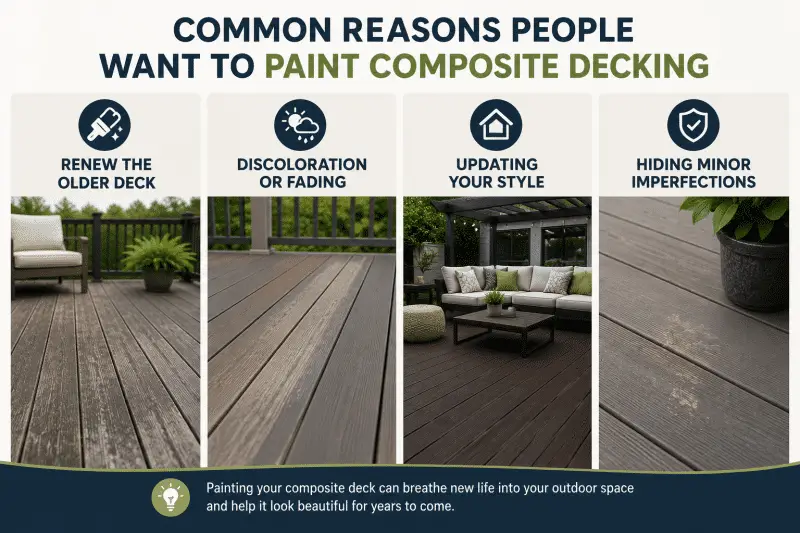
Here are some reasons why:
- Renew the Older Deck
Sometimes, composite decks also look worn out overtime.
- Discoloration or Fading
The sun, rain and usage makes the color uneven or dull.
- Updating Your Style
Sometimes you want to change your outdoor furniture, pergola or patio décor. Painting the deck can help it match the new style.
- Hiding Minor Imperfections
Small scratches, stains or marks can pop up on your deck with regular usage overtime. Paint can hide them.
Can You Actually Paint Composite Decking?
The real answer is, yes. But, it depends on the type of composite decking you have.
When Is Painting Composite Decking Possible
- Older Uncapped Composite Decking
Before modern capping technology the older version of composite decking boards were manufactured. They are easier to paint.
These boards have a more porous surface. This allows the paint to bond more effectively. Yes painting of the WPC deck is possible.
- Weathered Surfaces
Some older weathered composite decks may benefit from painting. This is true if the boards remain structurally sound. In these situations, painting can improve appearance for a period of time. It can also help extend the visual life of the deck.
However, preparation becomes extremely important.
Challenges of Painting WPC Decking
Before you decide to paint your WPC decking, you must know that the process does not as simple as a traditional wood painting project.
Painting may seem like a quick way to refresh your outdoor space. However, it can come with a few challenges that are worth considering.
- Poor Paint Adhesion
Many composite decking boards have a smooth and protective outer layer. This helps resists moisture, stains and dirt. This layer prevents paint from sticking or bonding to the surface.
Additionally unlike traditional timber deck or wood, composite decking does not naturally absorb paint. Even after cleaning, the surface can remain too slick. This makes it difficult for paint or primer to grip effectively.
- Peeling and Cracking
The paint looks great at first. Overtime the problems can start to appear due to outdoor exposure. The paint can peel, chip, crack or flake.
- Exposure to Sun and Weather
Outdoor decks face harsh conditions every day. These elements can cause materials to expand and contract over time. The natural movement can put stress on painted surfaces and increase the risk of cracking or peeling.
- More Maintenance in the Future
Painted WPC decks will need you to touch up, repaint or repair peeling areas periodically. This increases maintenance requirements.
- Potential Warranty Concerns
Some manufacturers do not recommend painting composite decking. In such cases, if you apply paint, it may impact or void the product warranty.
How to Properly Prepare Composite Decking for Painting
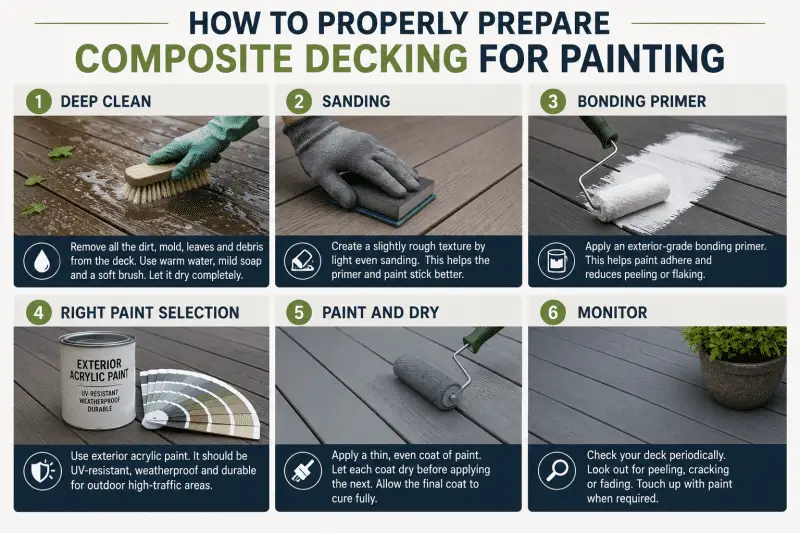
If you decide to paint your WPC fence or deck, you must prepare the surface well. Here is a step by step guideline.
Step 1 – Deep Clean
Remove all the dirt, mold, leaves and debris from the deck. You can use warm water, mild soap and a soft brush for this. Let it dry completely.
Step 2 – Sanding
Now create a slightly rough texture by light even sanding. This way the primer and paint can stick better.
Step 3 – Bonding Primer
Apply primer. You can utilize an exterior-grade bonding primer. This helps paint adhere and reduces peeling or flaking.
Step 4 – Right Paint Selection
Try to use exterior acrylic paint. It should be UV-resistant, weatherproof and durable for outdoor high-traffic areas.
Step 5 – Paint and Dry
A thin layer of paint should be applied to WPC decks. Make sure to apply even coats. Before applying the next coat, let each coat dry. The final coat should be allowed to cure fully.
Step 6 – Monitor
It is important that the WPC deck should be checked periodically. You should look out for peeling, cracking or fading. Touch up with paint when required.
Alternatives to Painting Composite Decking
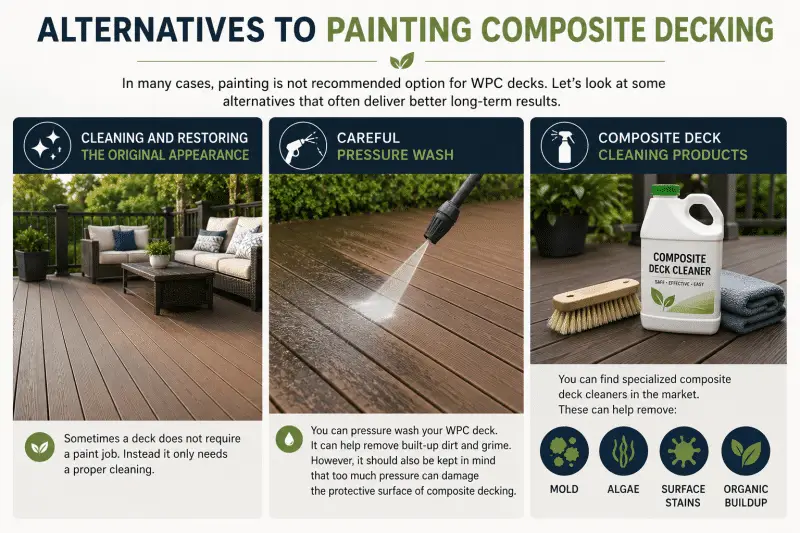
In many cases, painting is not recommended option for WPC decks. Let’s look at some alternatives that often deliver better long-term results.
- Cleaning and Restoring the Original Appearance
Sometimes a deck does not require a paint job. Instead it only needs a proper cleaning.
- Careful Pressure Wash
You can pressure wash your WPC deck. It can help remove built-up dirt and grime. However, it should also be kept in mind that too much pressure can damage the protective surface of composite decking.
- Composite Deck Cleaning Products
You can find specialized composite deck cleaners in the market. These can help remove:
- Mold
- Algae
- Surface stains
- Organic buildup.
Replacing Damaged Boards Instead of Painting
If only a few boards are damaged or faded, you can replace them.
- Modular Decking Systems
Many modern decking systems are installed in a modular way. These allow individual boards to be replaced. You can remove them and add new ones without rebuilding the entire deck.
- Consistent Outdoor Style
When you replace damaged sections it provides cleaner and longer-lasting results. Painting may eventually fade unevenly.
- Upgrade to Modern Capped Composite Decking
If your existing deck is reaching the end of its life, you should definitely think about upgrading. It will provide better value.
- Enhanced Fade Resistance
New capped composite decking offers long-term color stability. The protective cap helps reduce fading caused by sunlight and weather exposure.
- Reduced Future Maintenance
Modern composite decking minimizes the need for repainting, staining or refinishing altogether.
Choosing High-Quality WPC Decking for Long Term Outdoor Performance
Buying new outdoor deck is great for homeowners. Choosing the right material matters a lot.
Features to Look for in Composite Decking
- · UV Resistance
- · Moisture Resistance
- · Durable Construction
- · Slip Resistance
- · Color Stability
- · Low Maintenance
KR ECO WPC Composite Decking Solutions
KR is a renowned name in outdoor WPC decking solutions manufacturing. Their products are designed for durability, safety and low maintenance.
The composite decking products are suitable for both residential and commercial outdoor environments.
KR uses a combination of wood powder, HDPE plastic and precision manufacturing processes. They work to create consistent product quality. Their decking solutions are developed to withstand outdoor conditions while reducing the maintenance requirements commonly associated with traditional timber decking.
The company’s products are also manufactured with internationally recognized quality standards in mind. These include CE and FSC certifications. Moreover, there is testing for fire and heat resistance as well.
Conclusion
So, can you paint composite decking? Yes, in some situations you can and in some you should not. Uncapped composite decking may be painted. You should ensure proper preparation of the surface and follow the right steps with quality exterior products.
However, the new capped composite decking is not meant to be painted. The protective outer layer it has can prevent proper paint adhesion. This leads to peeling, cracking and ongoing maintenance headaches.
So, before painting, you should ask yourself a different question: Does the deck really need paint? If you select the right decking material from the start, it will save your time, reduce maintenance costs and keep your outdoor area looking great for years to come.
Frequently Asked Questions
Can all composite decking boards be painted?
No. The older type of uncapped composite decking can be painted. However, the new composite decking with a cap layer is not recommended for painting.
What type of paint works best on WPC decking?
High-quality exterior acrylic paint is best suited for outdoor use. It performs best when painting composite decking surfaces like uncapped versions.
Do I need to sand composite decking before painting?
Yes. Light sanding can make a rougher surface. This improves paint adhesion.
How long does paint last on composite decking outdoors?
It depends on many factors like weather conditions, surface preparation, deck usage and the type of composite decking you have. Painted composite decks generally require more maintenance than unpainted composite decking.
Can you stain composite decking instead of painting it?
Some older uncapped composite decking products may accept staining. However, modern capped composite decking does not go well with staining. They have a sealed outer shell does not allow stain absorption. You should always check the manufacturer’s recommendations before applying any coating.