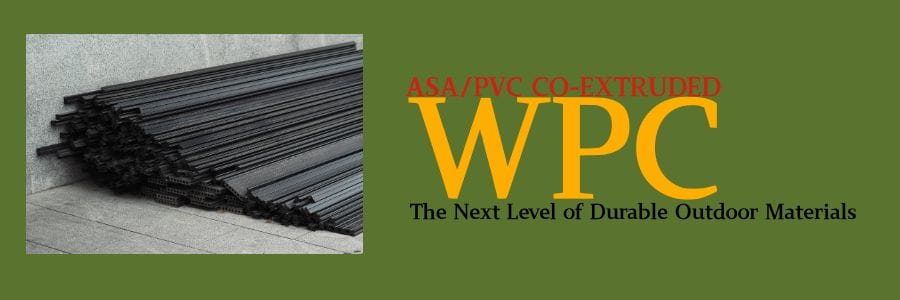
Introduction
If you’ve ever stood on a “maintenance-free” deck in year three and watched it look… tired, you already know the dirty secret of a lot of outdoor materials: the brochure lives in a climate-controlled fantasy, and your project lives in sun, rain, grime, and the occasional dropped grill tool.
Outdoor demand is only getting louder—decking, cladding, fencing, rooftops, pool surrounds, commercial patios. People want wood vibes without wood problems. Fair. But plain, old-school WPC (wood–plastic composite) can still get humbled by real weather: moisture cycles, UV exposure, grime that bakes in, and those slow little changes that make boards look washed-out and feel “meh.” Water can drive swelling in the wood portion of WPC and contribute to microcracks and property loss over time.
That’s where ASA/PVC co-extrusion shows up, rolling its eyes at the chaos and saying: “Let’s stop letting the outdoors touch the parts that hate the outdoors.”
What Is ASA/PVC Co-Extrusion?
Co-extrusion is the manufacturing trick where you push two (or more) materials through a die at the same time so they fuse into one profile—layers bonded during production, not glued on later. It’s common in exterior building plastics: for example, the U.S. NIST BEES technical manual describes vinyl siding made with a substrate plus a weather-resistant capstock, and notes the capstock can be PVC or ASA.
Now translate that idea to WPC-style boards:
- ASA (Acrylonitrile Styrene Acrylate) sits on top as the “I’m outside, deal with it” layer. ASA is widely used specifically because it holds up better to UV and weathering than ABS-type plastics, which is why you see it in exterior applications.
- PVC shows up as the stability player—good dimensional behavior, low moisture uptake, and a generally unfussy attitude around wet environments. Even basic PVC foam boards are widely described as moisture-resistant with low moisture absorption and strong dimensional stability.
You’ll also find real decking systems built around this idea. One example: Eva-Last’s Eclipse technical data sheet describes a PVC-heavy core with an ASA single-layer cap.
So the point isn’t “two plastics are better than one” (cute). The point is job separation: put the weather armor on top, put the structural “don’t warp on me” material underneath, and stop asking one blend to be perfect at everything.
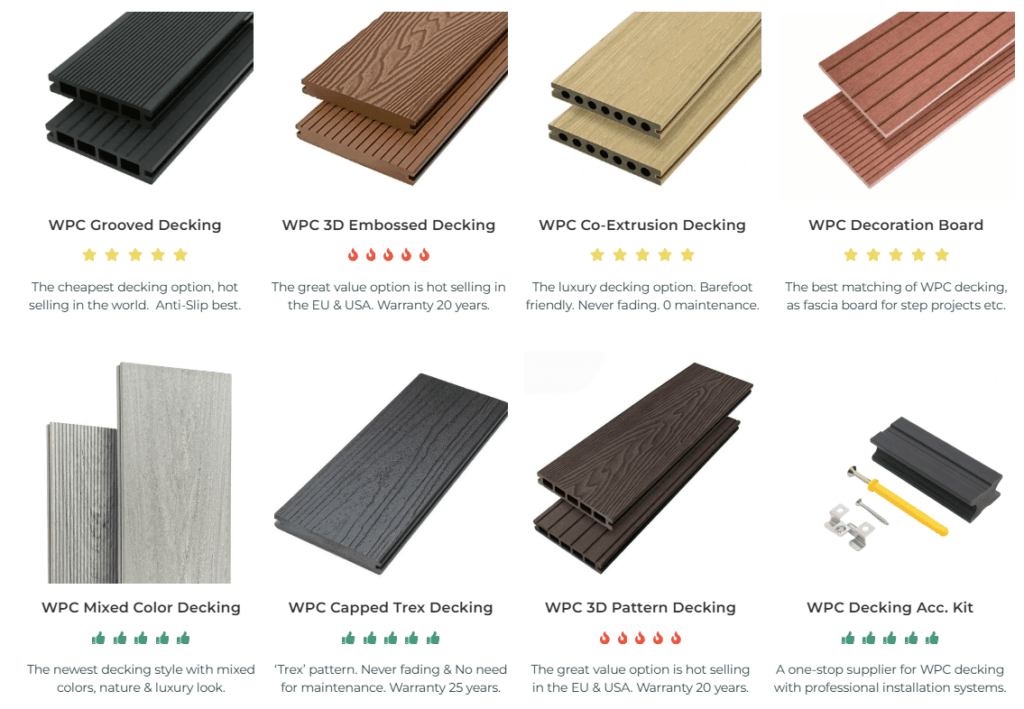
Superior Weather Resistance of ASA/PVC Co-Extruded WPC
Here’s the part most people miss: weather damage is rarely dramatic. It’s slow. UV dulls the surface. Heat and cold push expansion and contraction. Water sneaks into anything even slightly porous, then repeats the world’s most boring stress test—wet, dry, wet, dry—until the material starts acting its age.
Classic WPC has a built-in headache: wood fiber likes water. Water causes wood particles to swell, which can create internal stresses and microcracking in the composite matrix over time.
A capped / co-extruded approach attacks that problem at the surface. The U.S. Forest Service has written about “capped” WPC offerings being introduced with claims that a pure polymer cap helps protect the wood/polymer interior, keep the core drier, and reduce weathering and biological degradation risk—then discusses lab and field evaluation work around those ideas.
Now, why ASA specifically for the cap?
- ASA is used where weatherability matters; it’s a known exterior-grade thermoplastic.
- Major material suppliers market ASA grades for “extreme weatherability,” including grades positioned for PVC co-extrusion capstock applications (think window profiles).
Put that together and you get a surface that’s built to take sunlight and mess without immediately looking like it gave up. The bonus is tactile: a good cap layer tends to stay smoother and easier to wash down (because you’re not scrubbing gunk out of a more open, wood-filled skin).
And yes, this stuff is attractive to commercial jobs for one boring reason: predictability. Rooftop bars, pool decks, restaurant patios—nobody wants a surface that turns into a maintenance line item.
Enhanced Durability and Low Maintenance
Let me be blunt: most “low maintenance” claims are really “maintenance you’ll ignore until it looks terrible.”
The better promise with ASA/PVC co-extruded boards is simpler:
- You’re not staining or sealing every other season like real wood.
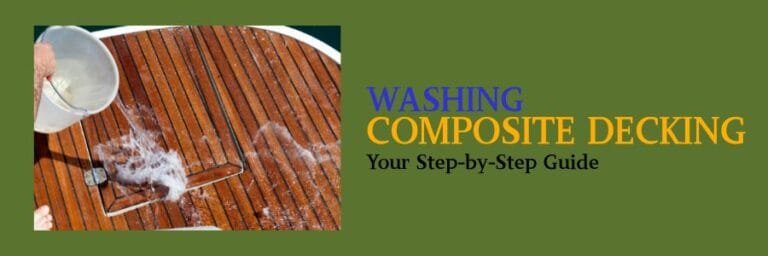
- Most day-to-day grime comes off with basic cleaning (water and mild cleaners), as long as you don’t treat spills like an art installation. Even TimberTech’s fade-and-stain warranty language, for example, talks about stain resistance in the context of cleaning common food/beverage spills with soap and water or mild household cleaners within a set time window.
Scratch/impact resistance? It depends on the exact cap formulation, thickness, and embossing. But ASA capstock is commonly positioned as a hard-wearing exterior surface, and real product data sheets for ASA-capped decking systems publish abrasion and hardness-style metrics.
The sustainability angle is less glamorous, but it’s real: long service life means fewer tear-outs. And broadly, WPC-style products can reduce demand for virgin timber while using reclaimed/recycled inputs (depending on manufacturer). Trex, for example, describes making its composite decking from up to 95% recycled and reclaimed materials.
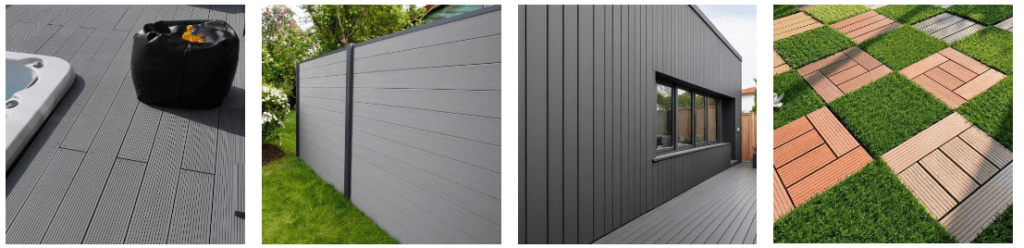
KR WPC’s ASA/PVC Co-Extruded WPC Solutions for B2B Clients
KR WPC positions itself as a leading wpc decking manufacturer and China-based supplier of WPC decking, cladding, and fencing, including co-extrusion decking and fence systems, with standard and custom-made product options.
A couple of useful B2B-friendly notes from their public materials:
- They describe co-extrusion WPC decking as a WPC core wrapped with polymer “360 degrees,” and they market long service life and resistance benefits. (Treat marketing numbers like “0% water absorption” as a claim to verify with test reports, not a law of physics.)
- They state customization is available across color, texture, size, packaging, and even branding/labeling, and they publish practical ordering info like MOQ and lead times (e.g., MOQs around decking/fencing, lead times dependent on customization and quantity).
- They also actively market broad color ranges and “custom color services,” which matters if you’re trying to match a façade palette or keep a development looking consistent across phases.
One important reality check: KR WPC’s pages I reviewed talk a lot about co-extruded/capped WPC, but they don’t clearly spell out “ASA cap + PVC core” as the default construction the way some ASA/PVC decking brands do. So if your spec truly requires ASA/PVC co-extrusion, the smart move is boring procurement discipline: request the cross-section, material breakdown (capstock resin + core resin), and third-party testing, then lock it into the submittals.
Versatility in Design and Applications
The fun part (for designers, at least) is that once the weather layer is handled, you can play.
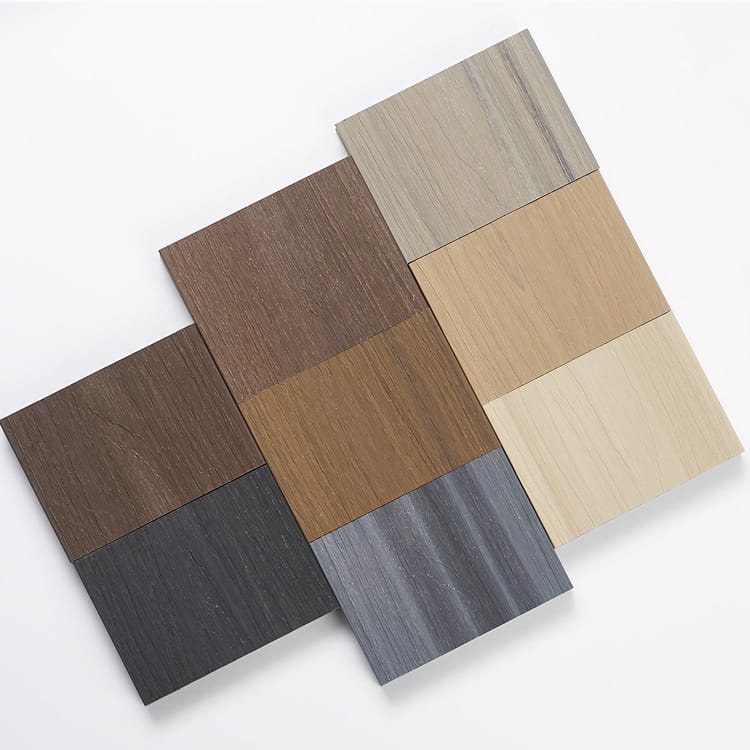
Capped/composite systems are sold in everything from wood-tone browns to modern greys, with embossed grains, brushed textures, and smoother architectural looks—often with color sample programs so teams can stop arguing over screenshots. KR WPC explicitly leans into this with a wide color lineup and sample matching guidance (including the very real reminder that screens lie).
And in mixed-material builds—metal rails, glass balustrades, stone planters—these boards are usually chosen because they don’t demand that the rest of the design bend around them. They just sit there and behave. That’s the dream, especially for composite exterior cladding projects in humid environments like Shanghai.
Conclusion
ASA/PVC co-extruded WPC is basically what happens when manufacturers admit the obvious: outdoor surfaces need armor, not wishful thinking.
An ASA cap is there to take the UV and daily abuse. A PVC-based structure is there to keep the board stable and unimpressed by water. The result is a material that fits residential jobs and the kind of commercial spaces where nobody has time to baby a deck.
If you’re buying for B2B, the play is simple: pick the look, then demand the paperwork—material specs, testing, warranty terms, and install guidance—so the performance matches the sales pitch.
FAQ
What is ASA/PVC co-extruded WPC, and how is it different from regular WPC?
Regular WPC is typically a single composite body (wood fiber + polymer) throughout. ASA/PVC co-extruded boards add a co-extruded cap layer—often ASA—over a different core structure (often PVC-heavy), fused during manufacturing. Co-extrusion and capstock layering are widely used concepts in exterior plastics to put the most weather-resistant material on the exposed surface.
Why is ASA/PVC co-extrusion better for outdoor applications than standard WPC?
Because standard WPC still has wood content near the surface, and water exposure can cause wood particles to swell, creating stress and microcracking over time. A polymer cap is meant to reduce water ingress and weathering of that wood/polymer interior.
Can ASA/PVC WPC withstand extreme weather conditions?
“Extreme” depends on spec and installation, but ASA is specifically used in exterior applications for UV/weather resistance, and ASA capstock is marketed by major suppliers for harsh-weather uses (including PVC co-extrusion capstock).
How long does ASA/PVC co-extruded WPC last compared to wood or single-layer WPC?
It varies by manufacturer and warranty. In the broader capped-composite market, long fade/stain and product warranties (25 years and beyond) are common talking points, and capped products are marketed as a durability step up from earlier uncapped generations.
What maintenance is required for ASA/PVC co-extruded WPC decking or cladding?
Typical maintenance is simple cleaning—sweeping, periodic washing, mild cleaners. The “gotcha” is spill discipline: many stain-resistance warranties are written around cleaning common spills within a defined time window using soap/water or mild household cleaners.