Introduction: Choose Outdoor Decking by Project Requirements
The fastest way to torch a budget on an outdoor deck isn’t the board price. It’s the callback. A hotel terrace that cups after the first rainy season. A restaurant deck that turns into a slip-and-fall liability right outside the bar door. A pool surround that looks “premium” until sunscreen, algae, and drag marks turn it into a maintenance problem nobody priced in.
So this isn’t a beauty contest. It’s a material system pick.
We’re going to stay focused on WPC (wood–plastic composite) decking—uncapped vs capped/co-extruded, hollow vs solid—and put PVC decking and mineral/resin composite boards in the same frame so you can spec what fits your site, not what fits a brochure. For KR WPC’s model families and accessories, start here and treat every performance claim like a line item you can request paperwork for.

1. What Is Composite Decking Made Of—and Why Does It Matter?
1.1 Understand the Ingredients Behind WPC Decking
Wood plastic composite decking (WPC) is basically three things: wood flour (or fiber), a thermoplastic (often PE/HDPE), and additives that make the mix behave outdoors—UV stabilizers, colorants, lubricants, coupling agents, anti-fungal packages, that sort of unsexy chemistry. KR WPC even spells out a “typical” split as 60% wood fiber, 30% HDPE, 10% chemical additive.
Why you should care: wood flour quality and moisture control hit consistency, swelling behavior, and surface checking; polymer choice and melt flow hit impact behavior and creep; additive package decides whether the board gets chalky, fades fast, or grows funk in shaded wet zones. Same “WPC” label, very different outcomes.
1.2 Compare Uncapped and Capped WPC
Uncapped WPC is the straight-through composite—whatever is inside is also what’s on the walking surface. Capped/co-extruded WPC adds a second layer during extrusion: a protective polymer skin meant to take the UV, stains, and scuffs so the wood-loaded core doesn’t have to. KR describes co-extrusion as a WPC core wrapped “360 degrees” in polymer, and markets higher scratch resistance and low water absorption for that capped surface.
But here’s the procurement reality: “capped” is not one thing. Cap coverage (3-side vs 4-side), cap thickness, cap resin (ASA? PVC? PE blends?), and how the manufacturer treats cut ends varies by product line. Don’t guess—get a cross-section, and lock the cap description into the submittal package.

1.3 Put Other Decking Materials in Context
Two common “not-WPC” options show up in commercial bids:
- All-plastic / PVC decking: no organic filler. TimberTech’s own PVC explainer calls PVC decking “no organic material, such as wood flour,” which is why it’s often pitched for wet or coastal installs.
- Mineral/resin composite decking: a mineral-heavy core instead of wood fiber. Deckorators’ Surestone mineral-based composite is marketed as zero organic material, absorbing “virtually no moisture,” with very low thermal movement.
None of these categories “wins” by default. PVC can get softer-feeling under high heat and can still get hot underfoot. Mineral composites can be a smart spec for movement control, but you still need to vet cap performance and surface traction the same way you would for WPC.
2. Evaluate Outdoor Performance Under Real Operating Conditions
2.1 Durability Means More Than a Claimed Lifespan
Ignore the lazy “lasts 25 years” line until you split it into parts:
- Moisture + movement: Water exposure doesn’t just rot wood—it drives swelling, micro-cracks, and joint issues if ventilation is wrong or expansion gaps are ignored. Mineral-based composites are explicitly sold on “virtually no moisture” uptake; capped WPC is sold on limiting water ingress into the wood-loaded core. Different mechanism, same goal.
- UV + surface wear: Your wear layer is the walking surface. Deep embossing can hide scuffs better than smooth finishes, but it also traps grime if cleaning is ignored. KR markets its 3D embossed surface as deeper grain and an anti-slip “R11 grade” claim—treat that as a starting point, not a finish line.
- Service life vs warranty vs coverage: Warranty years aren’t the same as “we pay to fix your problem.” Even big brand warranties often carve out labor/removal and shorten terms for commercial use—Trex, for example, is often cited as dropping commercial decking terms to 10 years in its warranty tables. Read the document, not the brochure.
And yes—drainage, airflow under the deck, correct joist spacing, and approved fasteners matter as much as the board recipe. “Durable material” installed wrong is still a failure.
2.2 Assess Slip Resistance Where People Actually Walk
Slip resistance is where spec sheets love to play games. Test methods matter. Direction of travel matters. Wet vs dry matters. And the sample condition (new, worn, dirty) matters.
KR’s range includes lines marketed around traction—like a SlipSafe series and R-rated claims (R10 shown as a “standard” rating on one page; R11 claimed for deep embossed). Good. Now do the adult part: request the report and confirm method.
If you see “R10” or “R11,” you’re usually looking at DIN 51130 ramp testing for shod feet, where ratings run R9–R13. Pool surrounds often need attention to barefoot conditions too—DIN 51097 uses A/B/C classes for wet barefoot zones. Same word “slip,” totally different test.
Real-world killers:
- algae film in shaded corners
- grease mist near outdoor dining
- standing water at low spots
- wear polishing high-traffic paths
So don’t spec traction once. Spec the cleaning plan that keeps traction real.
2.3 Separate Heat Resistance from Surface Comfort
Two different issues get mashed together:
- Heat resistance (shape): Will it soften, creep, or warp under high surface temps?
- Surface comfort (feet): Will guests actually walk on it barefoot?
Color and sun exposure are the big levers. KR even flags that decking color influences “temperature underfoot in direct sunlight.” That’s not marketing fluff—that’s physics.
Mineral-based composite brands sell “reduced heat” stories (Deckorators links Surestone to crushed limestone and heat reduction claims), and PVC brands sell moisture resistance and stability. Fine. The only comparison that counts is the one you can repeat: put physical samples outside in the same sun, same time, same airflow, then touch them. No “cool deck” buzzwords required.
3. Compare Maintenance and Whole-Life Value
3.1 Match Maintenance Requirements to the Site
“Low maintenance” doesn’t mean “no maintenance.” It means you’re not staining and sealing like timber. You still clean.
Think in stains you actually get:
- leaf tannins and mud streaks on garden terraces
- food spills, sauce, wine, fryer grease on dining decks
- sunscreen + pool chemicals + mildew near water
Capped surfaces usually clean up easier, but every manufacturer has rules—tool choice, cleaner type, dwell time. And if the deck has weak drainage, you’ll be pressure-washing forever no matter what you bought.
3.2 Calculate the Cost of the Complete Decking System
Board price is the bait. System cost is the bill.
Include:
- boards (and the real installed yield after cuts/waste)
- subframe/joists
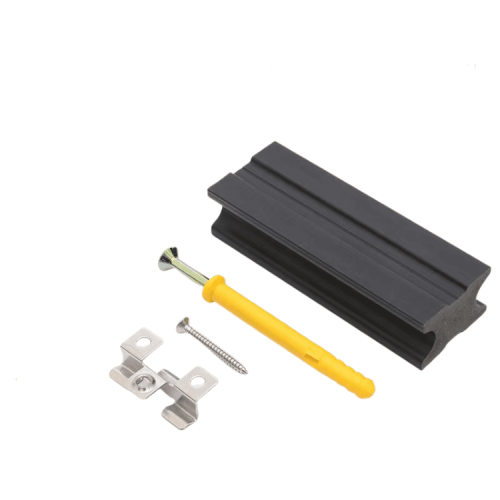
- hidden clips/fasteners
- fascia/edge trims and stair parts
- freight (especially if you’re importing)
- labor (layout, picture-framing, stairs, edge details)
KR explicitly pushes a “one-stop” decking + accessories concept (decking accessory kits, matching decoration boards/fascia). That’s not just upsell—consistent hardware reduces install improvisation, which is where failures start.
Price comparisons should be done per installed usable square meter/foot, not per board.
3.3 Evaluate Costs Throughout the Ownership Period
Ownership cost is where commercial projects bleed:
- cleaning labor and downtime (blocked seating, blocked walkways)
- spot repairs (board swaps, clip replacements)
- keeping matching stock for phase 2 or post-damage swap-outs
KR publishes broad price bands—basic to premium per linear foot—so you can at least model tiers early. Just remember: a premium capped board that avoids stains on a restaurant terrace can be cheaper than a “budget” board that forces weekly heavy cleaning.
No universal winner. Shaded hotel terrace? Your slip/cleaning priority changes. Exposed rooftop dining? Heat and fade risk jumps. Pool deck? Moisture, traction, and cleaning chemistry take over.
4. Turn the Material Comparison into a B2B Specification and QC Plan
4.1 Specify the WPC Decking Product and Installation System
Write the spec so it can’t be “interpreted” by whoever is trying to win on price.
Minimum list:
- exact board size, profile (solid vs hollow), finish, and approved color sample
- tolerances (width/thickness/straightness) and acceptable visual defects
- clip/fastener model, edge details, joist spacing, expansion gaps
- required test documentation tied to the exact model and surface
In the US market, performance frameworks like ASTM D7032 exist for rating WPC/plastic deck boards and related components—use standards as your language so you’re not arguing feelings.
4.2 KR WPC Composite Decking: A Manufacturer’s Perspective
KR WPC positions itself as a China-based WPC composite decking manufacturer supplying decking profiles made from wood powder + HDPE + chemical additives, produced through extrusion using dedicated molds, with quality control across production. That’s the right baseline story—materials, process, repeatability.
If you’re treating KR as a supply option, do it the sane way:
- Pick your product family from the main hub
- Narrow to a series concept if it helps the spec narrative (SlipSafe / WeatherGuard / EcoShield)
- Lock color/finish with physical samples (screens lie)
Then request the model-specific reports. Not “a report.” The report for that board.
4.3 Establish Quality Checks Before Bulk Delivery
A simple QC plan beats a fancy argument later.
- Incoming materials: confirm resin identity, wood-flour moisture, batch records, additive lots. (Wood moisture wandering around is how “same formula” becomes “different board.”)
- In-process: measure dimensions, straightness, weight consistency; inspect embossing quality; for capped boards, check cap continuity and corner coverage.
- Pre-shipment: agree a sampling plan; check color drift vs approved sample, surface defects, packaging integrity, and batch traceability.
And don’t forget the boring parts: pallets, corner protection, and labeling. Freight damage is still damage.
4.4 Align Approval Samples with Commercial Supply
Keep an approved control sample. Document acceptable variation. And write down what happens if the formula or cap resin changes—because it can.
KR lists MOQs (like 200㎡ for WPC flooring) and talks lead times and documentation support; that’s useful, but only if you pin the commercial terms to the exact model and finish you approved.
Conclusion: Choose WPC Through Evidence, System Fit and Long-Term Value
Pick the formulation. Check the outdoor performance under your site conditions. Model whole-life cost. Then write a spec and QC plan that forces consistency.
WPC can be a great choice when the board construction and install system match the project—and when the supplier can prove, on paper, what they’re shipping. KR’s public materials give you enough hooks to start that process, but the win comes from disciplined submittals, not hopeful buying.
FAQ
What specifications and QC records should bulk buyers request?
Ask for: exact board drawing + tolerances, material breakdown (core + cap if capped), test reports tied to the exact model/surface, installation guide, warranty document, and batch traceability/inspection reports before shipment. ASTM-style rating frameworks (like ASTM D7032) help keep everyone honest.
How do you clean and maintain WPC decking?
Routine cleaning. No magic. Rinse off debris, scrub spills before they become “permanent,” and keep drainage clear. Capped boards usually clean easier, but always follow the product’s cleaner limits—especially in food and pool environments.
Does WPC decking get too hot in direct sunlight?
It can. Color, sun exposure, airflow, and surface texture drive what your feet feel. KR even points out color affects underfoot temperature; mineral-based and PVC systems market heat advantages, but sample testing outdoors is the only comparison that matters.
How long does WPC decking last outdoors?
Depends on the board construction, site detailing, and maintenance. KR markets different warranty terms across product types (and separate hollow vs solid warranty positioning on its site), while other brands often shorten coverage for commercial use. Treat warranty years as a contract term—then verify what it covers.
What is the difference between WPC and PVC decking?
WPC uses wood fiber + plastic + additives; PVC decking is plastic-based with no organic wood flour. That difference changes moisture behavior, movement, and sometimes the feel underfoot—so you spec based on the site, not the label.