
As soon as the arrival of the spring season is heralded, most homeowners start thinking about cleaning up their outdoor spaces. We all want to sweep away the leaves and debris of the previous season. Clean up and take the patio furniture back outside. And lets not forget the up keeping of the deck. The attention it has been waiting for after months of rain, snow, dirt and fallen debris.
Most people consider pressure washing the composite (Wood Plastic Composite) deck right away. But there is always this skeptical thought in mind that whether this is the right and quickest way to bring the WPC deck back to life.
The answer is yes. But only if you do it in the right manner. Composite decking is said to be a low-maintenance substitute of wood decks. However, when we say low maintenance it does not and should not mean no maintenance at all. You have to careful while cleaning WPC as well.
Hence, you should know how to pressure wash composite decking the right way. This will help you avoid costly mistakes and also to keep it looking good for years.

Why WPC Decking Needs a Different Pressure Washing Approach
WPC decking is not like timber or concrete. It has a unique structure. When you know what this deck is made of, it will help you understand why its cleaning should be done carefully.
What WPC Decking Is Made Of
High-quality wood plastic composite decking boards are made from a combination of materials. These include the following:
- Wood powder or wood fibers
This material provides the boards a natural wood appearance and texture.
- High-Density Polyethylene (HDPE)
To add strength, flexibility and moisture resistance, HPDE is used in WPC decking.
- Performance additives
These substances help to improve UV resistance, color stability, durability and weather protection.
This combination creates a decking material that looks like wood. However it performs very differently.
Composite decking unlike wood, does not absorb water. It does not rot. It is also not vulnerable to termites.
Many premium boards also include a protective polymer cap. This shields the surface from stains, fading and moisture. This outer protective layer of the WPC decking should also be protected during cleaning for longevity.
Three Types of Damage from Incorrect Pressure Washing
Pressure washers are powerful tools for cleaning decks. If they are used incorrectly, damage will be caused. And that damage be may impossible or very difficult to repair.
Here are some types of damages that can occur of you pressure wash your deck in the wrong way.
1. Stripping the Protective Surface
When excessive water is used for cleaning, the protective polymer layer can be damaged or worn out with pressure. If this happened the board will become more vulnerable to fading, stains and weathering.
2. Surface Streaking
If the spray nozzle is held too close while pressure washing the composite decking, it can create uneven cleaning lines across the boards. These streaks often remain visible. Even when the deck dries they can be seen. This is because the surface texture has been altered.
3. Heat Damage
Hot-water pressure washers are excellent for concrete decks. However, if used for composite decking, they can be lethal. High temperatures will soften the plastic content within the boards. This will increase the risk of surface distortion or permanent marks.
Why Knowing the Material Matters
When pressure washed, different decking material responds differently. Here is a brief explanation.
- Natural wood can splinter if pressure is too high.
- UPVC generally tolerates higher pressure.
- Composite decking sits somewhere in the middle. Reliable manufacturers of composite decking recommend taking a conservative approach when cleaning it.
A pressure range of 1,500 to 2,000 PSI is suitable for most composite decking products. This range provides effective cleaning and at the same time helps in protecting the board’s surface. It is best to check the manufacturer’s recommendations before cleaning or pressure washing the deck.
Pre-Wash Preparation — Set Yourself Up for Success
Preparation of the surface before for any treatment is good. The cleaning process can also be made quicker, safer and more effective with this prior prep.
Selection of the Right Time to Wash
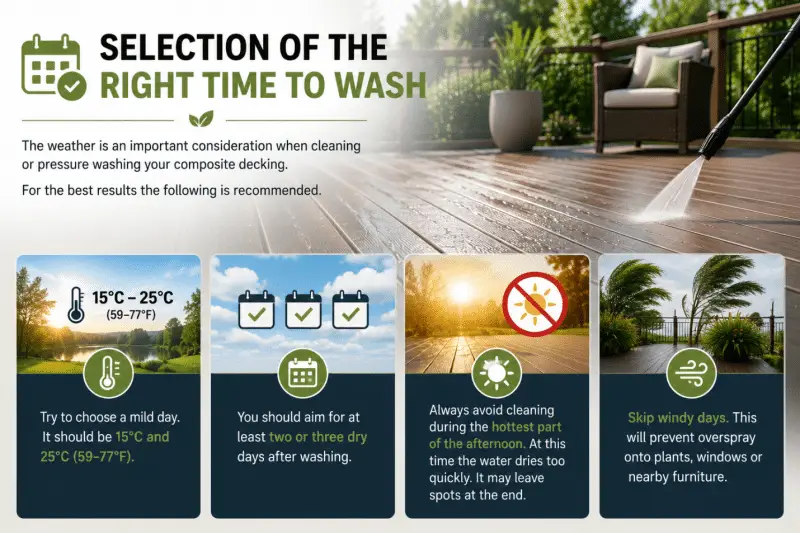
The weather is an important consideration when cleaning or pressure washing your composite decking.
For the best results the following is recommended.
- Try to choose a mild day. It should be 15°C and 25°C (59–77°F).
- You should aim for at least two or three dry days after washing.
- Always avoid cleaning during the hottest part of the afternoon. At this time the water dries too quickly. It may leave spots at the end.
- Skip windy days. This will prevent overspray onto plants, windows or nearby furniture.
Pre-Wash Deck Inspection
Before you turn the pressure washer on for cleaning the WPC deck, try to spend a few minutes examining the deck.
You should look out for the following:
- Loose or lifted boards. These can be caused by seasonal expansion and contraction.
- Deep scratches. They can become more noticeable after washing.
- Algae, moss, or mildew patches. Such problems need pre-treatment.
- Blocked drainage areas. These will cause the water to collect unnecessarily.
- Board ends or edge caps that may need attention before cleaning.
Finding these issues early can help you prevent accidental damage during washing.
Right Tools and Protective Gear
You need to have proper tools for pressure washing your WPC deck. Here is a list of some of the tools and equipment you may need for pressure washing:
- Medium-duty pressure washer with adjustable pressure (1,500–2,500 PSI)
- 25° green spray nozzle for cleaning
- 40° white spray nozzle for rinsing
- Soft-bristle brush
- Mild soap or composite deck cleaner
- Safety glasses
- Waterproof gloves
- Non-slip footwear
Before washing, make sure that you sweep away the leaves, dirt and loose debris. Dry cleaning first makes pressure washing much more effective.
The Step-by-Step Pressure Washing Technique for WPC Decking
Once everything is prepared and looked into, it will now be time to clean.
Step 1 – Set the Correct Pressure
Start with the lowest pressure setting available and test it in a hidden corner.
For most WPC decking:
- You should keep pressure between 1,500 and 2,000 PSI
- Increase only if necessary
- Never begin at maximum pressure
First test the pressure. This will give you confidence that the surface will not be damaged.
Step 2 – Select the Right Nozzle
Different nozzles in the pressure washing equipment produce different spray patterns.
- 25° Green Nozzle – This one is good for removing dirt, pollen and light stains.
- 40° White Nozzle – This nozzle is great for the final rinse and reducing streak marks.
You should avoid narrow nozzles designed for concentrated cleaning. These can leave permanent marks on composite boards.
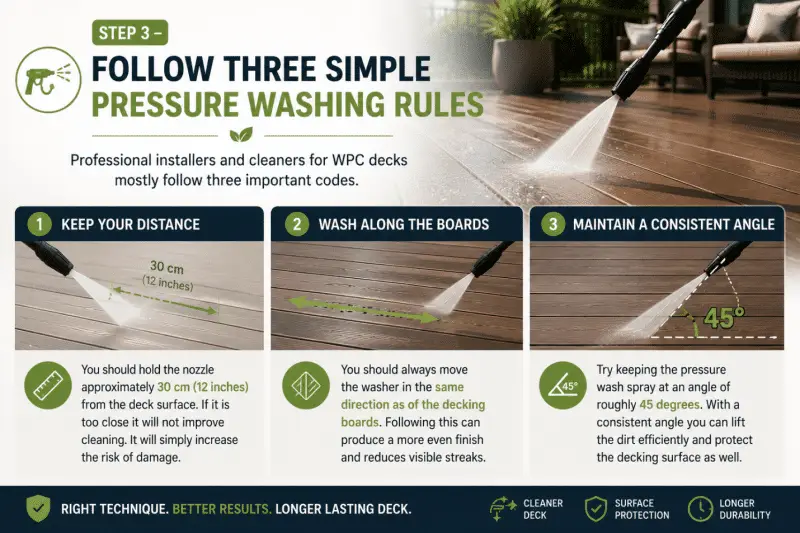
Step 3 – Follow Three Simple Pressure Washing Rules
Professional installers and cleaners for WPC decks mostly follow three important codes.
- Keep Your Distance
You should hold the nozzle approximately 30 cm (12 inches) from the deck surface. If it is too close it will not improve cleaning. It will simply increase the risk of damage.
- Wash Along the Boards
You should always move the washer in the same direction as of the decking boards. Following this can produce a more even finish and reduces visible streaks.
- Maintain a Consistent Angle
Try keeping the pressure wash spray at an angle of roughly 45 degrees. With a consistent angle you can lift the dirt efficiently and protect the decking surface as well.
Step 4 – Removing Tough Stains Safely
Before you pressure wash, there could be some stains on the deck that may require some extra attention. Here are some of these.
- Algae and Moss
If you have these green patches, they should be taken care of first.
- You can apply mild soapy water.
- Then scrub gently with a soft brush.
- At the end, rinse using low pressure.
Try to avoid aggressive scrubbing of the WPC deck. It can damage textured finishes.
- Oil and Grease
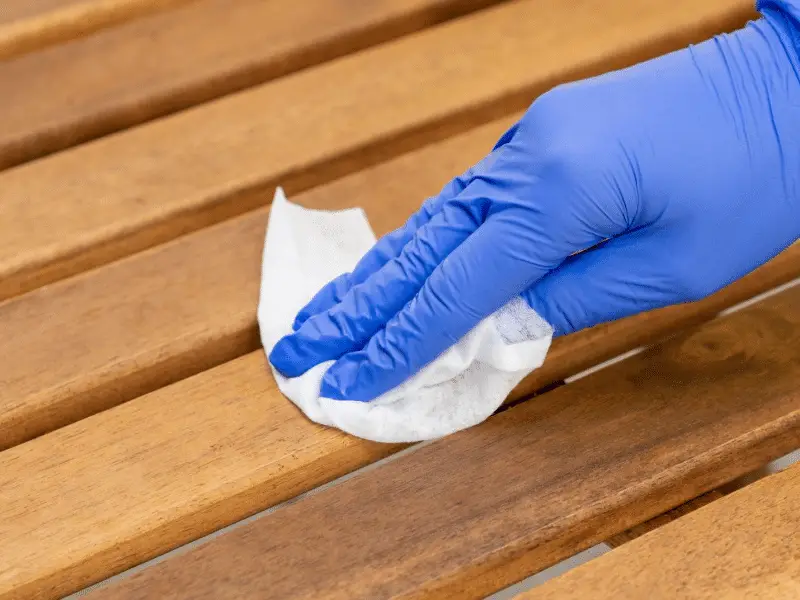
If there is grease from outdoor cooking, it can usually be removed with a composite deck cleaner.
- You should apply the cleaner.
- Leave it for around 10 minutes.
- Then rinse thoroughly.
Cleaning spills early can help in preventing permanent or tough stains.
- Dirt Between Deck Boards
Sometime, the leaves and dirt can collect between boards. Instead of forcing the nozzle into the gaps, you should gently run the spray along the joints. This will flush the debris away without disturbing the spacing. You can use the 25 degrees nozzle for this purpose.
Step 5 – The Zone-by-Zone Method: Clean in Sections, Don’t Skip or Overlap
Trying to wash the entire deck at once can lead to missed spots. It can also cause uneven cleaning. A better approach is to divide the deck into manageable sections like 3 meters to 3 meters.
For each section you can use the 40 degree nozzle. Simply wash the area. Then rinse immediately. Move to the next section.
Working in small zones will maintain consistent results from start to finish. Also make sure the pressure washer always has a steady water supply. Running the machine without water or drying pumping can damage the pump.
Post-Wash Protection — Make the Clean Last
The proper process of cleaning the WPC deck continues even after the pressure washer is switched off.
Thorough Drying of the Deck
We know that composite decking does not absorb water like timber. However, there are chances that moisture can still remain between boards.
Hence you should allow minimum 24–48 hours for natural drying.
During this time you must not place outdoor furniture on it. Do not lay any rugs or mats as they will trap in moisture. Also keep the heavy planters off the deck.
If rain is expected within the next day, it is always better to postpone the cleaning process. If it is half dried and there is rain, algae is most likely to get back.

Basic Post Washing Maintenance of WPC Deck
A few small habits can keep your deck looking clean for much longer. Here are some great ideas.
- You should sweep the WPC deck once a week with a soft broom.
- Remove all the leaves before they trap moisture.
- Always promptly wipe up food and drink spills.
- Inspect the WPC deck boards occasionally. Look for scratches or loose fasteners.
When there is regular maintenance one or two thorough cleanings each year are enough.
Do You Need to Seal WPC Decking After Washing?
Many homeowners ask this question. In most of the cases the answer is no.
When you have high quality composite decking, it will already have a built-in protection. This will protect against moisture, UV rays and stains.
For example, KR ECO composite decking. It is manufactured using high-density HDPE, wood powder and precision molding technology. It makes boards with long-lasting durability and excellent weather resistance. Under normal conditions, routine cleaning is all that is required for the maintenance of the deck.
Older composite decking like products that are more than five years old or lower-quality boards, can benefit from a WPC-specific sealant. But only if it is recommended by the manufacturer.
However, never use traditional wood varnish, wax or oil-based finishes of WPC. Composite decking will not absorb these products. They will leave behind a sticky surface that will only attract more dirt.
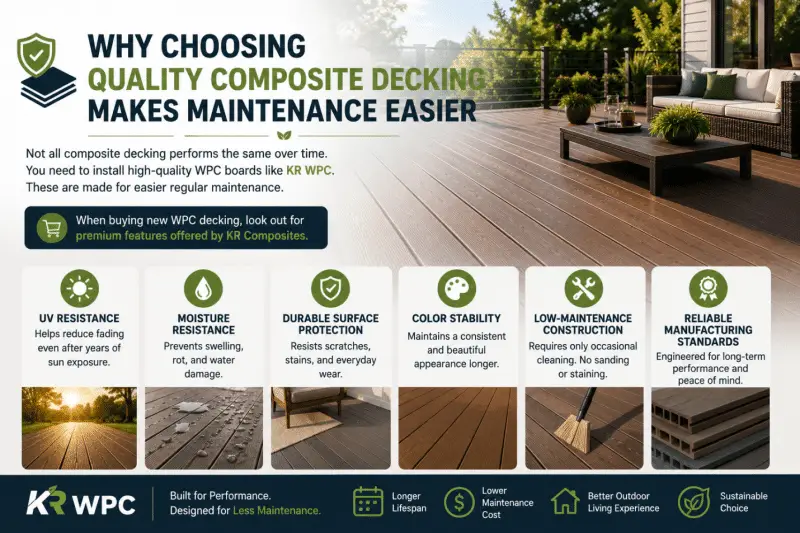
Why Choosing Quality Composite Decking Makes Maintenance Easier
Not all composite decking performs the same over time. You need to install high-quality WPC boards like KR WPC. These are made for easier regular maintenance.
When buying new WPC decking, look out for premium features offered by KR Composites.
- UV Resistance
- Moisture Resistance
- Durable Surface Protection
- Color Stability
- Low-Maintenance Construction
- Reliable Manufacturing Standards
Choosing a reliable WPC composite decking manufacturer means fewer repairs, easier cleaning, and a longer-lasting outdoor space.
Conclusion
Pressure washing composite decking is not a very difficult process. However, it does require the right technique. Pressure washing composite decking the right way can bring you the best required results.
Remember the four golden rules of pressure washing WPC decks:
- Use low to moderate pressure.
- Keep a consistent distance from the surface.
- Wash along the length of the boards.
- Allow the deck to dry completely before putting furniture back.
Composite decking is known to make outdoor spaces easier. However, even the best decks can need some regular care. A deep clean once or twice a year, combined with simple weekly maintenance, can help your deck stay clean and attractive. You can enjoy it for many years.
So, make sure to invest in high-quality WPC decking for easier maintenance. This will surely give you more time to relax and less time worrying about the deck repairs.
Frequently Asked Questions
Can you pressure wash WPC composite decking and not damage it?
Yes. It can be done. Most manufacturers recommend using a pressure washer at a range. This can be 1,500–2,000 PSI. You should keep the nozzle at least 12 inches away. Also make sure to use a wide spray pattern.
What is a good PSI level that is safe for pressure washing composite decking?
For most composite decking a pressure range of 1,500 to 2,000 PSI is said to be safe. You should however, always check with the recommendations provided by the WPC manufacturer.
How often should you clean or pressure wash your WPC deck?
Most composite decks only need one or two deep cleanings each year. Along with this you should ensure regular sweeping and prompt removal of spills.
Can bleach or harsh chemicals be used for cleaning composite decking?
No. You should not use bleach and harsh chemical cleaners on WPC decking boards. Mild soap or a composite decking cleaner is usually sufficient for good cleaning.
Why does my composite decking have streaks after pressure washing?
Streaks are often caused by holding the nozzle too close. If you use excessive pressure or wash the boards across instead of following their length, then you can also have streaks.