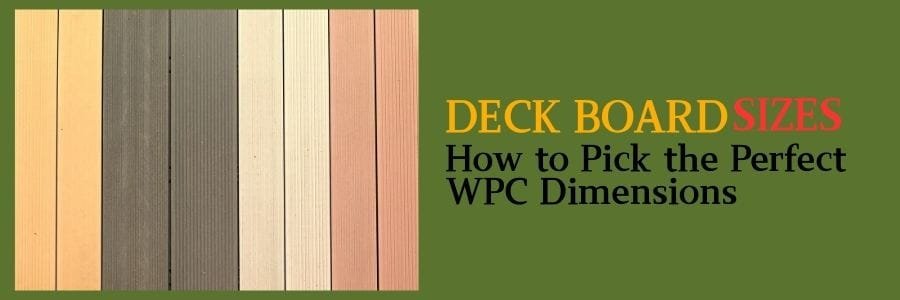
Deck-board size affects layout, material take-off, handling, subframe coordination and the finished appearance. The right choice is not simply ‘wider’ or ‘thicker’; it must match the selected profile, support spacing, installation pattern and project conditions.
WPC decking is considered by residential and commercial buyers who want factory-made profiles, consistent finishes and reduced routine coating. Product quality and suitability still vary, so size selection should begin with the application and verified product data.
With this change comes the need to understand how WPC decking board dimensions differ from traditional wood. In this article, we will help you understand everything you need to know about selecting the perfect deck board size.
Start with the Project Brief, Not a ‘Standard’ Board Size
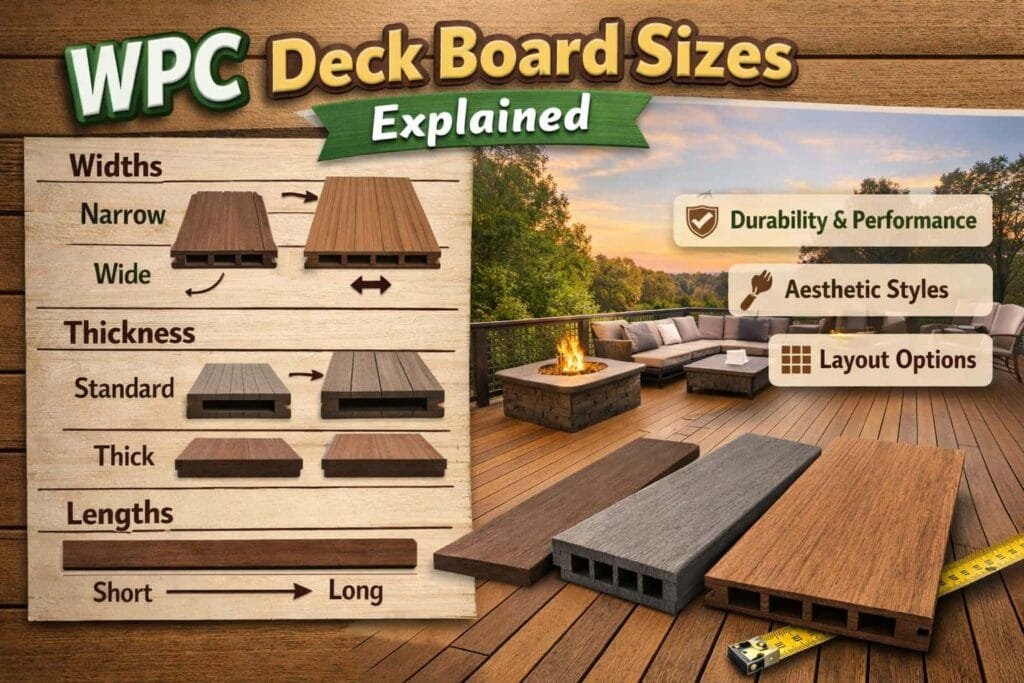
Width Considerations for Deck Boards
Width is one of the most important factors to consider when you are choosing deck board size. Available widths depend on the manufacturer’s active profile range. Compare effective cover width, overall width and the required joint—not just the nominal face width—and use the approved product drawing for quantities and layout.
- Narrow Boards:
Narrower boards are easier to work with. They are especially good for smaller spaces. They can give a more detailed and linear look. Moreover, they allow for more flexibility in installation.
This size is often chosen for traditional or rustic looks.
- Wide Boards:
The wider boards, that are over 5 inches, are more modern and sleek. They give a cleaner and more spacious look to your deck.
A wider effective cover can reduce the number of board runs, but installation time also depends on board weight, clip spacing, cutting, access and crew method. Quantify any labour saving only from a project take-off or installation trial.
Thickness and Structural Performance
Thickness is one input to stiffness, but profile geometry, material formulation, span, support and fastening are equally important. Select a profile from the manufacturer’s allowable installation table rather than assuming that thickness alone determines durability. For a deck that will support heavy foot traffic, furniture, or even a hot tub, you do need thicker boards. They can handle the load.
Unlike natural wood the WPC boards often come in a variety of thicknesses to suit different applications. Thicker WPC boards tend to be stronger and more rigid. Hence this makes them a great choice for larger decks or areas exposed to more stress.
The thinner boards are more affordable and easier to handle. However, they may not hold up as well under heavy use.
Length Options and Layout Flexibility
The length of your deck boards is another important consideration in size apart from the width and thickness. Standard and custom lengths vary by production line, order quantity, packaging and transport route. List KR WPC’s current options in both millimetres and feet only after sales and production confirm them.
Choosing the right length depends on the size and shape of your deck.
Here is how length can influence your decking project:
- Standard Lengths:
These lengths are ideal for most residential decks. Here the boards fit easily with minimal cutting.
- Custom Lengths:
The custom lengths might be good option if you have a more complex deck design or you need to minimize the number of seams in your deck. The custom sizes allow for a cleaner and a much more seamless look. There are fewer visible joints.
Consider the shape and size of your deck when planning for board length. A rectangular deck might only need standard lengths. But if your deck has an angled or circular design, then you will need longer boards to reduce joints.
How Board Width Changes Layout and Visual Scale
Visual Proportion and Scale
- With small patios the narrow boards should be used. They will make your space feel cozier and more detailed. It gives a more intimate vibe.
- With larger decks you should go for wider boards. They’ll fill the space better and make your deck feel open and expansive without overwhelming it.
- Try to match the board size to your deck. You should keep in mind the size of your deck when opting the board size.
Creating Modern or Classic Looks
- Modern look is clean and contemporary design. Here you should choose wider boards. They give your deck a sleek and minimalist finish.
- The classic or rustic look require the narrow boards. They will give your deck a detailed and timeless charm.
Surface Texture and Spacing Impact
- Wider Boards give you fewer seams and a smoother surface. This makes your deck look cleaner and more modern. You will love the contemporary vibe they create.
- With narrow WPC boards you get more visible seams. This adds texture. It creates a more intricate and detailed look. The extra spacing can make your deck feel more dynamic.
Orientation and Pattern Choices
- Straight layout involves a simple and clean look. You should stick with a straight layout. Here the boards run parallel to each other. It is the most common choice. It works for almost any deck.
- Diagonal layout is a bit more visually interesting. You can try laying the boards at a 45-degree angle. This makes the space feel larger and adds more dynamic movement. They are especially great for smaller areas.
- Mixed-Width Layouts is good if want something a bit more unique. You can mix different board widths. You should use this option if you want a customized and artistic deck that has more texture and depth.
Using Board Size to Define Deck Zones
- For the main areas you should use wider boards. They are for the central space of your deck. Places where you want an open and free-flowing vibe. It helps fill the space without making it feel cramped.
- You can create zones with narrow boards. They work well to define specific areas, like your dining space or lounging area. You should use them if you want to create a sense of structure within a larger, more open space.

System Checks Before Selecting a Board Size
Climate and Environmental Response
WPC decking is built to withstand harsh weather conditions. Therefore, they are ideal option for areas with extreme temperatures, high humidity, or frequent freeze-thaw cycles.
However, board thickness and width still play a role in performance under different environmental conditions.
- Thicker boards may be more resistant to bending and warping under high moisture conditions.
- Wider boards may expand more during temperature fluctuations, but proper spacing can manage this.
Overall, WPC boards are engineered to handle the challenges of outdoor environments better than natural wood.
Maintenance and Longevity Considerations
Compared to wood the composite decking boards require minimal maintenance. With WPC, you do not have to worry about sanding, staining, or sealing.
As the board sizes increase, it is however important to consider how easy they are to clean. Wider boards are easier to clean quickly. In comparison the narrower boards may require more attention.
WPC composite board decking also resists warping, cracking, and sagging. This makes it an excellent choice for long-term durability.
Practical Tips for Selecting the Right WPC Deck Board Size
Matching Board Size to Usage Needs
- Entertainment Space:
Wider deck boards are your best choice for you if you want to host parties or large gatherings. They can make the space feel open and welcoming.
- Family-Friendly Spaces:
The narrower WPC boards create a more intimate and detailed look for smaller and cozier areas.
- Multi-Functional Spaces:
If your deck will serve multiple purposes like a dining area and a lounge you can go for medium-width boards.
Confirm Joist Spacing, Installation Angle and Fasteners
- Joist Spacing: Always align the joist spacing with the size of your boards.
- Do not reduce joist quantity based on width or thickness alone. Follow the joist-spacing requirement for the exact profile, load case and installation angle; wider boards may still require the same or tighter support conditions.
- For narrower boards: You may need more joists to provide the support they need.
- Double-Check Manufacturer Guidelines: Always verify the correct joist spacing and board size compatibility with your supplier’s instructions to ensure a proper, safe fit.
Cost Implications of Thicker or Wider Boards
- Wider/Thicker Boards: These are more expensive up front. But they offer longer-term durability. They require less maintenance. If you are okay with the initial cost they could be a great investment.
- Weighing Costs vs Benefits: Before you choose, think about the long-term benefits:
- Wider or thicker boards might mean fewer replacements or repairs in the future.
- They also tend to look better and can make a bigger visual impact, adding to the overall appeal of your deck.
- Long-Term Savings: The extra upfront cost might be worth it when you consider the maintenance savings (no need for sanding, staining, or sealing like with wood).
Conclusion
Selecting and buying the right WPC deck board size requires thorough understanding of how the width, thickness, and length affect your deck’s appearance, performance, and longevity.
WPC decking can suit many outdoor projects when the profile, substructure and maintenance plan match the site. Use the selection checklist below to confirm fit before requesting samples or a quotation. With KR WPC’s wide range of sizes and finishes, you can create the perfect deck that meets your aesthetic and functional needs.
FAQs
1. What is the standard deck board size for WPC decking?
Typically, the WPC deck boards come in widths from 3 to 6 inches. They come with standard lengths of 12, 16, and 20 feet. Additionally, the custom sizes are also available.
2. How does WPC deck board size compare to wood deck boards?
WPC boards are typically more consistent in size and performance than wood. They are also more resistant to warping and require less maintenance.
3. Are thicker WPC boards better for hot or humid climates?
Not necessarily. Moisture performance depends on formulation, cap layer, profile design, exposed ends, drainage and installation. Choose a humid-climate product using product-specific absorption and dimensional-stability data, not thickness alone.
4. What deck board size works best for small outdoor spaces?
For smaller spaces, narrower boards tend to be better. They create a more detailed and textured appearance.
5. Does deck board size impact installation cost?
Yes. The wider boards can reduce installation time. But they may also cost more per board. You should think about the overall aesthetic and labor costs when making your decision.