A well-defined fence does more than just a boundary. It creates your safe space and converts your outdoors – backyard patio, deck, or lawn into a comfortable nook that not only gives you a sense of security but also elevates the curb appeal of your place.
So, appreciate the fencing options we have evolved from classic wood to modern WPC. KR wood-plastic composites are also excelling in terms of durability and sustainability to meet your aesthetic fencing needs.
Let’s get into it!.
Classic Privacy Fence Styles for Every Home
Vertical Board Fencing
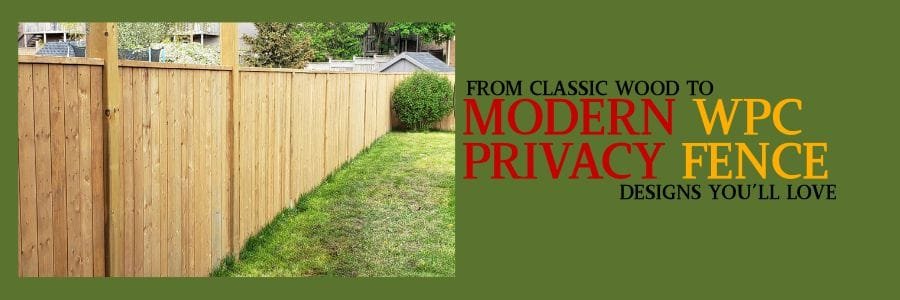
Vertical board fencing is one of the most widely recognised traditional privacy fences, giving complete coverage. It uses vertical wooden planks (pickets) attached to horizontal rails (the frame that supports the fence). This simple fencing style is also ideal for residential areas where you want to block the view entirely or have outdoor family time.
Natural wood, such as cedar, redwood, or pressure-treated pine, is well-suited for this type of fencing. However, natural wood damage (such as rot, insect damage, or sealing or staining) is a primary concern and requires regular maintenance.A smarter alternative is a composite wood fence made from WPC (wood-plastic composite), which delivers the classic look of timber with decades of durability and minimal upkeep.
Board-on-Board Fencing
As the name suggests, board-on-board fencing is made of overlapped boards. They are mounted in such a way that one board overlaps another on alternate sides of the support rail.
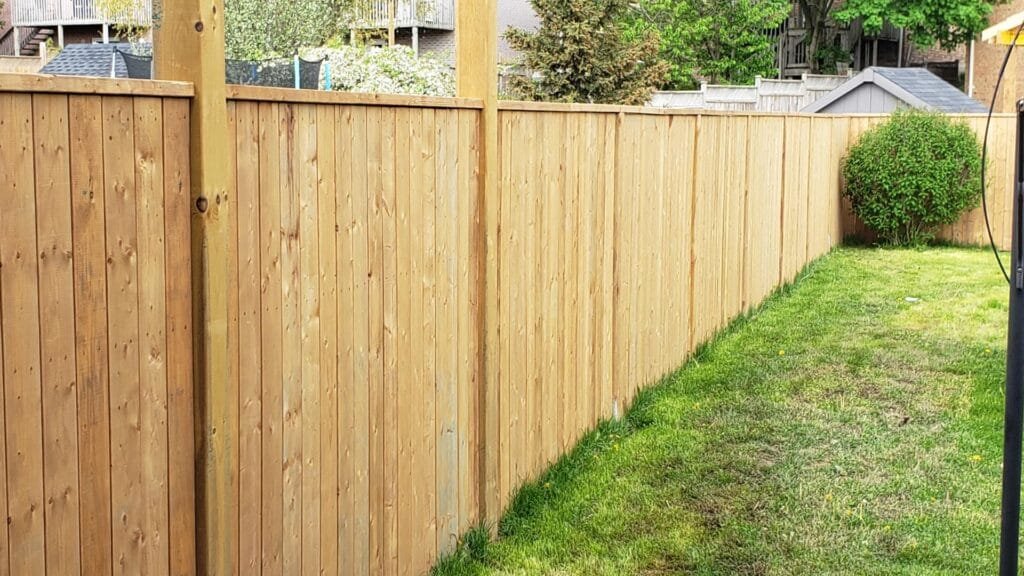
This tight packing leaves no gaps, meaning you get absolute privacy with a premium look.
Board-on-board fencing is also excellent at reducing noise. So, consider it if your noisy neighbors or excessive traffic bothers you.
Horizontal Slat Fencing
Horizontal slat fencing is a modern fencing option in which horizontal slats run parallel to the ground – mounted between vertical posts or rails. The choice of gaps between the boards is variable and entirely up to your privacy requirements.
Overall, its sleek design and clean look take contemporary homes to the next level. It is also important to choose stable and durable materials (like WPC) for this fencing type. WPC is warp-resistant to ensure clean and consistent horizontal lines.
Mixed-Material Fence Ideas: Wood, Metal, and WPC
Wood and Metal Combinations
Wood and metal fences are the best combination ever. The warmth of wood pairs well with black steel or aluminum structure. It not only increases the modern visual interest of the space but also complements architectural elements (e.g, windows) for a cohesive look.
Natural wood also maintains an organic feel, and solid wood panels leave no doubts about privacy. At the same time, metal frames give structural support and protect wood from insect damage.
WPC and Metal Hybrid Fences
Nothing can beat the scope of wood-plastic composite planks and metal hybrid fences. WPC planks resemble wood but resist rot, splintering, and insect damage. The added benefits of WPC, along with powder-coated frames (Aluminum or steel), make the fences more durable.
Aluminum or properly treated steel is also rustproof and weather-resistant, allowing it to stay intact for long-term outdoor use.
Here, a great catch is that wood plastic composite comes in varied textures and colors. You can also have powder-coated metal frames in many colors (black, bronze, white, or more) for the desired combination.
Decorative Privacy Fences
Transforming your privacy fence into a decorative element is also a great idea. You can have a laser-cut, perforated steel or aluminum screen to create a bold statement. Use lighting above, between, or behind the panels to convert the fence into a nighttime feature. Even more customization is possible – simply choose motifs (geometric or nature-inspired) for a distinct look.
Modern Privacy Fence Concepts for Function and Flair
Vertical Gardens and Green Screens
You can also celebrate nature in your privacy fence by incorporating climbing plants, trellises, or planter boxes.
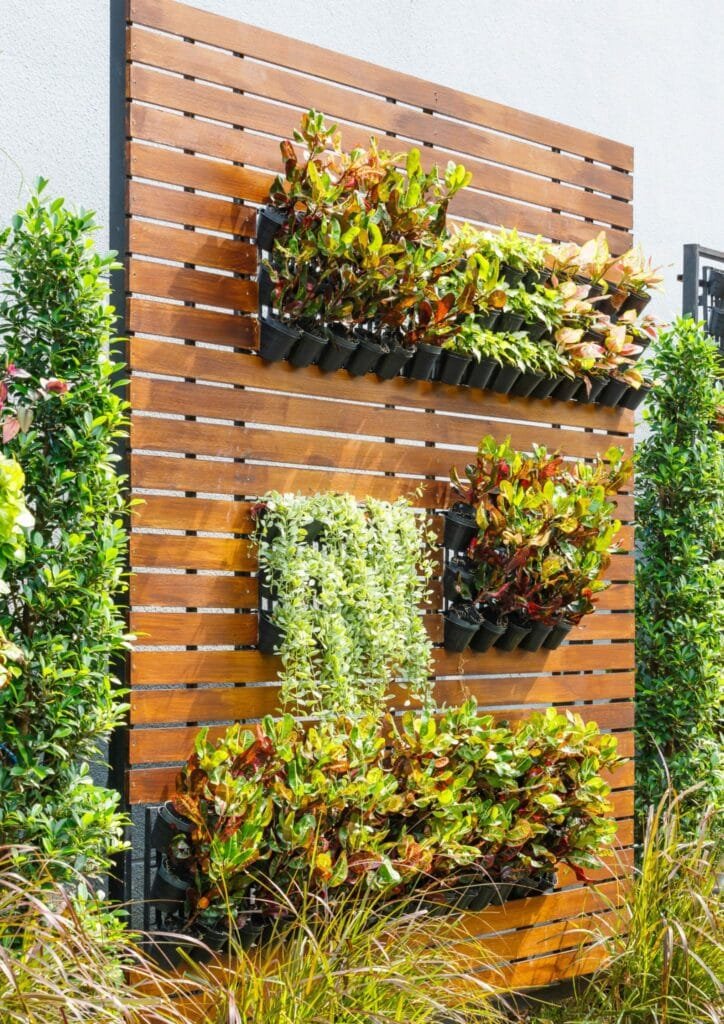
- Simply attach trellis panels to the fence, and climbing plants (Jasmine, ivy or climbing roses) will grow upward to form a green wall.
- Creating a vertical garden as a fence is also easy. You need to use a WPC system that supports integrated or attached planters for optimal plant growth.
- Use grid frames on the fence to help grow plants and use them as green screens.
This raises an important question when designing a plant-based fence: what material should you use for fence support – traditional wood or WPC?
The answer is – WPC. Here is why:
- WPC is moisture-resistant and does not decay like wood when exposed to damp soil or water.
- It is also less prone to insect infestations and mold growth.
- WPC planks are more stable to bear the weight of planters or trellises.
Louvered Fences
Louvered fences are modern yet practical. They are designed using angled slats instead of flat boards. This design offers privacy – blocking the view – without interrupting light or airflow. The slats are set at an angle that you cannot see through, but air and light filter through to prevent a stagnant environment. So it’s a big choice for urban homes where less outdoor space is an issue.
Patios, poolside areas, and rooftop terraces are also ideal locations to use louvered fences, where both privacy and ventilation are required.
Layered & Textured Designs
Here is a great deal of ideas to create layered and textured privacy fences:
- The first approach is to use alternating WPC boards. Go for some thicker, some thinner – some set forward or recessed. It will create a subtle 3D effect in the privacy fence.
- Focus on the board textures. Combine smooth, brushed, or embossed wood-grain finishes to add depth and a striking appearance.
- Make your privacy fence luxurious with correct color blending. Use light and dark WPC tones – for instance, warm cedar paired with deep charcoal creates a contrasting look to make the fence luxurious.
Modular Fence Systems
A modular fence system is a fast and modern way to use ready-to-use fencing kits. You get pre-engineered panels, posts, and connectors to assemble into a customizable fence. Panels come in a variety of styles and sizes, allowing for the integration of further decorative elements.
Choosing the Right Privacy Fence for Your Space
After getting a detailed overview of all the fence designs, it is now time to decide how to choose the right privacy fence for your space.
Define Your Purpose
First, reconsider the purpose of your fencing. Are you looking for a purely privacy fence to block neighbors’ view? If so, then opt for a fence with minimal gaps for maximum convergence.
On the other hand, you can consider decorative fences or mixed materials if your main goal is to make your space aesthetically pleasing.
Match Your Home’s Style
Next is to revisit your home’s style to create a mind map of materials/architecture focused on your place. The style of your house should align to the orientation, pattern, and materials of the fence so everything looks cohesive.
A general guide is to consider vertical planks or board-on-board fencing for traditional homes. It gives a warm and packed feel.
While horizontal slats or mixed-material fences catch everyone’s eye in modern or contemporary homes for their clean and sleek look.
Budget and Maintenance Considerations
When choosing the right privacy fence, it is essential to consider both the upfront cost and the long-term care and maintenance budget.
Wood and WPC – both are widely accepted fencing materials, but they significantly differ in terms of pricing.
Traditional wood seems to be budget-friendly due to its low upfront cost. It’s higher upkeep – sealing, staining, painting, and protection from insects takes your extra budget and effort. On the other hand, wood-plastic composite fencing costs more at the start but requires less maintenance (saves long-term expenses). Thus, it is advisable to invest wisely, considering your long-term goals, and make it pocket-friendly.
Sustainability & Longevity
Natural wood is prone to damage and rot earlier than WPC. Even a well-maintained wood fence has an average lifespan of 5 to 15 years. WPC is made of recycled materials and lasts for decades.
Conclusion: Privacy and Style Can Coexist
In this changing world, privacy fences are not just the solid marking of materials. They define your lifestyle – your choice and preferences for your property. Whether you prefer a classic wood or modern composite, the perfect privacy fence starts with innovative design and the right material choice.As a trusted wpc fencing supplier, KR WPC’s fencing has your back offering elegance, privacy, and sustainability all at one place.
FAQ
- How tall should a privacy fence be for my backyard?
Your backyard must have a 6 ft. high privacy fence to block neighbors’ view. In some cases, people can go up to 7 to 8 ft. high, depending on their privacy requirement, but it also depends on the local zoning or building regulations, so it’s better to check if there is any height limit on your property.
- What materials last the longest for privacy fencing?
Wood-plastic composite lasts the longest – for decades. Its high resistance to moisture, pests, UV, and warping adds to its longevity. While traditional wood is prone to damage and lasts for a few years.
- Can I mix wood and metal for a custom privacy fence?
Yes, you can mix wood and metal for a custom privacy fence in fact, it is a modern approach to blend materials for personalization. Ensure the metal is weather-resistant, powder-coated steel or aluminum to avoid rust issues.
- How do I make my existing fence more private?
Adding privacy panels or slats to existing fences is a great way to make existing fences more private. Another way is to add a topper or use climbing plants or vines to tightly block the view.
- What are the advantages of using WPC composite for fencing?
Wood-plastic composite is resistant to rot, insects, warping and moisture. It also requires low maintenance – no need to regularly paint, stain, seal or do pests treatments.