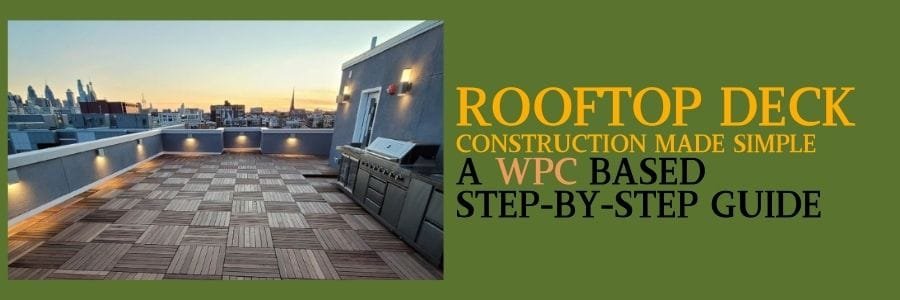
In an era where modern constructions and architectures of urban living are constantly evolving, having a flat roof is more than just a structural necessity. Homeowners are now utilizing the rooftop decks to create an extra outdoor living space. Having a dedicated area in the house ensures the space feels lively. It’s a perfect escape from the daily routine with great views of a crowded city or the suburbs. However, when it comes to choosing materials for a rooftop deck, the process becomes more complicated than installing decks in a simple backyard project.
Unlike a ground-level deck, several demanding factors require high consideration. When installing rooftop decks, factors such as rigorous weight restrictions, intense wind uplift, constant exposure to sunlight, and the absence of a cooling element in the ground require materials that meet high standards and can handle such demanding conditions. This is where Wood-Plastic Composites (WPCs) come in as a solution to the rooftop deck installations, where builders and homeowners can install them without ever worrying about durability or high maintenance requirements that are demanded by the rooftop environment.
Step One: Evaluate Structural Capacity and Load Requirements
This is the most critical step that comes before even purchasing a single board for a rooftop deck. Analyzing and understanding the structure of your rooftop and its structural capacity is highly critical, as these decks can significantly add a lot of weight to your roof, and failure will result in catastrophic structural damage.
Understanding Roof Load Limits Before Any Design Decisions
Typically, there are two types of loads: static loads (dead loads) and dynamic loads (live loads), and distinguishing between these two types is crucial before you start with installations on your rooftop decks.
- Static Loads: Static load applies when there is a constant load on your rooftop. These loads include all the permanent features that you will be installing on your rooftop, like the permanent weight of the decking materials, railings, or permanent seating that you would be installing.
- Dynamic Loads: These are the loads that are variable, accounting for the weight of people, furniture, and the temporary equipment that you will be installing and using on your rooftop.
However its important to note that before installations on your rooftop, ensure that your rooftop is fit for making it a living space, which means your rooftop should handle loads from 40-60 PSF. If your rooftop is made based on a 20 PSF standard, you can apply reinforcement or a pedal system to ensure that static and dynamic loads can be catered to.
Why Lightweight Decking Materials Matter
A rooftop structure has a limited capacity for bearing loads before a catastrophic failure. To ensure that every pound of weight you add doesn’t have an overall effect on the structure, lightweight decking matters a lot. They provide you with extra room for installations of equipment on your rooftop and allow you to cater to more people.
When considering rooftop decking, you may find traditional hardwood or concrete to be extremely heavy. A perfect solution for your rooftop decking can be using WPC decking, which offers an extremely well-balanced strength-to-weight ratio. The density typically ranges from 1.2 to 1.4 g/cm^3, which reduces the risk of excessive mass that the load is kept within the safety codes and standards of the buildings.
Consulting Engineers and Local Building Codes
When installing rooftop decks, it’s always wise to consider having a professional or a structural engineer assess the existing roof. They will do any necessary calculations required and determine if any reinforcements are required according to the region’s standard codes, like IRC (Table R301.5), which states that for a living space, the load capacity has to be increased by 20 PSF to 40 to 60 PSF. These standards may vary for different regions, and a consulting engineer will provide you with the necessary information on whether your roof is suitable for creating it as a living space, or you may require reinforcements if it’s not suitable.
Step Two: Plan Drainage, Ventilation, and Waterproofing
The life of a rooftop deck is highly dependent upon how well the roof membrane beneath it is holding up. This is where properly planned drainage, ventilation, and waterproofing come in handy.
Protecting The Roof Membrane Beneath The Deck
When it comes to protecting the roof membrane, a traditional practice is to install laying sleepers (beams) directly on the roof, which can cause the water to be trapped on the roof and damage the roofing materials, like EPDM, TPO, or bitumen. A much more modern and superior approach to protect the roof membrane is going towards an adjustable pedestal system. These are the supports that sit at the top of the roof membrane, which cause the entire deck structure to be elevated. This is an effective method that doesn’t require making holes in the roof for screws or bolts.
Designing For Proper Water Runoff
Typically, rooftops are made with a slight tilt towards the drainage to guide water to the drains. But when it comes to installing decks, they need to be leveled to ensure you can put furniture or walk comfortably. With adjustable pedestals, you can adjust them when installing rooftop decks for the roof’s slope, ensuring a flat surface while also maintaining a slope underneath for water drainage.
- Drainage Gaps: The problem with a flat surface is that water can’t be drained. This is where consistent gaps of around 3mm to 6mm between each WPC deck board are ensured to allow rainwater to instantly fall on the tilt of the roof towards the drain.
- Preventing Standing Water: With the WPC deck is slightly elevated, it allows the air to flow beneath the decking, keeping the actual roof membrane dry and free of moisture. This prevents puddle formation, preventing mold formation, heat buildup, and elongates the life of the roof membrane.
How WPC Decking Performs In Moisture-Prone Environments
When it’s about installing decks on rooftops, moisture is a big concern. When compared to traditional decking, WPC decking for rooftops is great for resisting moisture. These WPC deckings consist of a polymer shell that not only locks the water out but also ensures that it is immune to rot, swelling, and growth of mold, which is a big concern in timber decks in conditions that are constantly damp.
Step Three: Design the Layout and Functional Zones
A rooftop deck should not only perform great, but also the design and functions offered by these rooftop decks should look like a natural extension of your living space. This is where you would require proper zoning and layout planning for your rooftop.
Determining How The Rooftop Deck Will Be Used
The most crucial part is considering how your space will be utilized. For your rooftop, there should be two major considerations, which include traffic Flow and safety rail placement.
- Traffic Flow: Does your rooftop have a corner with the best views for a lunge zone, or do you require a reinforced area for a dining table? An accurate plan is required based on your use cases, with clear pathways from the access door to the edge railings.
- Safety Rail Placement: Whenit comes to creating a living space on a rooftop, safety rail is a no-compromise. Ensure that the safety rails you install should resist 200 lbs of force for the utmost safety required for a living space. Furthermore, look for railings that aesthetically match the WPC decking design you would be installing and using glass beneath the railing for wind protection, while also ensuring that views are not blocked.
Selecting Board Orientation and Spacing
How well the final look of your roof comes out is highly dependent upon the type of orientation and spacing you choose. Going towards a diagonal layout can give a small space a larger feel. On the other hand, a linear layout is more eye-catching and keeps focus on views. These design features are a personal choice, but when designing a rooftop decking, it’s crucial to ensure expansion gaps.
- Expansion Gaps: Rooftops constantly experience change in temperature, which causes the decking to slightly expand when under heat or contract in cold weather. With a WPC decking, these expansion rates can be as low as 1%. This ensures that the expansions are as low as possible, giving a smoother surface feel.
Integrating Fencing or Privacy Solutions
Rooftops are constantly exposed to wind pressure, and privacy is a major concern. A single solution to both problems can be installing WPC fencing panels that not only at resisting wind pressure but also provide great privacy for a living space on the rooftop. Another benefit that these panels offer is that they eliminate the need for constant staining or painting, featuring lower maintenance than traditional panels, which makes them great for rooftops, where maintenance is dangerous and difficult to perform.
Step Four: Choose Materials Built for Rooftop Conditions
The material for your rooftop decking is what determines how long your rooftop decking will last and what maintenance will be required.
Why Traditional Wood Struggles On Rooftops
When it comes to traditional woods, they are known to struggle in outdoor demanding environments, such as rooftops, where there is constant exposure to UV rays, rain, moisture, wind, and constantly changing temperatures. With such conditions, natural wood like cedar or timber will eventually gray, splinter, warp, and check (crack). The problems of rot, swelling, and molding are also a big concern in traditional woods. Installing wood as a rooftop decking is like having a sponge under a magnifying glass that constantly requires maintenance to ensure it lasts.
Advantages of WPC Composite Decking And Cladding
If wood is not a suitable option for decking, then what is the perfect option for rooftop decking? Our answer is WPC composite decking and cladding that is engineered to look like wood while being a highly durable and reliable option for homeowners looking for a rooftop decking solution.
- UV Resistance: WPC uses high-quality composites that ensure the color stays looking the same as it was bought originally unlinke wood that fades or greys out after a period of time.
- Thermal Stability: WPC expands a lot less, typically less than 1%, due to temperature changes, making them highly stable, preventing warping or twisting.
- Minimal Maintenance: With no sanding, staining, or sealing required, the maintenance is pretty low. Just soap and water are enough for efficient cleaning.
Working With A Reliable Manufacturer
When it comes to getting WPC composites, not all of them are created equally. With installations on rooftops, the material quality and composition used in the manufacturing of composites matter a lot. One such manufacturer that stands out the most is KR Eco Composites, manufacturing and supplying WPC Composite Decking, Composite Cladding, and Composite Fencing that are engineered to perform in demanding outdoor environment conditions. KR WPC fencing is not only durable but also ensures that an aesthetic feel and warmth of natural wood is added, so that it not only looks great when installed but also performs well.
Conclusion: Building Smarter for Long-Term Rooftop Enjoyment
Installing decking on the rooftop is more than just making it useful. With rooftop decking, you ensure utmost durability and aesthetics that make your living space perfectly blend in with the overall aesthetics of the house. Before rooftop decking installations, ensure to evaluate the structural capacity and load requirements of your rooftop and end up with materials for your rooftop that actually survive the demanding conditions
Instead of going towards high-maintenance timber or traditional woods, it’s better to go towards WPC technology to ensure that you get the peace of mind from maintenance requirements, improved safety, and reduced structural load. With WPC decking, you not only get better drainage, proper loading, and premium materials, but a rooftop that provides value and a long-lasting investment to your overall property.
For builders and homeowners looking for materials that meet these rigorous standards, KR WPC offers a comprehensive range of composite solutions designed to turn any rooftop into a stunning, enduring retreat.
FAQ
Q. Can any roof support a rooftop deck?
Typically, the answer is no. It is due to the residential rooftops being mostly built to support the loads of snow, rain, or a maintenance person, not a live load. Before installing rooftop decking, ensure a structural engineer evaluates your rooftop and installs any required reinforcements before you start the building process.
Q. Is WPC decking suitable for rooftop installations?
Yes, WPC decking is far superior to wood. It not only looks aesthetically like a wood, but performs even better. It is UV-resistant, resists moisture and rain, is more thermally stable, and doesn’t rot, and the color stays consistent for longer periods. Furthermore, there are a lot fewer maintenance requirements for WPC when compared to Wood.
Q. What spacing is needed between WPC deck boards on rooftops?
Spacing is crucial for the effective drainage of rainwater or water used for cleaning. For WPC rooftop decking, a side-to-side gap of 3mm to 6mm is considered a standard for efficient airflow and the drainage of water. Furthermore, gaps are also crucial for accounting for thermal expansions, which are relatively smaller, about 1% in WPC, to ensure boards can expand without buckling.
Q. Are rooftop decks more expensive than ground-level decks?
Yes, typically, rooftop decks are expensive due to the requirements of specialized structures like pedestal systems, and the use of lightweight materials in WPC rooftop decking increases the costs. Furthermore, reinforcement costs, crane or elevator logistics for materials, also add up to the costs of installing deck boards on rooftops.
Q. How long does a WPC rooftop deck typically last?
One of the crucial benefits that a WPC rooftop deck offers is that it can last for years. Typically, a good quality WPC decking can last for 20 to 25 years or more with minimal maintenance, for cleaning that requires only soap and water.