Welcome to this categorized glossary of Wood-Plastic Composite (WPC) wall cladding terms. This guide is designed for homeowners, contractors, and designers to use a consistent professional language when selecting materials, installing, and maintaining WPC wall cladding. Each term includes a concise definition to facilitate quick reference.
BOARD TYPES AND PROFILES
• WPC / Wood-Plastic Composite: A cladding material composed of wood fiber and plastic, offering the appearance of wood with enhanced durability and exterior performance.
• Capstock / Capstock Thickness: The outer protective layer on WPC boards that provides UV resistance, color stability, and surface durability; thickness influences longevity and cost.
• Capstock Colors: The color options applied to the capstock to achieve desired aesthetics and fade resistance.
• Core: The internal material composition of a panel, typically a mix of wood fibers and plastics, determining strength and stability.
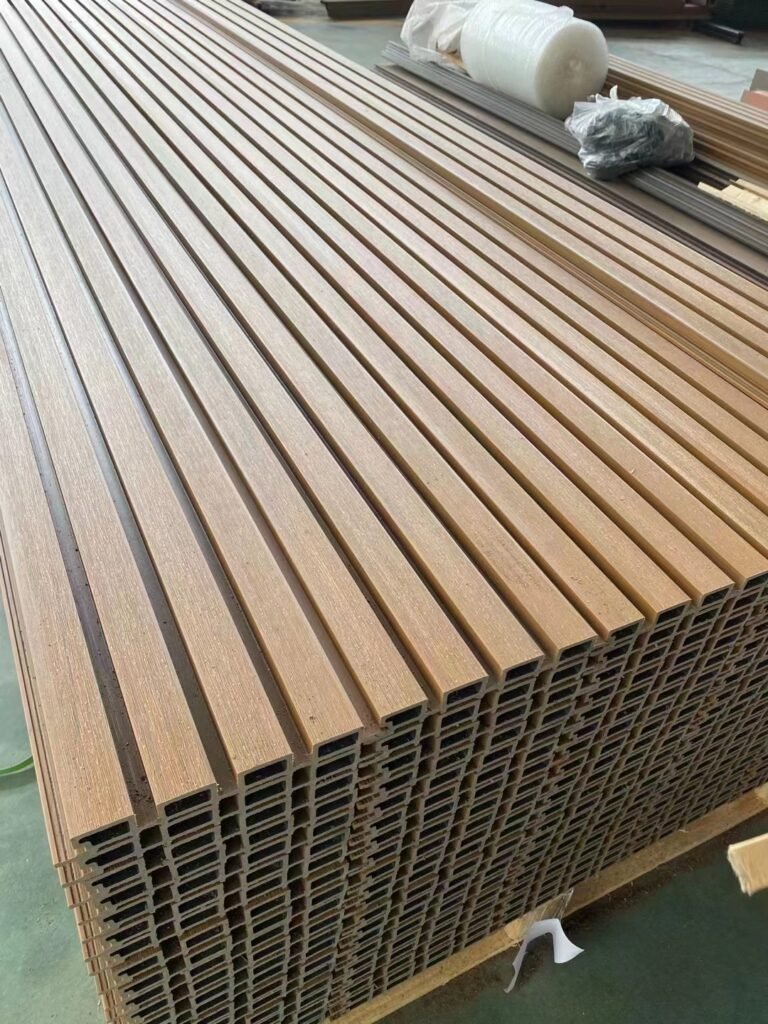
• Hollow Core: A panel with hollow cavities inside to reduce weight and cost, usually with lower stiffness than solid cores.
• Solid Core: A panel with a continuous solid interior, offering higher stiffness and impact resistance but greater weight.
• Extruded: A manufacturing process where the panel is formed by pushing material through a shaped die, producing uniform cross-sections.
• Coextruded: A process where the core and capstock are extruded separately and then bonded, often yielding thicker capstock and more uniform weathering.
• Embossed / Textured / Brushed: Surface textures created to mimic wood grain and/or enhance appearance and tactile feel.
• Surface Finish Options: Finished textures or coatings (e.g., wood grain, smooth, matte, satin, or gloss) that influence aesthetics and maintenance.
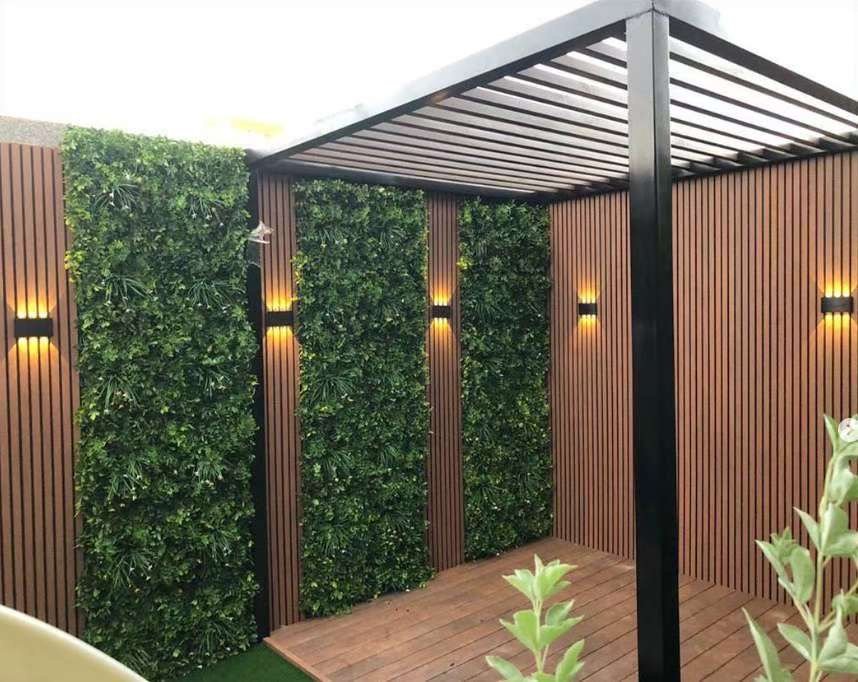
• Wall Panel Profile: The overall cross-sectional shape and edge design of a panel (flat, tongue-and-groove, beaded, etc.).
• Tongue-and-Groove (T&G): A cladding interlock system where panels interlock via a tongue on one panel and a groove on the adjacent panel for a tight seam.
• Shiplap / Beadboard / Panel: Common wall cladding profiles, each with distinct interlock or fastening methods and visual appearance.
• Groove Options: Grooved edges or back channels designed to accommodate hidden fasteners or provide drainage/ventilation.
• End Grain Sealer: Treatment applied to panel ends to reduce water uptake and potential end-splitting (included on some products).
INSTALLATION AND SUBSTRUCTURE
• Substructure (Façade Frame): The supporting framework behind the cladding, including furring strips, battens, and vertical/horizontal framing members.
• Framing Members: Structural elements such as studs or battens to which cladding is attached.
• Hidden Fasteners: Fastening systems that attach panels without visible screws on the surface for a cleaner look.
• Face Fasteners: Screws or fasteners that are visible on the panel face.
• Starter Clip / End Clip: Hidden fasteners used to secure the first and/or last row of panels for alignment and stability.
• Clip System: The complete family of hidden fastening components used with a wall cladding panel.
• Clip Compatibility: How well a fastening system works with a given brand or panel profile.
• Plug: Decorative or protective caps that cover screw or clip holes for a clean finish.
• Expansion Gap: The intentional spacing between panels to allow for thermal expansion and moisture movement.
• Alignment / Start / End Alignment: Ensuring consistent gaps, angles, and panel orientation during installation.
• Alignment Tools: Tools used to help achieve uniform spacing and alignment during layout.
• Ventilated Façade / Rainscreen: A wall installation approach that creates a ventilated air gap behind the cladding to promote drainage and drying.
• Substructure Drainage: Design features that promote drainage behind the cladding to prevent water pooling and substrate damage.

FASTENERS AND CONNECTORS
• Screws: General term for fastening hardware used to secure panels to substructure members.
• Stainless Steel Screws / Coated Screws: Corrosion-resistant screws suitable for outdoor use with WPC.
• Flush Installation: Mounting panels so the screw heads sit flush with or below the panel surface for a clean top.
• Face Fasteners: Screws that are installed on the face of the panel, visible from outside.
• Hidden Fasteners: Fasteners that are not visible on the surface, providing a cleaner appearance.
• Starter Clip / End Clip: Hidden edge fasteners used to secure the first and last rows.
• Clip System: The full set of hidden fastening components used with a panel profile.
• Plug Color Matching: Using plugs that match the cladding color for a seamless look.
• Hardware Corrosion Resistance: The durability of fasteners and metal components in outdoor, humid, or saline environments.
• Panel Fastener Size: Typical screw lengths vary by panel thickness and spacing (e.g., 25–60 mm, depending on profile).
• Sealant / Edge Sealant: Sealants used at panel edges or joints to improve water resistance and airtightness.

SURFACE AND AESTHETICS
• Embossed / Textured / Brushed: Surface treatments that imitate wood grain and enhance tactile/visual appeal.
• Texture: Visual and tactile surface characteristics of the panel.
• Colorfastness: The ability of color to resist fading under UV exposure and weather.
• Fade Resistance: The ability to maintain color over time under UV exposure.
• UV Stabilizers: Additives that slow color fading and material degradation due to sunlight.
• Color Consistency / Batch Variation: Differences in color/appearance between panels or batches.
• Nosing: A decorative or protective edge piece at the end of a panel for safety and finish (where applicable).
• Fascia / Skirting: Decorative or protective boards used along the outer edge to provide a finished look.
PERFORMANCE AND MATERIAL PROPERTIES
• Moisture Content (MC): The percentage of moisture contained in the panel, affecting dimensional stability.
• Acclimation: Allowing material to adjust to ambient site conditions before installation to reduce movement after installation.
• Dimensional Stability: The ability of the material to maintain dimensions with changes in moisture and temperature.
• Thermal Expansion / Heat Build-Up: Expansion and contraction behavior with temperature changes and potential heat buildup on sunny days.
• Rapid Drying: Fast moisture loss after installation that can lead to cracks or warping if not managed properly.
• Moisture Equalization: Balancing moisture across components to minimize differential movement.
• End Grain Treatment: Finishes or coatings at panel ends to reduce water uptake and end-splitting.
• Warp / Distortion: Any deviation from a flat, true plane; includes cupping, bowing, twisting, and crowning.
• Cuping / Bow / Twist / Crown: Specific warp forms—cup (concave), bow (arch along length), twist (torsion), crown (convex along length).
• Warp: General term for any deviation from true flatness in a panel.
• Check / Split: Surface or internal cracks; checks are often cosmetic, splits can affect structural performance if severe.
• End Splitting: Cracks that originate at the end of a panel and propagate inward.
• Gapping: Gaps between panels that widen with expansion and shrink with contraction.
• Lipping: A raised edge or burr along a joint between panels.
• Joint Tightness: The snugness of joints and gaps between panels and fasteners.
• Surface Planarity: The flatness of the finished wall surface.
• Heat Build-Up: Excessive surface temperatures that can exacerbate expansion and distortion.
MAINTENANCE AND CARE
• Cleaning Methods: Recommended cleaning approaches (mild cleaners, water, non-abrasive tools) to preserve surface finish.
• Routine Maintenance: Regular inspection, cleaning, sealing, and treatment as needed.
• Staining / Mold / Algae Control: Preventive and remedial measures for discoloration, mold, and algae growth.
• Repair Options: Solutions for minor scratches, surface damage, or warped panels.
• Replacement Considerations: Guidelines for when to replace panels due to damage or extensive wear.
STANDARDS, CERTIFICATION AND BRAND COMPATIBILITY
• Warranty / Warranty Terms: Coverage details for materials, workmanship, and installation.
• Certification: Compliance with standards (e.g., ASTM) or quality certifications.
• Batch Variation: Small color/texture differences between production lots.
• Brand Compatibility: How well components from different brands work together (especially clips and fasteners).
• Colorfastness Certification: Verification of color stability under UV exposure and environmental conditions.
SELECTION AND CONSTRUCTION CONSIDERATIONS
• Ventilation / Air Gap: Adequate space for air movement to prevent moisture buildup behind cladding.
• Drainage Behind Façade: Design features to improve water drainage behind the cladding structure.
• Maintenance Windows: Optimal timeframes for cleaning and maintenance activities.
• Installation Direction: The recommended direction for installing panels for visual effect and drainage efficiency.
• Substructure Material Choice: Balancing durability, cost, and environmental considerations when selecting the structural framework.
• Building Code Compliance: Ensuring installation meets local codes and wind-load requirements.
ADDITIONAL WPC WALL CLADDING TERMS (UPDATED)
• UV Index Exposure Rating: Indicates resistance to high UV environments such as Australia or the Middle East.
• Wind Load Rating: The cladding system’s resistance to wind pressure based on local building codes.
• Impact Resistance / Hard-body Impact Test: Ability of panels to withstand impacts such as hail or debris.
• Freeze–Thaw Resistance: Performance under cycles of freezing and thawing in cold climates.
• Water Absorption Rate: Percentage of moisture a panel absorbs, affecting stability and lifespan.
• Drainage Cavity: The cavity behind cladding allowing water drainage and ventilation.
• Furring Strip: Wood or aluminum battens used to support cladding panels.
• Vertical vs Horizontal Battens: Orientation of battens depending on cladding direction.
• Flashing: Metal or waterproof components preventing water intrusion (drip edge, sill flashing, window flashing).
• Starter Trim / Base Trim: Trim piece used at the bottom to begin the cladding installation.
• Corner Trim / Inside Corner Trim: Profiles used for finishing exterior and interior corners.
• J-Channel: Trim used around openings like windows and doors.
• Z-Flash / Z-Trim: Mid‑wall transition piece used in shiplap/T&G systems.
• Coefficient of Linear Thermal Expansion: Rate of panel expansion per temperature change.
• Movement Joint / Expansion Joint: Gaps designed to accommodate panel movement on large façades.
• Structural Movement Accommodation: Ensures panels can adjust to building expansion or contraction.
• Acoustic Insulation Value (dB): Cladding’s ability to reduce external noise.
• Thermal Insulation (R‑value / λ‑value): Measurement of heat transfer resistance.
• Breathability / Vapor Permeability: Ability of a wall system to release trapped moisture.
• Multi-tone Surface: Multi‑color design mimicking natural wood shading.
• Embossing Depth: Depth of embossed wood-grain texture.
• Anti-scratch Coating: Surface layer enhancing scratch resistance.
• Weathering Curve: Projection of color or surface change over long‑term exposure.
• Wall Bracket System: External mounting system used with aluminum substructure.
• Structural Anchors: Heavy-duty fasteners connecting substructure to building walls.
• Substrate Preparation: Steps required to prepare the wall for cladding installation.
• Leveling System: Tools or components to ensure panels sit perfectly level.
• Pre-drilling Requirement: Whether screws must be pre‑drilled (especially for solid panels).
• Fire Rating Standards (EN 13501‑1 / ASTM E84): International fire performance classifications.
• Flame Spread Index: Measurement of how fast flames spread across the panel surface.
• Smoke Development Value: Amount of smoke produced during fire testing.
• Building Envelope Requirements: Regulations dictating how exterior cladding must perform.
• Hurricane Zone Requirements: Special installation rules for high‑wind regions.