Welcome to this categorized glossary of Wood-Plastic Composite (WPC) fencing terms. This guide is designed for homeowners, contractors, and designers to use a consistent professional language when selecting materials, installing, and maintaining WPC fencing. Each term includes a concise definition to facilitate quick reference.
FENCE TYPES AND PROFILES
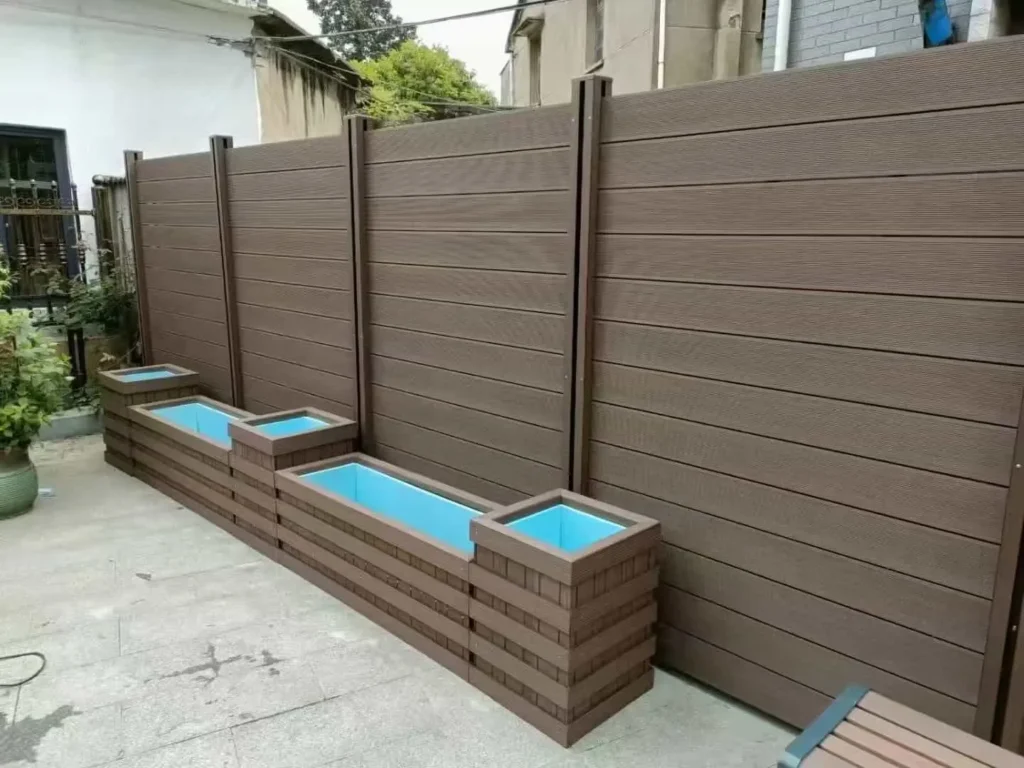
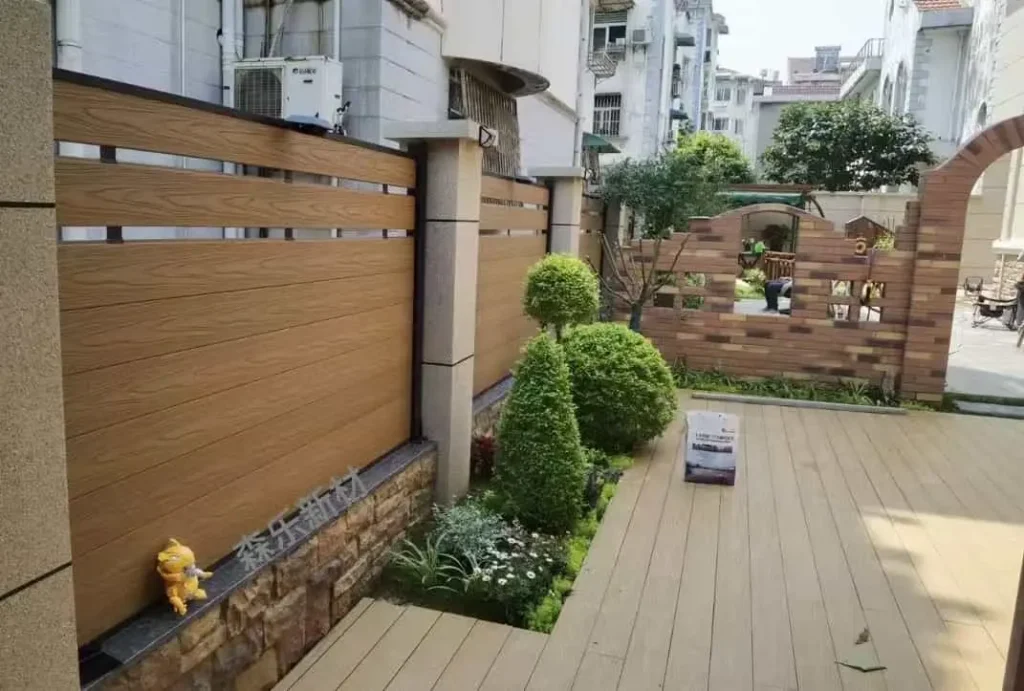
• WPC Fencing A decorative and functional fencing solution made from wood fiber and plastic, offering the appearance of timber with enhanced durability and outdoor performance.
• Capstock Capstock Thickness The outer protective layer on WPC boards or panels that provides UV resistance, color stability, and surface durability; thickness influences longevity and cost.
• Capstock Colors The color options applied to the capstock to achieve desired aesthetics and fade resistance.
• Core The internal material composition of a panel or rail, typically a blend of wood fibers and plastics, determining strength and stability.
• Hollow Core A core with hollow cavities inside to reduce weight and cost, usually with lower stiffness than solid cores.
• Solid Core A core with a continuous solid interior, offering higher stiffness and impact resistance but greater weight.
• Extruded A manufacturing process where the panel or rail is formed by pushing material through a shaped die, producing uniform cross-sections.
• Coextruded A process where core and capstock are extruded separately and then bonded, often yielding thicker capstock and more uniform weathering.
• Embossed Textured Brushed Surface textures created to mimic wood grain andor enhance appearance and tactile feel.
• Surface Finish Options Finished textures or coatings (e.g., wood grain, smooth, matte, satin, or gloss) that influence aesthetics and maintenance.
• Fence Panel Profile The overall cross-sectional shape and edge design of a fencing panel (flat, grooved, T&G, etc.).
• Tongue-and-Groove (T&G) A claddinginterlock system where panels interlock via a tongue on one panel and a groove on the adjacent panel for a tight seam.
• Slat Panel Louver Panel Panel styles featuring horizontal slats or angled louvered designs for privacy and airflow.
• Picket Privacy Panel Different panel styles offering traditional picket aesthetics or full privacy coverage.
• Groove Options Grooved edges or back channels designed to accommodate hidden fasteners or provide drainageventilation.
• End Grain Sealer Treatment applied to panel ends to reduce water uptake and potential end-splitting (included on some products).
• Post Cap Compatibility Design features ensuring posts receive aesthetically compatible caps for a finished look.
POSTS, RAILS AND SUBSTRUCTURE
• Substructure (Fence Frame) The supporting framework beneath the fencing surface, including posts, rails, and footings.
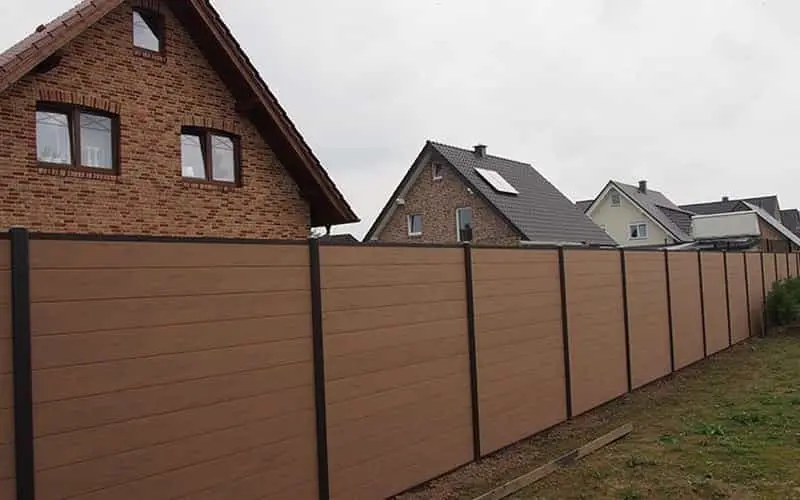
• Posts Vertical members that transfer loads to the footing; may be hollow or solid, round or square, with various heights.
• Rails Horizontal members that connect posts and support panels or boards.
• Post Spacing The distance between adjacent fence posts, affecting panel support and stiffness.
• Aluminum Framing Aluminum substructure components offering durability, corrosion resistance, and reduced weight.
• Timber Concrete Substructure Traditional wood or concrete anchors used to secure posts in the ground.
• Hidden Fasteners Fastening systems that attach panels without visible screws on the surface for a cleaner look.
• Face Fasteners Screws or fasteners that are visible on the panelrail face.
• Starter Clip End Clip Hidden fasteners used to secure the first andor last row of panels for alignment and stability.
• Clip System The complete family of hidden fastening components used with a fencing profile.
• Clip Compatibility How well a fastening system works with a given brand or panel profile.
• Plug Decorative or protective caps that cover screw or clip holes for a clean finish.
• Expansion Gap The intentional spacing between panels to allow for thermal expansion and moisture movement.
• Alignment Start End Alignment Ensuring consistent gaps, angles, and panel orientation during installation.
• Alignment Tools Tools used to help achieve uniform spacing and alignment during layout.
• Substructure Drainage Design features that promote drainage behind the fence to prevent water pooling and substrate damage.
• Ground Clearance The minimum vertical distance between the bottom of the fence and the ground to prevent moisture contact and allow for cleaning.
FASTENERS AND CONNECTORS
• Screws General term for fastening hardware used to secure panels and rails to posts or substructure members.
• Stainless Steel Screws Coated Screws Corrosion-resistant screws suitable for outdoor use with WPC.
• Flush Installation Mounting panels so the screw heads sit flush with or below the surface for a clean appearance.
• Face Fasteners Screws that are installed on the face of the panelboard, visible from outside.
• Hidden Fasteners Fasteners that are not visible on the surface, providing a cleaner appearance.
• Starter Clip End Clip Hidden edge fasteners used to secure the first and last rows.
• Clip System The full set of hidden fastening components used with a fence profile.
• Plug Color Matching Using plugs that match the fencing color for a seamless look.
• Hardware Corrosion Resistance The durability of fasteners and metal components in outdoor, humid, or saline environments.
• Panel Fastener Size Typical screw lengths vary by panel thickness and spacing (e.g., 25–60 mm or as specified by the brand).
• Sealant Edge Sealant Sealants used at panel edges or joints to improve water resistance and airtightness.
SURFACE AND AESTHETICS
• Embossed Textured Brushed Surface treatments that imitate wood grain and enhance tactilevisual appeal.
• Texture Visual and tactile surface characteristics of the fencing components.
• Grip The degree of slip resistance or tactile feel provided by surface texture, especially in wet conditions.
• Fade Resistance The ability to maintain color over time under UV exposure.
• UV Stabilizers Additives that slow color fading and material degradation due to sunlight.
• Color Consistency Batch Variation Differences in colorappearance between boardspanels or production lots.
• Nosing A decorative or protective edge piece at the end of a fence board or panel for safety and finish.
• Post Caps Fascia Decorative or protective coverings used to cap posts or cover edges for a finished look.
PERFORMANCE AND MATERIAL PROPERTIES
• Moisture Content (MC) The percentage of moisture contained in the material, affecting dimensional stability.
• Acclimation Allowing material to adjust to ambient site conditions before installation to reduce movement after installation.
• Dimensional Stability The ability of the material to maintain dimensions with changes in moisture and temperature.
• Thermal Expansion Heat Build-Up Expansion and contraction behavior with temperature changes and potential heat buildup on sunny days.
• Rapid Drying Fast moisture loss after installation that can lead to warping if not managed properly.
• Moisture Equalization Balancing moisture across components to minimize differential movement.
• End Grain Treatment Finishes or coatings at panel ends to reduce water uptake and end-splitting.
• Warp Distortion Any deviation from a flat, true plane; includes cupping, bowing, twisting, and crowning.
• Cuping Bow Twist Crown Specific warp forms—cup (concave), bow (arch along length), twist (torsion), crown (convex along length).
• Warp General term for any deviation from true flatness in a fencing component.
• Check Split Surface or internal cracks; checks are often cosmetic, splits can affect structural performance if severe.
• End Splitting Cracks that originate at the end of a board or panel and propagate inward.
• Gapping Gaps between panels or boards that widen with expansion and shrink with contraction.
• Lipping A raised edge or burr along a joint between panels or boards.
• Joint Tightness The snugness of joints and gaps between panels, boards, and fasteners.
• Surface Planarity The flatness of the finished fence surface.
• Heat Build-Up Excessive surface temperatures that can exacerbate expansion and distortion.
MAINTENANCE AND CARE
• Cleaning Methods Recommended cleaning approaches (mild cleaners, water, non-abrasive tools) to preserve surface finish.
• Routine Maintenance Regular inspection, cleaning, sealing, and treatment as needed.
• Staining Mold Algae Control Preventive and remedial measures for discoloration, mold, and algae growth.
• Repair Options Solutions for minor scratches, surface damage, or warped panelsboards.
• Replacement Considerations Guidelines for when to replace boardspanels due to damage or extensive wear.
STANDARDS, CERTIFICATION AND BRAND COMPATIBILITY
• Warranty Warranty Terms Coverage details for materials, workmanship, and installation.
• Certification Compliance with standards (e.g., ASTM) or quality certifications.
• Batch Variation Small colortexture differences between production lots.
• Brand Compatibility How well components from different brands work together (especially clips and fasteners).
• Colorfastness Certification Verification of color stability under UV exposure and environmental conditions.
SELECTION AND CONSTRUCTION CONSIDERATIONS
• Terrain Ground Conditions Soil type and slope considerations that influence post installation and drainage.
• Drainage Behind Fence Design features to promote drainage behind the fencing structure.
• Maintenance Windows Optimal timeframes for cleaning and maintenance activities.
• Installation Direction The recommended direction for installing panels for visual effect and drainage efficiency.
• Substructure Material Choice Balancing durability, cost, and environmental considerations when selecting the framing framework.
• Building Code Compliance Ensuring installation meets local codes, wind-load requirements, and setback rules.
• Wind Load Considerations Design and fastener selection to withstand local wind conditions.
• Ground Clearance Adequate clearance between the fence bottom and ground to prevent moisture contact and allow for maintenance.
• PestTermite Considerations Material and installation practices to reduce pest intrusion or damage.
ADDITIONAL FENCING TERMS (UPDATED)
• Full-Privacy Fence: Panels fully block visibility for maximum privacy.
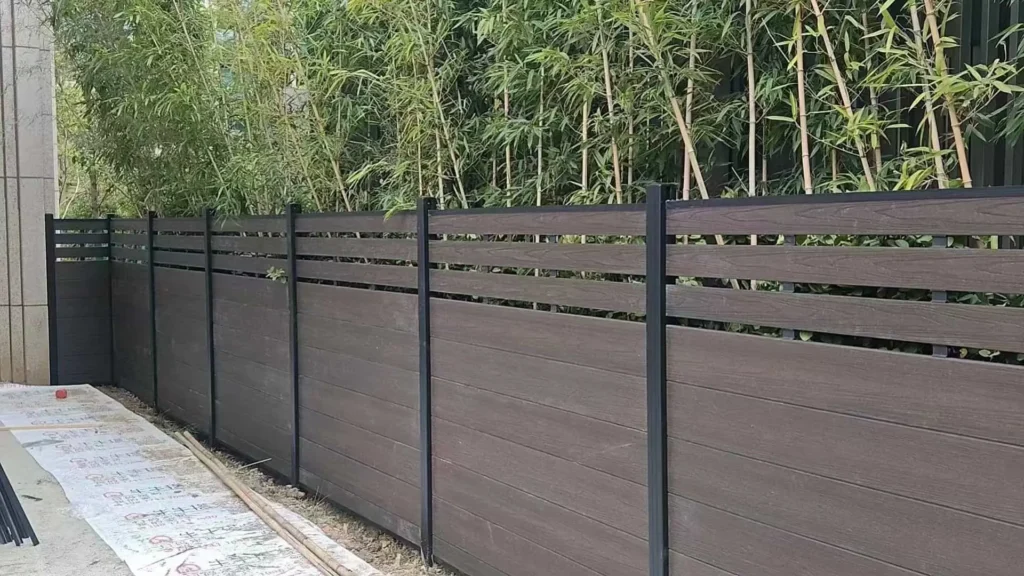
• Semi-Privacy Fence: Panels allow light/airflow with partial visibility.
• Decorative Fence: Aesthetic boundary fencing with limited privacy.
• Shadowbox Fence: Alternating slats offering semi-privacy and airflow.
• In-Ground Post Installation: Posts buried into soil with concrete.
• Surface-Mount Post (Bolt-Down): Posts secured with base plates onto concrete.
• Post Sleeve: Decorative outer cover placed over inner support posts.
• U-Channel / Side Channel: Side framing components securing fence boards.
• Bottom Rail Support: Structural piece preventing sagging of lower boards.
• Post Footing: Depth and dimensions of foundation supporting posts.
• Aluminum Post: Lightweight corrosion‑resistant structural post.
• Aluminum Top/Bottom Rail: Rails providing stability and alignment.
• Aluminum Insert: Reinforcement bar inside WPC boards.
• Powder Coating: Durable protective aluminum surface treatment.
• Privacy Strip: Filler used to eliminate gaps and enhance privacy.
• Spacer: Component ensuring consistent board spacing.
• Decorative Topper (Trellis): Optional decorative extension atop fence.
• Solar Post Cap: LED solar‑powered lighting cap for posts.
• Line Level / String Line: Tools to maintain level and straight layout.
• Post Plumb: Ensuring vertical alignment during installation.
• Concrete Setting Time: Time required for concrete curing and load‑bearing.
• Slope Adjustment (Stepped Installation): Tiered installation on sloped terrain.
• Racking Installation: Boards follow ground slope naturally without stepping.
• Impact Resistance: Fence’s strength against physical impact.
• Wind Load Rating: Fence performance under strong wind pressure.
• Fire Rating: Compliance with recognized fire‑safety standards.
• Pressure Washing Guideline: Safe pressure cleaning recommendations.
• Graffiti Removal: Procedures for removing paint or markings.