Introduction: Why Material Dimensions Matter in Modern Construction
Did you know that in the lumber world, the 1×6 deck board is neither 1 inch thick nor 6 inches wide? In fact, the dimensions mentioned are before the board is machined to a smooth surface. A standard 1×6 wood board is actually 0.75″ x 5.5″. In comparison, WPC (Wood-Plastic Composite) manufacturers considered this a point of confusion. They engineer high-end WPC material with an exact 1-inch thickness, which makes it have higher strength in comparison to natural wood.
Precise WPC dimensions are critical for decking to support weight without sagging over time. Ensuring proper fittings also minimizes gaps, which can be a source of water ingress and damage to the structure. Moreover, it also improves installation speed, optimizes usage, and ensures clean lines for aesthetics.
This article is all about understanding how WPC dimension impacts modern construction. It will start with an explanation of standard dimensions of decking boards, siding sizes and profiles, dimensional lumber sizes, and a small guide on how to choose the right deck board sizes for your project.
Understanding Standard Dimensions in Decking Boards
For a precise build, it is essential to understand the standard dimensioning of decking boards. In construction, seasoned carpenters and associated construction workers know these details, but it can be challenging for a person working on a DIY project.
Nominal vs. Actual Decking Sizes
The first step to understanding deck sizes is realizing that a label 2×6 does actually mean a 1.5-inch by 5.5 inches size. These are true for lumber dimensions, which undergo various processing losses before reaching their final form. The milling processe remove ⅛ to ¼ inch of material to achieve a smooth and even surface. Later, the wood is left to dry through evaporation of moisture. The removal of moisture causes the wood to contract and decrease in dimensions. Here are some common width expectations for deck boards:
| Style | Nominal Width | Actual Width |
| Narrow | 4″ (1×4 or 5/4×4) | 3.5 inches |
| Standard | 6″ (1×6 or 5/4×6) | 5.5 inches |
| Wide | 8″ (1×8 or 2×8) | 7.25 inches |
Note: Unlike wood that shrinks 2 to 5%, WPC remains within 0.5% tolerance, ensuring predictable dimensions and fewer adjustments in the field.
Deck Board Width Options in WPC Decking
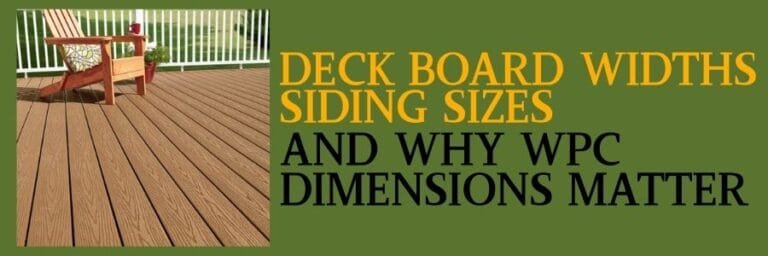
The standard WPC decking is equal to the actual width of lumber deck boards. The standard sizes range from 3.5 inches to 7.25 inches. The 5.5-inch is the standard that most residential constructions utilize. The use of deck width depends on the available space. In case of small patios use of narrow boards is recommended. For large areas, 7.25 inches or larger is ideal to create a modern feel. However, it’s important to consider that wider boards require a larger gap to accommodate thermal expansion.
In case of wide WPC boards, it’s important to consider the drainage and air flow. using grooves or an elevated structure by 2 to 4 inches allows ventilation to reduce the chances of mold by 40%.
Thickness and Structural Stability
The thickness of the deck board determines its strength to bear a load. A 1” board supports residential loads of 40–50 psf, while 1.5” boards handle commercial demands up to 100 psf. Joist spacing is also dictated by the thickness of the board. Use a simplified formula:

A 25mm board will typically require a 16 to 24 inch spacing. As a user, you do not need to worry about the hollow ddesign ofthe n WPC material. They offer similar strength with reduced weight by 20 to 30%. Moreover, there is more consistency across a similar batch of WPC material and lower variation.
Standards and Codes for Deck Construction
If you are looking for standards to consider during deck construction, then consider IRC and ASTM. We will be using the following as a reference in our article:
- International Residential Code (IRC): IRC Section R507
- ASTM D7032: Product Standard
Siding Sizes and Profiles: More Than Just Coverage
Just like decking, siding sizes also matter to ensure that the structure is physically protected and the final aesthetics have a visual impact. Quality siding and dimensions create a weather-tight seal while providing air movement.
Typical Siding Widths and Lengths
Water management and installation efficiency are two key areas to consider when selecting siding widths and lengths. Typically, sidings are 100mm to 300 mm in width and have lengths extending up to 6 meters.
For both aesthetics and efficiency, consider the installation orientation of siding. For a large area, vertical installation is ideal to reduce the overwhelming impact of a large space. By using precisely dimensioned siding modules, the material loss can be reduced by 15 to 25%.
WPC Composite Cladding Dimensions
Using WPC composite cladding results in exceptional dimensional precision that traditional materials cannot match. WPC claddings typically feature 140 to 156mm of width and thicknesses between 20 and 25mm. Each cladding is manufactured with a 0.1mm edge tolerance. It ensures that each piece forms perfect straight lines and geometric symmetry.
WPC can have 19 to 30mm thicknesses, which protects the structure from impact and provides thermal insulation, improving the energy efficiency of the construction. Moreover, they absorb sound waves and reduce vibrational noise.
Visual Scale and Architectural Proportion
To create visual harmony, it’s important to select the right size of the siding. It should match the scale of the building. Here are some key tips:
- For structures greater than 10 feet in height, utilize 200mm+ width sidings to prevent the facade from looking fragmented.
- Structures under 8 feet tall, narrower options can help maintain proportion.
- Using wider panels creates a contemporary minimalism look.
- Narrower boards allow more intricate patterns like herringbone.
Dimensional Lumber Sizes and Their Modern Alternatives
By now, we know that lumber varies in dimensions significantly due to the process it undergoes at the factory or the time it spends on the shelf drying. Let’s revisit the case and compare it with the WPC technology.
Traditional Dimensional Lumber Explained
As explained in the table earlier, the actual and nominal label dimensions vary. Their thickness requirements for load-bearing beams are different fromthose o other materials. You need thicker 2×6 lumber for the supporting structure and load between 40–60 psf, while thinner 1×4 boards are used for decorative purposes.
Limitations of Natural Lumber Sizing
The natural lumber, alongside deviation from standard dimensions by ⅛ inch, has other limitations that one should consider:
- Warping and Shrinkage: The presence of humidity at the installation site can cause the wood to warp up to 5%.
- Loose Tolerances: With ±1/4 inch tolerances, there is a greater need for on-site corrections.
- Long-Term Degradation: Presence of gaps, bulges, and alignment issues caused by sizing issues accelerates wear and tear.
WPC Dimensional Profiles as a Solution
The use of wood-plastic composite is the modern way in construction. It is an engineered product that focuses on ensuring precision and durability of construction. WPC manufacturers ensure that the profiles are 140mm to 150mm in width and 20 to 30 mm thick. They are typically manufactured with 0.2mm accuracy. The result is a perfect fit for decking frames, fencing elements, and trims.
Some key highlights of WPC material are:
- Linear expansion is limited to 0.1-0.2%
- High-density material typically between 700 and 900 kg/m3
- WPC offers 20% more resistant than wood, which is calculated using the formula
Choosing the Right Sizes for Your Project
Choosing the right thickness and width ensures that your structure is stable and can handle the environmental impacts.
Matching Dimensions To Application
There are standard sizing for different construction requirements. Here are the details:
- Decking: Requires 25–30mm thickness to safely support foot traffic.
- Fencing: Uses 20–25mm for privacy and wind resistance.
- Cladding: Uses 19–25mm for lightweight but durable weather protection.
For load and traffic, consider the following:
- High-Exposure/Load: Areas like pool decks require thicker profiles 30mm+ to support up to 100 psf.
- Stability vs. Economy: Daily traffic is best handled by wider 150mm boards for increased stability, while occasional-use areas can use narrower 140mm boards.
For tougher environmental conditions where sun exposure is non-avoidable, use a thickness of 25 mm+ to provide UV and fade resistance.
Installation Efficiency and Labor Considerations
Using standardized WPC dimensions, the cost of installation and time is greatly reduced:
- Span Efficiency: To optimize your frame, use the span equation:
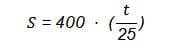
S = Span in mm
t = thickness in mm
- Waste Reduction: Using consistent WPC sizing ensures utilization of the full length. The result is reduced scrap and material waste.
- Assembling Speed: Using similar size boards with interlocking systems and pre-aligned edges, the labor time is halved. There is minimal need for on-site trimming.
- DIY Kits: Consider using pre-cut WPC kits, which can potentially save on professional labor fees.
Working with a Reliable WPC Manufacturer
WPC is an excellent material for construction. It saves money, ensures a long-lasting construction and structure that is stable. However, it’s equally important to consider a source that maintains high engineering standards. Only reliable WPC manufactures can provide dimensional tolerances under 0.5%. Moreover, proper sizing results in long-term performance often backed by warranties of up to 25 years.
Consider KR WPC as a reliable manufacturer supplying Composite Decking, Cladding, and Fencing to 24 countries with over 340 molds. Their WPC is crafted from 100% recycled, eco-friendly materials, which are 60% wood fiber and recycled HDPE. Their products are UV-resistant, waterproof, fireproof with a 20+ year lifespan. Moreover, they offer CE/FCS certifications and a 25-year warranty on solid items. Explore all the options on WPC construction material on the KR WPC website.
Conclusion: Dimensions That Define Performance
Accurate dimensioning leads to stable construction and sleek aesthetics. The result is a material with a life that goes beyond 20 years. WPC’s dimensional tolerance eliminates the need for measurement and guesswork. It leads to a reduction in build time and maintenance activities. For precision-engineered decking, cladding, and fencing, KR WPC offers superior dimensional accuracy and long-term performance for sustainable, professional results.
FAQ
- What is the actual size of a 2×6 board in case of lumber?
The actual size of a 2×6 board in lumber is typically 1.5 inches by 5.5 inches, reduced from nominal due to milling and drying. In comparison, WPC has tight dimensions without the shrinkage effect.
- How wide are standard deck boards used today?
Standard widths range from 140mm to 150mm for residential use. Where narrow is utilized for detailed patterns and wider is for enhanced airflow.
- Why is the nominal size different from the actual size?
Nominal size is the dimension before the rough-cut and processing. Later, the wood may also dry and change dimensions. Typically, ±1/4 inch of tolerance is expected in lumber wood. Whereas, for WPC material, nominal and actual size are the same.
- Are WPC decking boards wider than traditional wood boards?
WPC has 140-150mm, whereas wood has 5.5 inches. The dimensions are somewhat similar in width. However, WPC has engineered edges for better interlocking and reduced gaps.
- Are WPC cladding sizes standardized across manufacturers?
While there can be variations like 148-156mm width, most manufacturers adhere to the 19-30mm thickness for compatibility.