Introduction
Most “budget deck railing” advice is written by people who’ve clearly never watched cheap railing twist, peel, rust, or splinter—right in front of guests—while the homeowner does that tight smile that says, “yep, I saved money… and now I’m paying for it socially.”
Deck railings aren’t decoration. They’re safety gear you stare at every day. And the annoying truth is that a railing can be technically “fine” and still make your whole deck look like a rushed weekend project with leftover parts.
The biggest misconception: cheap has to look cheap. It doesn’t. What you want is cost control without the “builder-basic” vibe. That’s where smarter materials come in—especially WPC (wood-plastic composite), which hits that rare sweet spot: stable, outdoor-friendly, and good-looking enough that you don’t feel the need to apologize for it.
And yes—done right, it can keep your budget from bursting into flames.
Why WPC Is a Smart Choice for Budget-Friendly Deck Railings
WPC is basically what happens when someone gets tired of babysitting outdoor wood. It blends wood fibers with polymers, which sounds like a lab experiment, but it’s really just a practical way to get consistent boards that don’t throw tantrums every time the weather changes.
Material efficiency and cost control
With traditional wood, you pay for waste you didn’t ask for: knots, warping, splitting, ugly boards you reject, boards that look fine at the store and then turn into potato chips on your deck.
WPC manufacturing tends to be more consistent, which means fewer “why is this piece crooked?” moments mid-install. Less waste. Less do-over. Less swearing.
And if you’re trying to keep railing costs reasonable, consistency matters because labor is expensive—even if you’re the labor.
Lower long-term expenses
Painted wood railings can be cheap on day one and expensive forever. It’s the classic trap: you “save” upfront, then spend your summers sanding, sealing, repainting, and replacing soft spots—basically paying subscription fees to your own deck.
WPC doesn’t need that cycle. No constant sealing. No refinishing schedule that you ignore until the railing looks like driftwood.
Reliable performance for everyday use
Outdoor railings live in moisture. They get blasted by sun. They get leaned on, bumped, grabbed with dirty hands, and occasionally used as a drink ledge (you know it happens).
WPC is built to handle that kind of daily abuse with less drama—better resistance to moisture, rot, and insect damage than bare wood, and a more stable feel than a flimsy “budget” system that wobbles when someone sneezes near it.
If you’re curious what composite can do outside railings too, you can look at composite decking options on our site—same material logic, same outdoor priorities.
Cheap Deck Railing Design Ideas That Still Look High-End
You don’t need fancy. You need intentional. High-end-looking railings usually come down to three things: clean geometry, disciplined material choices, and not doing weird stuff at the corners.
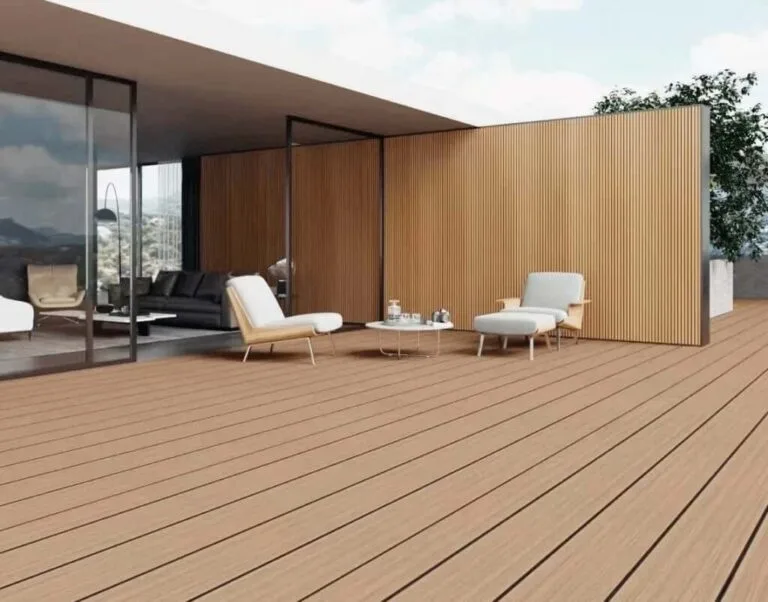
Simple horizontal and vertical slat layouts
Straight slats—horizontal or vertical—are the “plain white T-shirt” of railing design. And I mean that as a compliment.
- Clean lines keep the eye calm.
- Fewer parts usually means fewer costs.
- Open spacing preserves sightlines, airflow, and that “I didn’t trap myself in a wooden cage” feeling.
Horizontal slats look modern and stretch the deck visually. Vertical slats feel more traditional and often align better with code expectations in some areas. Either way, the trick is to keep spacing consistent and the frame tidy—messy spacing screams DIY even when it wasn’t.
Mixed-material railing concepts
This is where you can cheat the budget without the deck looking like a compromise.
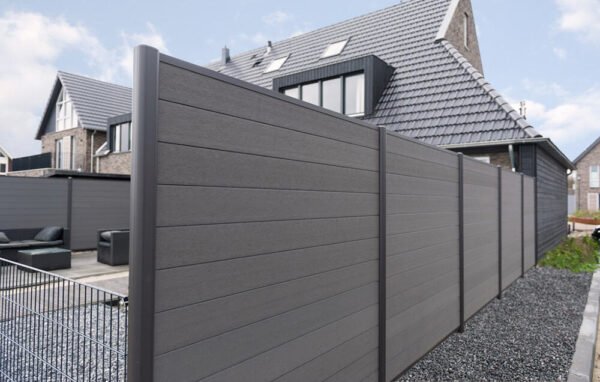
A smart combo: WPC railing boards + metal posts. Metal posts do the structural heavy lifting, and the WPC gives you warmth and texture where people actually look and touch. It’s like wearing decent boots with an inexpensive jacket—you don’t need everything premium, just the parts that people notice.
Want cable or glass? Use it selectively. Don’t do a full glass system if your budget can’t take it. Instead:
- Glass only on the “view side”
- Basic infill elsewhere
- Cable in short runs where it has impact
That approach looks deliberate, not “I ran out of money halfway through.”
Color and texture choices that elevate appearance
Color is the cheapest “upgrade” you can buy—if you don’t overthink it.
- Neutral tones (soft grays, browns, darker charcoals) hide dirt and blend with most decking.
- A wood-grain finish can read expensive from six feet away, especially when paired with simple geometry and clean post caps.
And please—avoid loud, plasticky shine. If it looks glossy indoors, it’ll look cheap outdoors. Matte or lightly textured finishes are your friend.
If you’re trying to match railing to the rest of the yard, our composite fencing pages can help you keep the palette consistent across the property.
Installation Strategies That Help Keep Costs Down
Here’s the part nobody wants to hear: the design is only half the bill. The other half is “how long it takes to install” and “how many times you change your mind.”
Choosing standardized railing components
Standard components keep things predictable—posts, rails, brackets, infill boards. The more you drift into custom cuts and odd angles, the more time you burn. Time is money, even if you’re doing it yourself and paying in weekends.
Modular WPC railing systems are budget-friendly because they reduce:
- custom measuring marathons
- tricky joinery
- the “oops, cut it short” tax
A clean modular layout also makes repairs simpler later. One damaged section shouldn’t require rebuilding the whole run.
Designing with local codes in mind
Nothing wastes money like ripping out work you already paid for.
Typical code issues that trigger expensive rework:
- railing height not compliant
- spacing too wide
- poor post anchoring
- weird stair angles that weren’t planned
So pick railing profiles and spacing patterns that are commonly compliant—boring, yes, but boring is cheaper than doing it twice.
DIY-friendly options for simple deck layouts
If your deck is a basic rectangle and the stairs aren’t a geometry exam, DIY can make sense—especially with lighter materials that are easier to carry, align, and fasten.
The trick: don’t “DIY” yourself into a corner with complicated sections. Keep the layout simple:
- fewer corners
- fewer transitions
- fewer one-off pieces
And if you’re hiring out the work, the same logic still saves money—installers charge more when they know the plan is going to be fiddly.
Comparing WPC Railings with Other Inexpensive Alternatives
Budget shoppers usually end up choosing between three lanes: painted wood, basic metal, or composite (WPC). They all have a place. They all have baggage.

WPC vs painted wood railings
Painted wood wins the upfront-cost contest. No question.
But it loses the “I don’t want to spend my life maintaining this” contest—especially in wet climates, heavy sun, or places where winter chews through finishes. Painted wood railings tend to need:
- repainting
- spot repairs
- rot checks
- fastener replacements as boards move and split
WPC tends to cost more upfront than the absolute cheapest wood setup, but it usually pays you back in reduced upkeep and fewer ugly surprises.
WPC vs basic metal railings
Metal railings can be affordable and code-friendly. They also come with two common complaints:
- they can feel hot in direct sun and cold in winter
- they can look stark (great if that’s your style, miserable if you wanted warm and homey)
Corrosion depends on coating quality and environment. Some metal systems do great. Some start looking tired fast, especially near salt air or in damp areas.
WPC brings more visual warmth and a more comfortable “hand feel,” and it’s less likely to look beaten up just because seasons happened.
Overall value for budget-conscious homeowners
If your goal is the cheapest possible railing today, you’ll pick the simplest wood system and hope for the best.
If your goal is to spend reasonably and not regret it—WPC tends to be the steady middle: a balanced spend between appearance, durability, and not having to schedule your life around maintenance.
Conclusion
Affordable deck railing designs don’t need to look like a corner-cutting confession.
If you keep the layout clean, stick to standardized parts, and choose finishes that look intentional—your railing can look sharp without dragging you into a high-end price bracket. WPC systems are a practical way to get there because they dodge the constant repainting cycle, hold up better in the usual outdoor mess, and still give you that “finished” look people actually want.
And yes, manufacturers matter. As a professional manufacturer of WPC Composite Decking, Composite Cladding, and Composite Fencing, KR WPC focuses on cost-effective outdoor solutions built for long-term value—meaning you’re not buying something that looks fine for six months and then quietly falls apart.
FAQ
Are WPC deck railings more affordable than wood in the long run?
Often, yes—because you skip recurring costs like repainting, sealing, and frequent repairs that add up fast with outdoor wood.
Can inexpensive deck railing ideas still meet safety codes?
Yes. Simple slat designs and standard modular systems can meet code as long as height, spacing, and post anchoring are done correctly.
What is the lowest-maintenance deck railing material?
WPC and some well-finished metal systems are usually low-maintenance. Painted wood is rarely “low-maintenance” for long.
Are cheap porch railing ideas suitable for outdoor use?
Only if the materials are actually exterior-rated and stable. Indoor-grade shortcuts outdoors fail fast—usually right after you stop paying attention.
How can I reduce deck railing costs without compromising style?
Keep the design simple, use standardized components, limit custom angles, and spend your “style money” on finishes and the most visible sections (like the view side).