Introduction
Exterior walls live a hard life. Sun bakes them. Rain slaps them sideways. Wind finds the one tiny gap you “definitely sealed.” And then winter shows up and starts the freeze–thaw routine like it’s getting paid by the cycle.
Traditional finishes can look great. For a while. Painted timber? Lovely… until the paint blisters. Render? Clean… until hairline cracks turn into water highways. Even “low-maintenance” options have a habit of demanding maintenance at the worst possible time—like right before you list the house, or right after you’ve spent your budget on literally everything else.
That’s why WPC exterior wall cladding keeps getting pulled into the conversation for exterior wall systems: it’s built to behave outdoors, not just survive outdoors.
What Makes WPC Cladding Suitable for Outdoor Walls
Understanding WPC material composition
WPC is basically a peace treaty between wood and plastic. You’re taking wood fibers (for stiffness, feel, and that familiar “timber-ish” look) and combining them with polymer (for moisture resistance and dimensional stability). The exact recipe varies by manufacturer, and yes—recipe matters.
Cheap mix in, cheap results out. It’s not complicated.
Blending wood fibers with polymer materials
Wood on its own is thirsty. It expands, contracts, cups, checks, and generally does whatever it wants once it gets wet and then dries out again. Add polymer into the mix and you dramatically slow down water uptake and reduce that wild movement. That’s the whole point: fewer seasonal surprises.
And no, this doesn’t mean WPC is “plastic wood” that feels like a kids’ slide. A good board has enough wood content to keep it from looking glossy and fake, and enough polymer to stop it acting like a sponge.
Additives that enhance weather resistance and structural stability
This is the unglamorous part people skip. UV stabilizers, pigments, coupling agents, antioxidants—these small components do the heavy lifting for outdoor performance. Without them, you get fast fading, surface chalking, brittleness, and boards that age badly.
So when you’re comparing cladding, don’t just ask “Is it WPC?” Ask what’s been added to help it handle sun and temperature swings. Because sun is relentless. And it doesn’t negotiate.

Engineered for exterior performance
Improved resistance to moisture absorption and UV exposure
WPC cladding is designed to resist moisture absorption far better than natural wood. That doesn’t mean it’s magic. Water can still sit in joints, dirt can still hold moisture against the surface, and bad detailing can still trap condensation.
But if you want fewer rot-adjacent headaches, WPC is a smart starting point.
UV is the other bully. A decent WPC formulation aims for slower color shift and better surface stability, especially when you step up to capped products (more on that in a second).
Reduced risk of warping, cracking, and splitting compared to natural wood
Natural wood loves to split at fasteners and end grain. WPC—done right—has fewer of those classic failure modes. It’s less likely to crack the way timber does, and it’s generally more predictable across seasons.
Still, it expands and contracts with temperature. Don’t ignore that. If an installer treats it like brick, the wall will eventually “argue back.”
Surface design and protective layers
Textured finishes that mimic wood grain
Texturing isn’t just for looks. A good embossed surface hides small scuffs, reduces that flat “plastic” vibe, and keeps large walls from looking like a bland sheet. On big elevations, texture is the difference between “architectural” and “budget shed.”
Co-extrusion and capped surfaces for extended lifespan
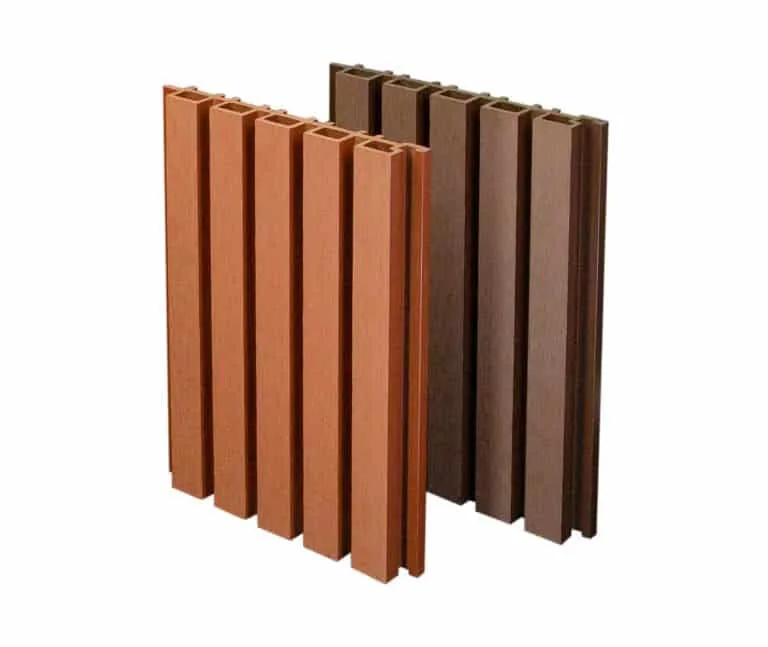
If you keep hearing people talk about “capped” or “co-extrusion” WPC cladding, here’s the plain-English reason: there’s a protective outer skin wrapped around the core. That cap is tuned for stain resistance, UV performance, and easier cleaning.
It’s not invincible. Dragging metal across it will still leave marks. And dark colors still absorb heat. But capped cladding is usually what you pick when the wall is a long-term façade, not a “we’ll see how it goes” experiment.
If you want to see the typical profiles and styles that show up in real projects, start here: KR WPC wall cladding.
Performance Advantages in Real Exterior Conditions
Weather adaptability across climates
Exterior walls don’t fail in a lab. They fail on a south-facing elevation with no eaves, where the sun roasts the façade all afternoon and the sprinkler system hits it every morning because someone aimed a nozzle wrong. True story. Repeated often.
WPC cladding tends to hold up well across hot, cold, and humid regions because it’s designed to limit moisture-driven movement, and it doesn’t rely on a fragile paint film to stay “finished.”
Stable performance in hot, cold, and humid environments
Heat makes materials move. Cold makes them brittle. Humidity makes organic stuff complain.
WPC is less reactive to humidity than timber, but it still responds to temperature changes. The trick is planning for it: expansion gaps, correct clip systems, and a subframe that stays straight. If you do that, the cladding behaves.
If you don’t… you can get buckling, noisy movement, and joints that look like they’re trying to escape.
Resistance to mold, insects, and corrosion
WPC doesn’t give termites the same easy meal as natural wood. And since it doesn’t rot the way timber does, you’re usually avoiding the classic “soft spots” that become insect invitations.
Mold is more about surface grime than the board itself. If pollen, dirt, and shade keep the surface damp, you can still get growth on anything. The difference is you can wash WPC without panicking that you’re stripping away your “finish,” because the color isn’t sitting on top like paint.
Corrosion? The cladding doesn’t rust—but your fasteners can. Use the right hardware for your environment. Coastal air eats cheap metal for breakfast.
Low-maintenance exterior wall solution
No need for painting, staining, or sealing
This is the big lifestyle win. With WPC cladding, you’re not signing up for a repaint cycle just to keep the wall looking decent. No peeling. No flaking. No “why is it bubbling right there?” drama.
Simple cleaning to maintain appearance
Most of the time, cleaning is boring. Hose. Soft brush. Mild soap. Done.
The walls that look filthy after a year usually have two things going on: poor runoff detailing (water dribbles and streaks) and a microclimate issue (shade + moisture + dirt). Fix the water path and you fix half the “maintenance.”
Safety and structural considerations
Fire-rated options and impact resistance
Fire performance isn’t one-size-fits-all in cladding—different regions have different rules, and different products test differently. If a project has fire requirements, don’t assume. Specify it. Verify test reports. Sleep better.
Impact resistance matters too, especially at ground level where bikes, bins, and delivery people exist. A rigid, consistent panel helps. And on commercial sites, it’s not optional.
Consistent panel dimensions for secure installation
Consistency is underrated. When boards are straight, uniform, and stable, installers can build a cleaner façade with tighter reveals. When boards vary, the wall turns into a time-eating mess of shimming and swearing.
Design and Installation Flexibility
Compatibility with modern façade systems
Use in ventilated façade and rainscreen systems
If you’re building a modern exterior wall, you’re probably thinking rainscreen. Good. A ventilated cavity helps manage moisture, improves drying, and gives the cladding a fighting chance long term.
WPC cladding works nicely in these systems because it’s lightweight enough for common subframes and predictable enough for repeatable detailing.
Integration with insulation and waterproof layers
A proper wall build-up is a team sport: WRB (water-resistive barrier), flashings, cavity, insulation strategy, and then the cladding. WPC is the visible part, so it gets blamed for problems that usually started behind it—like missing flashings or a WRB that looks like it was installed during a power outage.
Detail the wall properly and WPC becomes what it should be: the outer skin, not the bandage.
Versatility in architectural design
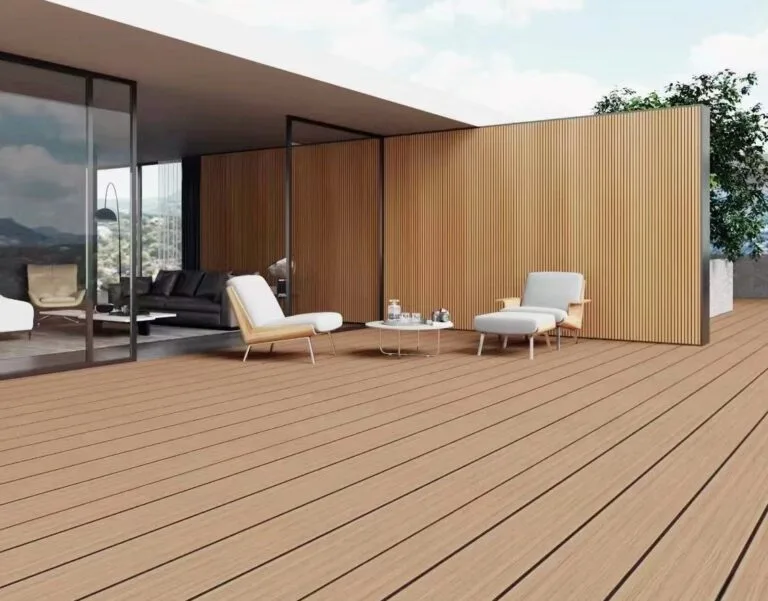
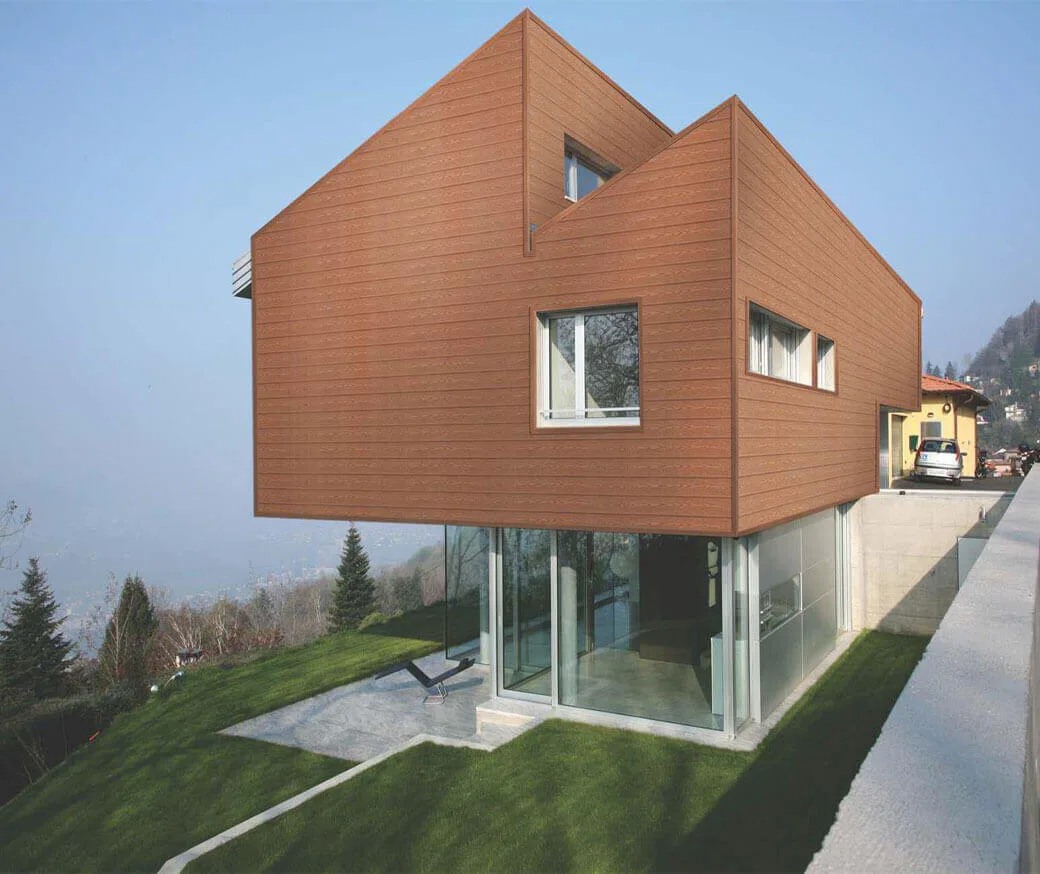
Horizontal, vertical, and mixed installation patterns
Horizontal cladding is the classic. Vertical can look sharp and modern—especially with slat profiles—but it’s less forgiving if your subframe is out of plane. Mixed patterns can look expensive when done with restraint, and chaotic when done like a mood board exploded.
So, pick a rhythm. Stick to it.
Wide range of colors and profiles for exterior walls
Colors matter more than people admit. Dark tones hide grime but run hotter. Lighter tones stay cooler and show less fade, but can show splashes near grade. Wood-tone finishes can look excellent, but you want the texture and pigment quality to match the “close-up reality,” not just the brochure photo.
Profiles matter too: slats for contemporary façades, grooved boards for long runs, embossed boards for the “timber but not timber” vibe.
Installation efficiency and long-term reliability
Lightweight panels that reduce structural load
Compared to masonry or heavy cement boards, WPC cladding keeps things easier on the structure and faster on install. That can mean simpler handling on-site and fewer labor hours spent wrestling materials into place.
Concealed fasteners and allowance for thermal expansion
Hidden clips look cleaner, and they also help manage movement—if the system is designed right. The real enemy is pretending movement doesn’t exist. Leave your expansion gaps. Follow the spacing rules. And don’t trap the ends tight like you’re framing hardwood flooring.
A wall that can move a little is a wall that stays looking intentional.
Cost and Long-Term Value Considerations
Initial investment versus lifecycle cost
Yes, WPC cladding can cost more upfront than basic timber boards. And yes, people still choose timber because it’s cheap on day one.
Then day 700 arrives. Paint prep. Scaffolding. Weather delays. Patch jobs that never match. Suddenly “cheap” has receipts.
The better question is lifecycle cost: how much time, labor, and replacement risk are you buying—or avoiding—over the next 10–20 years?
Comparing WPC exterior wall cladding with wood and fiber cement
- Wood: warm look, easy to work with, but it asks for upkeep and it will punish lazy detailing.
- Fiber cement: stable and often fire-friendly, but heavier, brittle if mishandled, and cuts are dusty and slow.
- WPC: lower maintenance than wood, generally easier handling than cement boards, and a strong fit for rainscreen-style façades—if you detail movement and drainage properly.
Fewer repairs and replacements over time
A façade that doesn’t need repainting is already saving money. A façade that doesn’t warp and split on you is saving sanity. Both count.
Durability as a value driver
Extended service life in demanding outdoor environments
Durability isn’t a marketing line—it’s what happens after years of sun, wet seasons, and temperature swings. WPC cladding is built for that routine, especially capped options where the surface is designed to take the abuse.
Consistent appearance without frequent upkeep
This is the part homeowners love and property managers quietly celebrate: the wall still looks “kept,” without a maintenance calendar full of unpleasant weekends.
Sustainability and material efficiency
Use of recycled materials in WPC production
Many WPC products incorporate recycled plastics and wood fiber. That’s not a free pass to call everything “green,” but it can be a meaningful improvement over virgin-only materials.
Reduced reliance on chemical treatments
Traditional exterior wood often leans on chemical treatments and coatings to survive outdoors. WPC generally reduces that dependency because weather resistance is baked into the material, not painted on top and prayed over.
Conclusion
WPC cladding is a practical pick for exterior walls when you want durable performance, design freedom, and fewer maintenance chores hanging over your head like a bad joke.
Its engineered structure tackles the classic weaknesses of traditional wall materials—water movement, cracking, constant refinishing—without forcing you into a cold industrial look.
As a specialist manufacturer of WPC Composite Decking, Composite Cladding, and Composite Fencing, KR WPC provides exterior solutions designed to meet modern architectural and environmental demands. Start with KR WPC composite cladding, and when you’re ready to price a project or request samples, use the contact page.
FAQ
How long does WPC cladding last on exterior walls?
With a quality product and a correctly detailed rainscreen setup, WPC cladding is typically a long-term exterior finish. The real divider is product grade (especially capped vs uncapped) and installation discipline.
Is WPC material more durable than natural wood?
In the ways that usually matter outdoors—moisture resistance, reduced splitting, less repainting—yes. Wood can still be great, but it demands more upkeep and better ongoing attention.
Can WPC cladding be installed vertically on exterior walls?
Yes. Vertical installs are common, especially with slat profiles. Just make sure the subframe is straight, drainage paths are clean, and movement gaps are respected.
What maintenance does WPC exterior wall cladding require?
Mostly cleaning. Wash off dirt and airborne grime occasionally, especially on shaded walls. No painting, staining, or sealing cycles—unless you enjoy spending weekends on ladders.
Is WPC cladding environmentally friendly?
It can be, especially when it uses recycled inputs and avoids heavy chemical treatment cycles. The honest answer depends on the manufacturer’s material sourcing and the product’s service life—longevity is part of sustainability.