Introduction: When Decking Meets Relaxation
Did you know that an 8-person hot tub can weigh around 8,000 lbs when filled? A deck cannot support such a massive weight. Therefore, designers create a concrete floor and install WPC-based decking around the hot tub. The seamless, cool-looking deck design is not just aesthetic; It’s engineering!
Modern homes now consider hot tubs as an essential part of their decks rather than just a luxury add-on. Therefore, having a well-designed hot tub area brings out the aesthetic feel of the backyard alongside safety and comfort. It becomes the focal area where users can unwind and relax during the day.
This article is about exploring all the hot tub deck designs that pair well with WPC decking for moisture resistance, slip resistance, and low-maintenance backyard bliss.
Seamless Built-In Hot Tub Deck Designs
The seamless built-in hot tub deck design is the most modern form of backyard architecture. It provides the minimalistic aesthetics that modern home designs require. They are usually independently supported by the floor. Designers may install ghost hatches for access to the pump and electrical systems of the hot tub. For more details, here are the three types of seamless built-in hot tub deck designs:
Flush-Mounted Hot Tubs
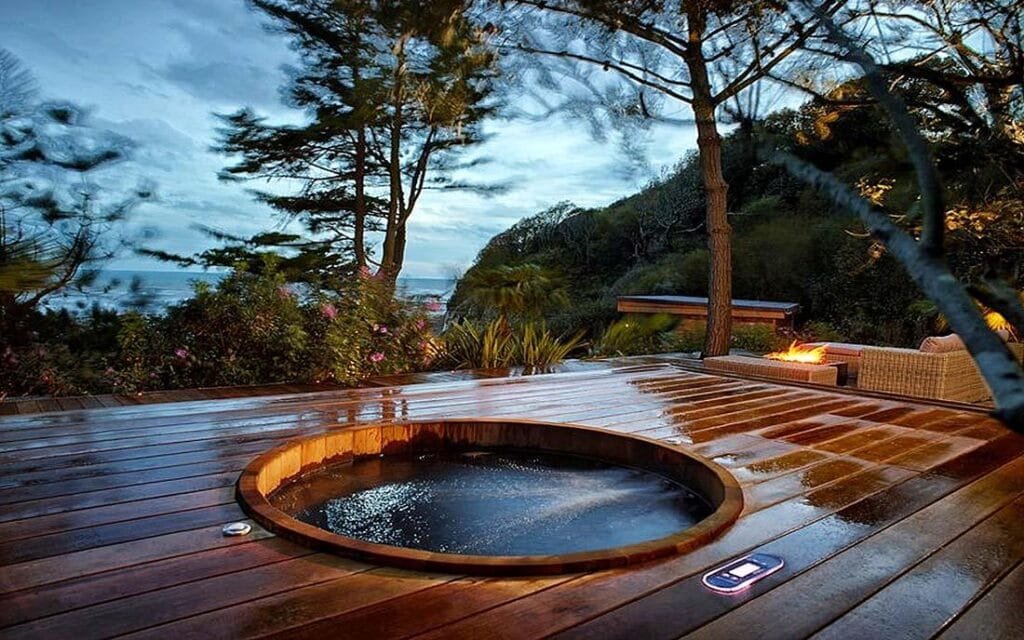
The most modern design within the seamless built-in deck design is flush-mounted hot tubs. The tub sinks into the deck level, where the rims of the tub match exactly with the deck elevation. The resulting look passes the modern vibe check. Obstruction is the biggest enemy of modern sleek looks, and flush-mount eliminates them entirely. All you need is the surroundings to follow the aesthetics for a perfect contemporary look.
Partially Sunken Hot Tub Decks
For users who want the convenience of sitting on the edge of the hot tub, partially sunken hot tub decks are ideal. Their rim typically sits around 12 to 18 inches above the deck surface. It ensures easy access to the hot tub while ensuring safety and minimizing the risk of falls. From the engineering perspective its also easier to install as there is a lower requirement for precisely matching the height, which can easily misalign with small foundational deviations.
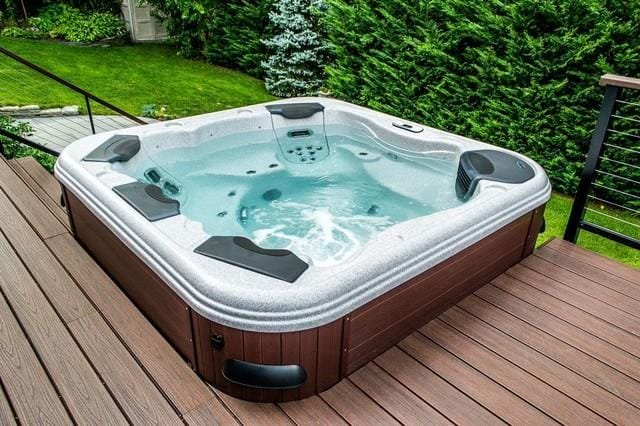
Wraparound Deck Integration
For a much more social experience and an environment that sparks conversations, hot tubs in wraparound decks are ideal. They are integrated into the surroundings that may contain benches, towel storage, drinks storage, and subtle lighting.
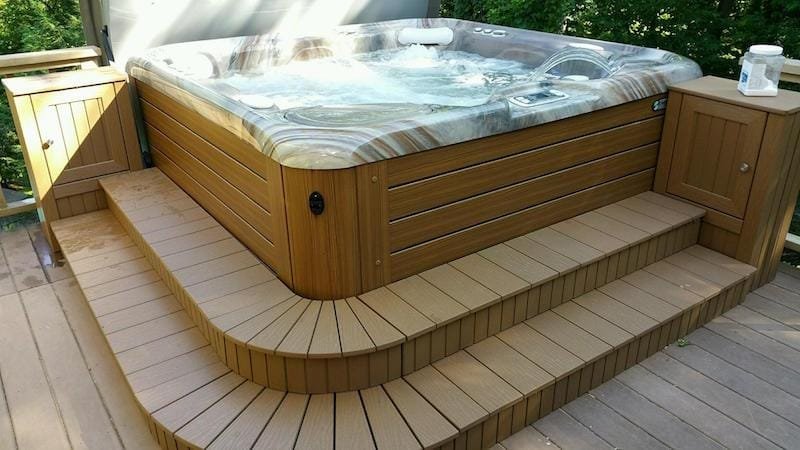
To create a unique look, high-end brands like to allow heat-bending capabilities for their WPC deck material. Designers can curve the material to match the surroundings, creating a professional finish. Since the decking naturally flows around the hot tub, it enables usability from multiple angles. However, do consider doubling the joists underneath the deck to prevent deck bounce that can occur for long WPC deck sections. These work great with medium to large backyards.
Elevated and Multi-Level Hot Tub Deck Ideas
Instead of making a whole section of the deck where everything forms a connection with the hot tub, designers use a multi-level approach to create different sections. Each section is dedicated to separate activities. The deck design makes other activities enjoyable for users who want to remain dry. Here are some cool multi-level deck ideas with built-in tubs:
Raised Hot Tub Platforms
In the raised hot tub deck design, the hot tub becomes the focal point. All the other sections get an aesthetic boost with the dedicated hot tub platform. To further integrate the plastic box with the deck, use WPC fascia boards that cover up the exposed plastic section to homogenize the look.
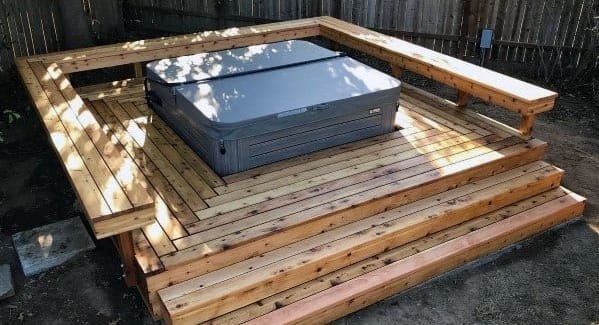
While the raised hot tub is best for uneven or sloped yards, it comes with its engineering challenges. Raising the tub by 24 inches means the standard deck footings will not be enough. You must use concrete piers. Use double or tripled beams for better support.
Split-Level Deck Designs
Using the split-level deck technique makes it convenient to separate areas like lounging, dining, and soaking. It allows visual and acoustic separation between the areas. Designers can carefully select WPC boards with colors that set the mood and vibe for activities associated with the zone. For example, use Espresso boards for the high-traffic dining area and a weathered Coastal Gray for the spa level.
Hot Tubs with Integrated Steps
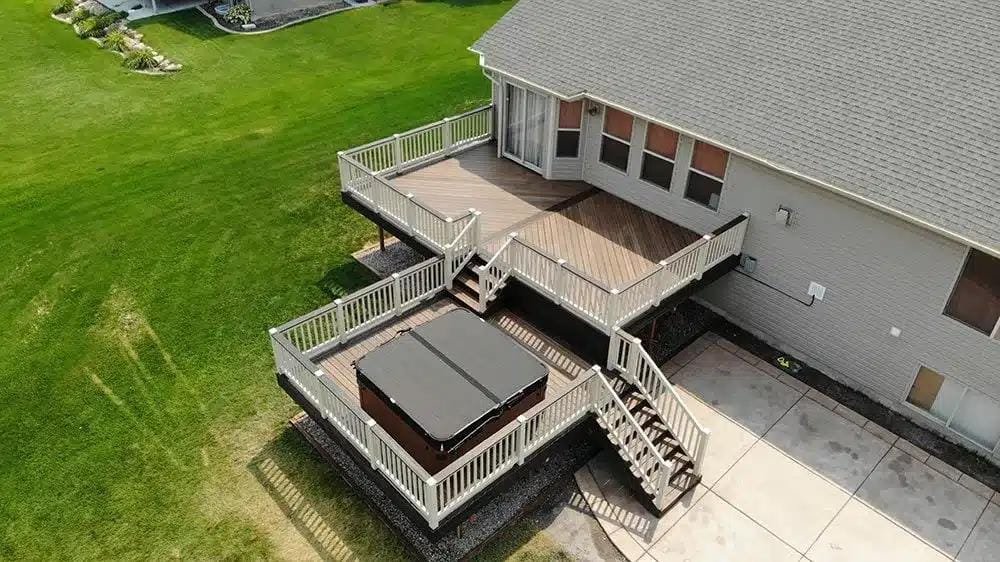
Another way to create a visually integrated space is to use the same WPC texture and color for the steps around the hot tub. Instead of directly covering up the hot tub’s visible surrounds with WPC boards, using stairs helps create a cohesive look while removing the plastic ladders that feel odd.
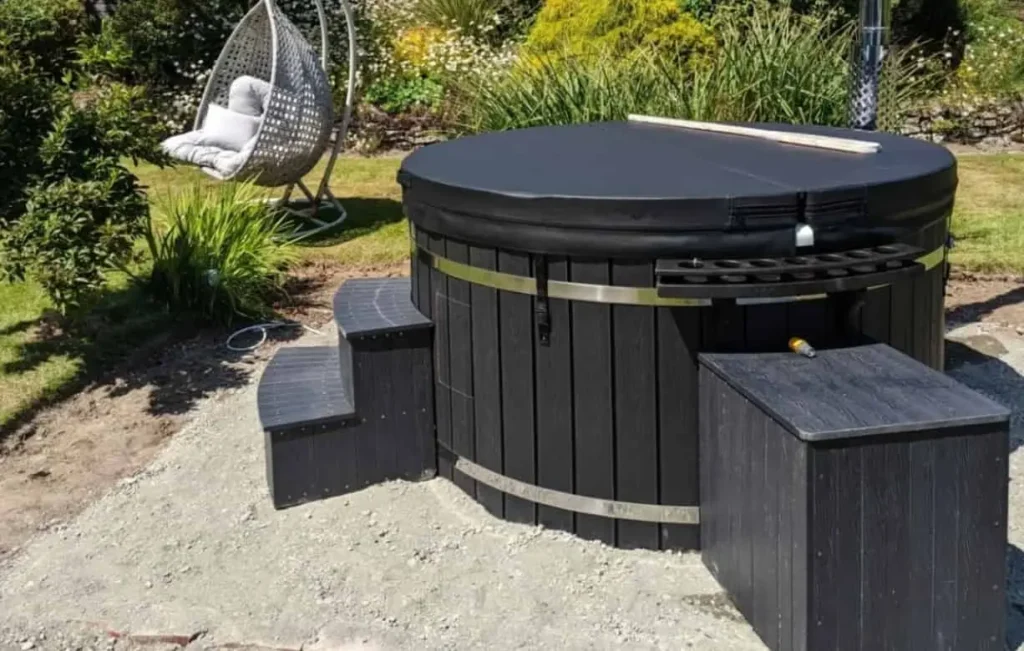
Note: Using textured or grooved WPC board makes the surface of the stairs slip-resistant. Creates a clutter-free stair design that provides dual functionality of seating space.
Privacy-Focused Hot Tub Deck Concepts
For spaces that are more open or on the same elevation level, creating a privacy-focused hot tub section can be challenging. Providing privacy while maintaining the openness requires creative implementation of WPC fencing with decking. Here are three ideas that can boost your creativity:
Decks with Built-In Privacy Screens
Creating a space that has good air flow and light yet provides exceptional privacy requires the use of privacy screens. The privacy screens are made using vertical WPC panels installed at an angle with spacing in between. It creates visual obstruction from the adjacent area while providing the openness that does not block the sky or the light. The design is ideal for urban or close-neighbor settings.
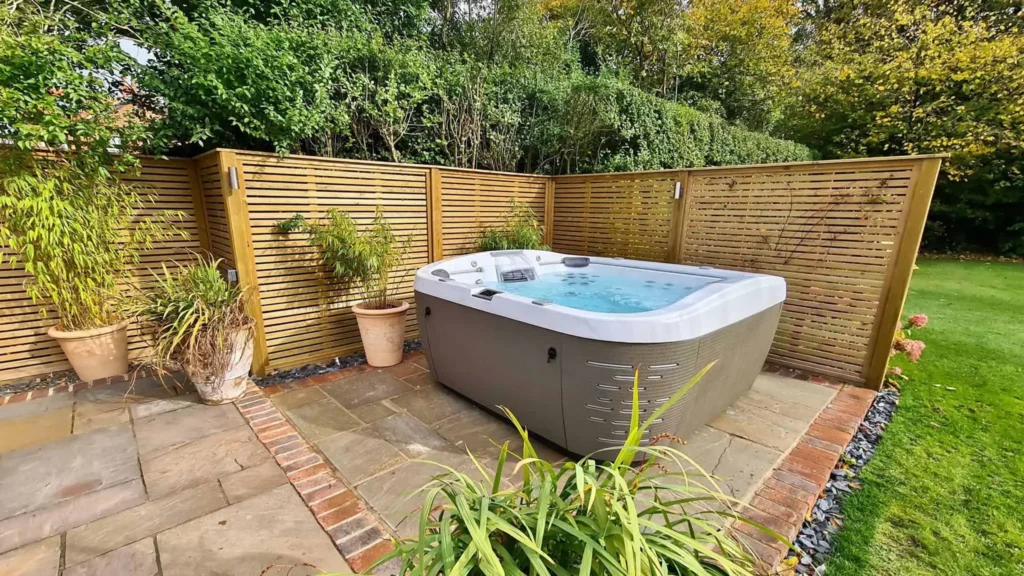
Note: Using WPC for screens makes them weather-resistant and stable in UV light, allowing years of privacy without failure. When sourcing materials for such durable and stylish partitions, partnering with a reliable composite fencing supplier ensures you get the highest quality panels designed for long-term outdoor performance.
Pergola and Partial Enclosure Designs
To enhance the openness while maintaining the feeling of being in a room, consider the pergola and partial enclosure designs. These convert flat decks through height and drama using overhead structures. It provides partial shade in scorching sunlight and lowers the impact of high wind speeds, maintaining year-round usability. Pergolas also facilitate hanging of bistro lights, curtains, lanterns, or outdoor fans.
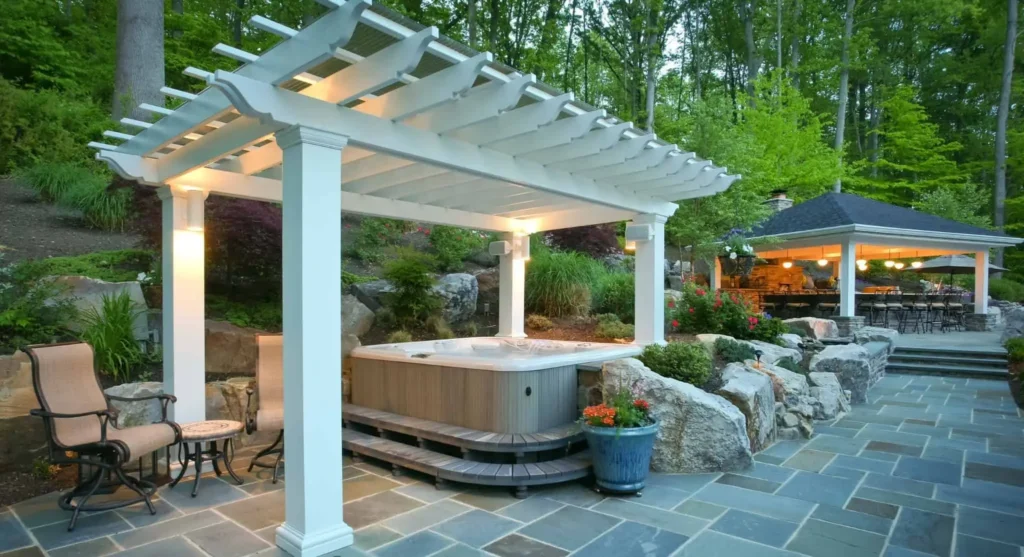
Decks Integrated with Landscaping
Using natural elements like planters or greenery makes the space more in touch with nature. Integrating decks with landscapes creates a natural oasis where one can escape from the concrete jungle at work. It removes the industrial look and enhances biodiversity, inviting birds and beneficial insects.
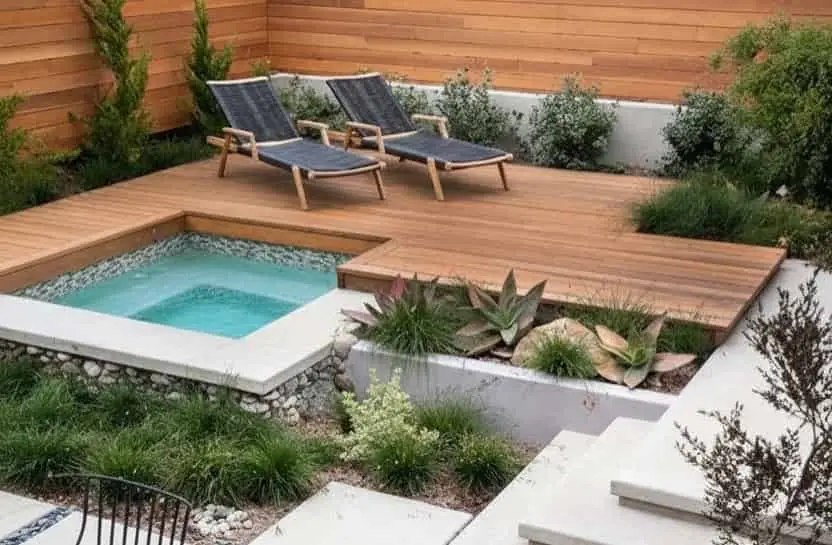
Note: Using WPC is vital in environments where sand and moisture meet. It prevents decking from moisture-induced failure.
Compact & Creative Hot Tub Deck Ideas
All of us have faced space constraints for our ideas. In the case of hot tubs, making them a utilitarian section of a home saves space but makes it less appealing. To make a hot tub look cozy and warm within confined spaces, consider our following compact & creative hot tub deck ideas:
Small Backyard Hot Tub Decks
The purpose of small backyard design is to ensure the hot tub is fully utilized while using minimal backyard space. Look for installation in a corner with 6x6ft space. Use narrow or diagonal patterns of decking to create the look of a large space. Moreover, use similar exterior composite wall panels for a sectioned look, creating a cohesive indoor-outdoor flow that ties the entire compact space together.. Utilize wall-mounted planters and other ornaments to enhance the look without compromising on space. Angling the deck at 45 degrees can increase the perceived area visually by 15-20%, based on human psychology.
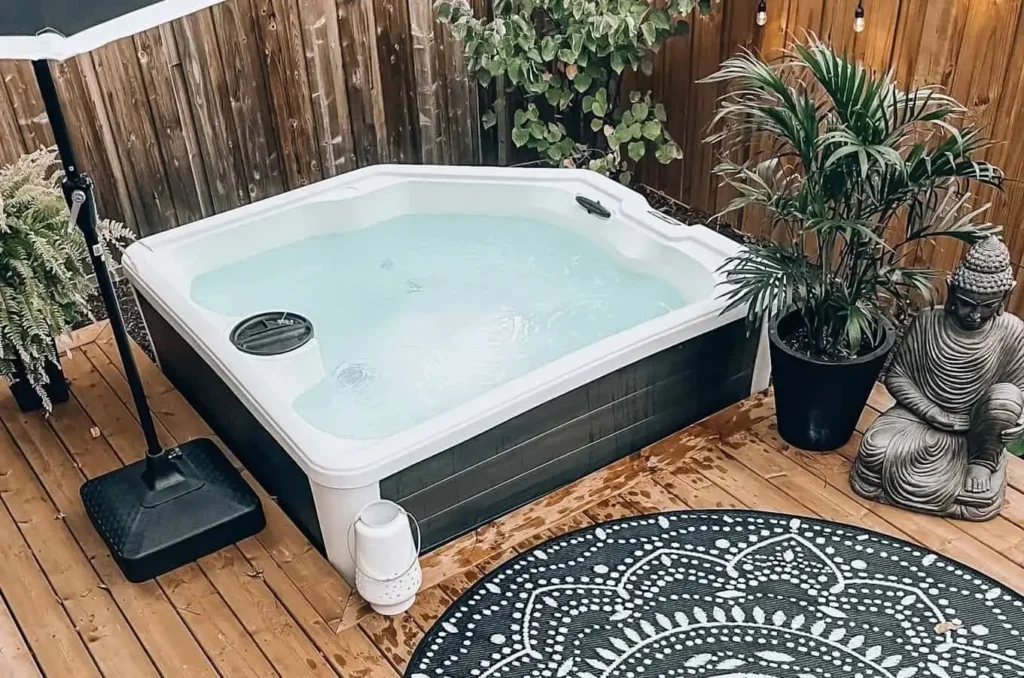
Floating Deck Designs
For a space that feels dedicated to the hot tub and makes the space perfect for contemporary homes, use a floating deck design. The use of low-to-ground design does not require massive excavation, making it ideal for renters. They are easy to install with enough space underneath the deck for ventilating associated tub machinery. Floating decks use adjustable deck pedestals or tuff-blocks. The blocks must be placed every 2 feet for stability.
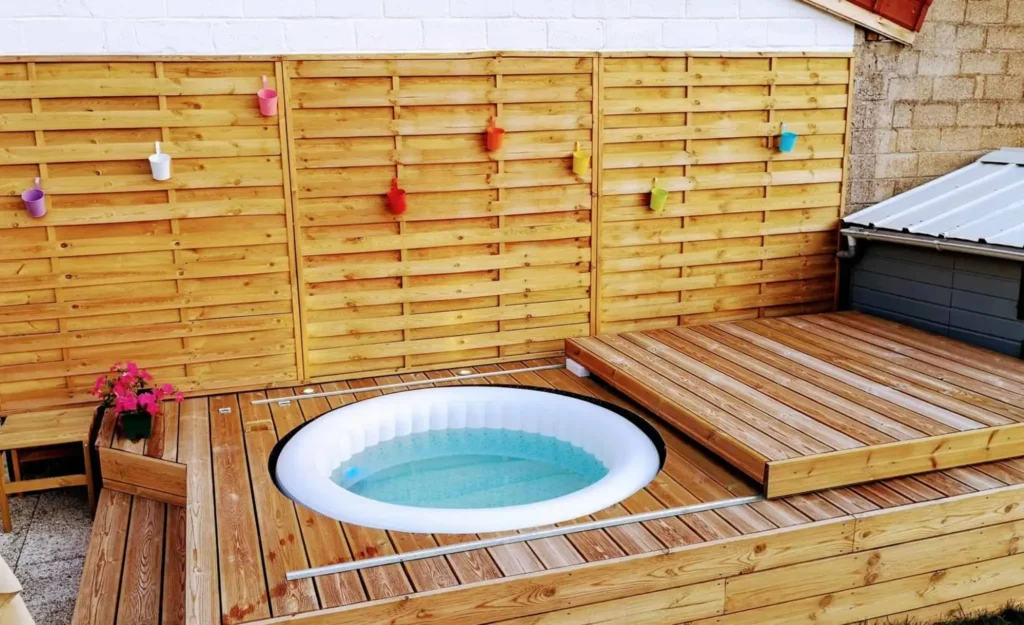
Hot Tub Decks with Built-In Seating
To create a conversation zone around the hot tub, the integrated parameter seatings are ideal. They utilize the same WPC material that is water-resistant, allowing protection against splashes. Moreover, the benches also serve as hidden storage compartments for towels and chemicals, saving indoor storage space. It results in a space that looks tidy while keeping it entertaining for social gatherings.
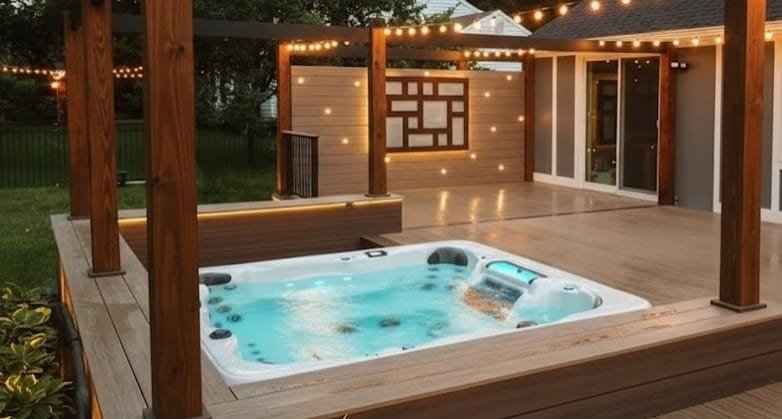
Engineering & Safety Considerations
Requirements for Built-in Hot Tubs
Owing to the zero support from the WPC deck surrounding the tub, there is a 4 to 6-inch reinforced concrete pad to handle the weight of the hot tub. Consider the following aspects when using the flush-mounted hot tub design:
- Coping Edge: Use picture-frame bordering to create a sleek look
- Drainage: The rainwater or tub splash-outs can find their way into the space between the deck and the hot tub. Therefore, consider the drainage system to clear the water.
The selection of wide-plank WPC decking in the presence of hot tub water is a strategic choice by designers. It comes with the added advantage of a low absorption rate of 0.37%, and the material is immune to hot tub rot. In typical wood, these backyard decks fail within 5-7 years due to waterlogging and start to warp.
Noise and Safety
The installation of rubber dampening pads between the deck and the hot tub reduces the noise level during operation by 20%. The rim is elevated, which will make people sit on the picture-frame installation of WPC naturally. Since WPC does not have splinters like cedar or pressure-treated pine, the skin is protected. Moreover, typically these WPC deck slabs just adjacent to the hot tub are made with a higher slip-resistant surface than others for safety.
Conclusion: Hot Tub Decks That Look Cool and Feel Even Better
Making a hot tub deck requires engineering knowledge and a creative mindset. We need to combine durability with comfort while maintaining the visually stunning aspect. Moving away from the traditional wood to modern WPC decking ensures that the oasis you create remains intact and as-new for years to come. Whether you choose to pick the seamless built-in hot tub, multi-level, privacy-focused, or compact design, the outcome should always be the creation of a true backyard retreat.
If you want premium-grade material for a long-lasting deck with a hot tub, consider KR WPC material. Their solutions are tailored to handle high-moisture environments of a hot tub with a stunning variety of colors and visual patterns. Explore Kreco Composites’ range at KR WPC to elevate your backyard oasis.
FAQ
- Can a WPC deck safely support the weight of a hot tub?
Yes, with proper reinforcements, a WPC deck can safely support a 5000lbs hot tub when filled. Calculate total weight/tub area and use joists with 12-inch spacing. Ensure that the subframe can handle 100-150lbs/sq-ft.
- Are composite decks slippery around hot tubs?
No, with the right selection of grooved or textured design, the WPC composite decks provide 37% more traction than smooth wood. Moreover, use tricks such as laying the board perpendicular to walking for optimal grip.
- Is WPC decking better than wood for hot tub areas?
Yes, WPC provides excellent moisture resistance, which is approximately 0% for WPC and 20% for wood. It results in rot prevention and a life span of 25+ years without the need for sealing. In comparison, wood lasts 10-15 years with sealing requirements.
- What maintenance does a composite hot tub deck require?
There is no need for staining or sealing like regular wood in WPC composite material. All you need is simple water hosing after application of mild soap. UV-stabilized WPC material only needs inspection of fasteners for loosening.
- How much space should I leave around a hot tub on a deck?
Ensuring a space of at least 2-3 feet on all sides for access, maintenance, and air circulation is ideal for maintenance of a hot tub. Keep around 3 feet for cover removal while incorporating factors such as electrical clearances.